Fish Deaths At Durgam Cheruvu Blamed On Sewage Flow, HMWSSB Plans Permanent Solution

Officials identified four major routes through which sewage is entering the lake
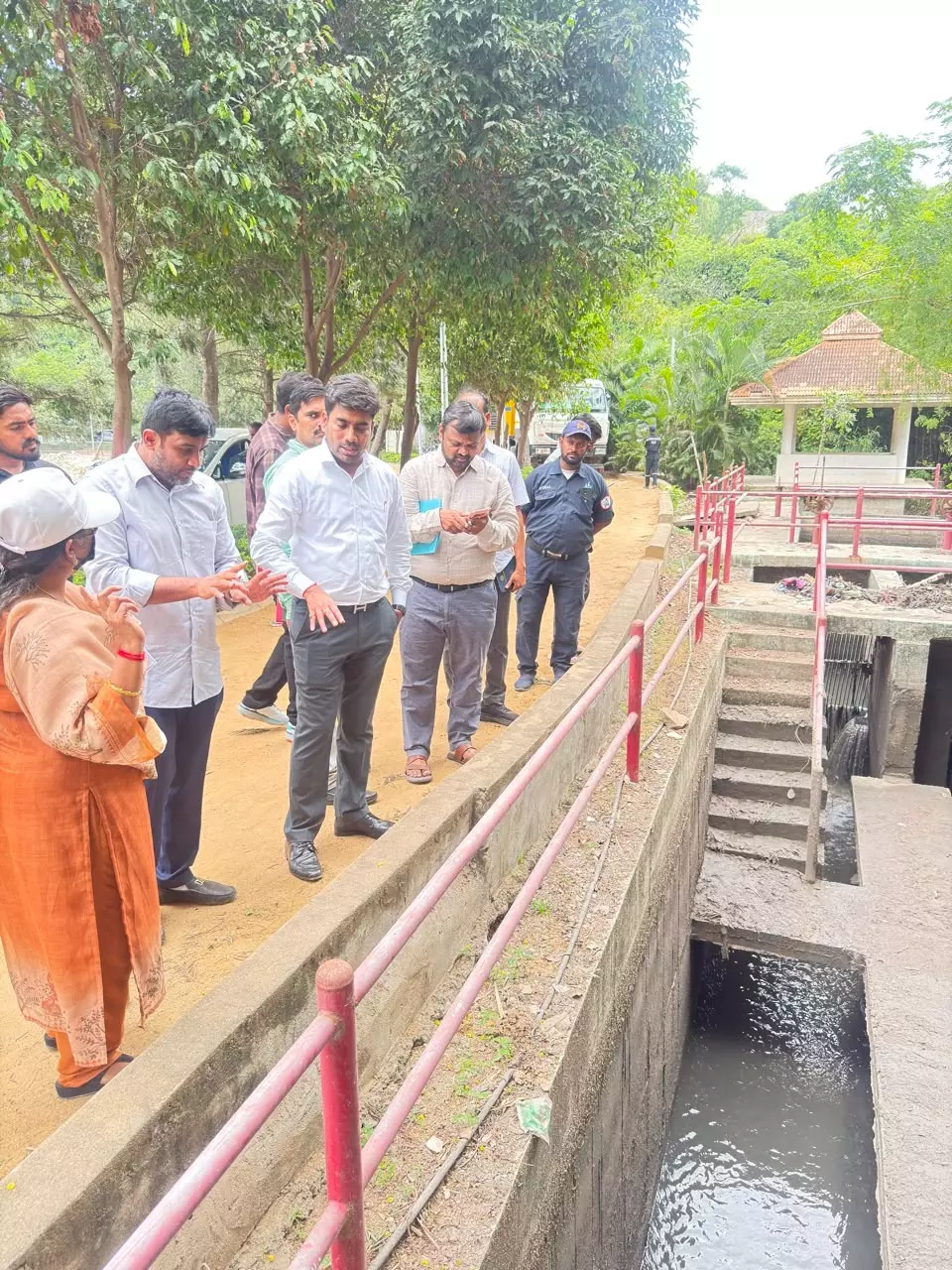
Hyderabad: The HMWS&SB on Saturday identified four major sewage inlets that was carrying sewerage into the Durgam Cheruvu at Jubilee Hills, resulting in the death of, according to fishermen, tonnes of fish.
Officials identified four major routes through which sewage is entering the lake — the Madhapur I&D nala, Silent Valley I&D nala, Vitthal Rao Nagar box nala and the route from the TGIIC layout. They inspected the flow at the inlets and discussed measures to stop sewage from reaching the lake.
Officials said the existing sewage treatment plant (STP) at Durgam Cheruvu is functioning at full capacity. However, the rapid growth of residential areas and population around the lake has resulted in a significant increase in sewage generation. During the monsoon, the problem is compounded by additional flows entering along with rainwater.
The team that inspected the lake — HMWS&SB joint managing director Mayank Mittal, GHMC Kukatpally zonal commissioner Mayank Singh, HMWS&SB Cyberabad executive director Mandala Santosh and senior officials — decided to study the topography and hydrology of the surrounding areas and prepare a permanent action plan to prevent sewage from mixing with the lake water.
The plan will include sewage diversion, treatment and other technical measures at the four identified inlets. Officials will work in coordination to implement the measures. Mittal directed the departments to take steps to completely prevent sewage flow into Durgam Cheruvu and protect its natural environment and ecological balance.
Neelam Surender Kumar, president of the Raidurgam Fisherman Society, told Deccan Chronicle that the fishing community has been cultivating rohu, catla and murrel in Durgam Cheruvu for nearly 40 years. “Last month, we lost tonnes of fish due to sewage leakage,” he said.
He said water quality and related works need to be taken up regularly to ensure the lake remains suitable for fish cultivation. “Every year, we fishermen invite officials from the National Fisheries Development Board to inspect the water and assess its suitability for fish growth before continuing their activities,” he added.
