Citizen scientists map beetles nationwide
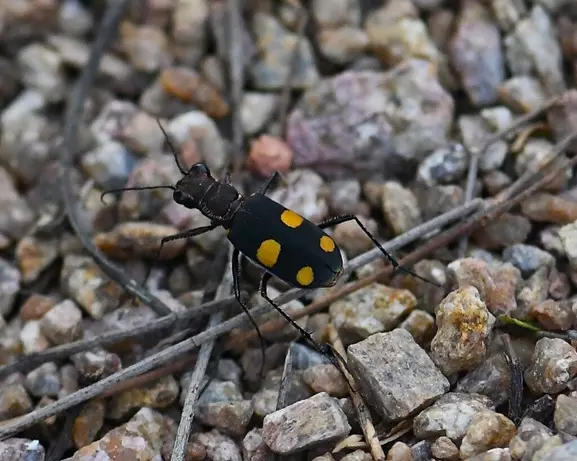
Hyderabad: In a first-of-its-kind nationwide effort, India’s inaugural Tiger Beetle Quest has recorded 132 species of the brightly coloured, fast-moving beetles across the country. The citizen science project, held from June 28 to July 6, encouraged nature enthusiasts to photograph and upload beetle sightings to the platform iNaturalist.
Tiger beetles, often called the “tigers of the insect world”, are small yet powerful ground predators. With their metallic sheen, long legs and sharp vision, they play a crucial role in maintaining ecological balance and are considered indicators of a healthy environment.
The 2025 campaign drew participation from 12 states, with Telangana standing out by contributing 4,170 observations, including nine different species. These were spotted in locations such as Narsingi Forest Trek Park, Kokapet Goshala and the Indian Institute of Rice Research campus.
“We found several beetle species in Hyderabad itself. While the numbers are fewer than places like Tirupati or EISER in Madhya Pradesh, it still shows that urban and semi-urban areas hold surprising biodiversity,” said Dr Chitra Shanker, principal scientist at ICAR-IIRR and a member of the Butterfly Conservation Society (BCS), talking to Deccan Chronicle.
The initiative was coordinated by the Tiger Beetle Watch India group, led by the Rhopalocera and Odonata Association of Rajapalayam (ROAR) and The Naturalist School, in partnership with iNaturalist and organisations including WWF India. Over 80 to 100 people took part nationwide during the bioblitz week.
Launched in July 2024, the project focuses on studying the distribution, diversity and seasonal activity of tiger beetles across India. Experts believe the data can guide conservation policy, especially in regions facing ecological degradation or urban development pressures.
“Tiger beetles are not new to India. But this is the first time we’ve come together as a country to map them in a structured, citizen-driven way. When we collect such data, we can show authorities the value of protecting certain landscapes,” Chitra added.

