The student committee described Virasat as “a tribute to the roots that define us,” and chose to focus less on grandeur and more on grounding.
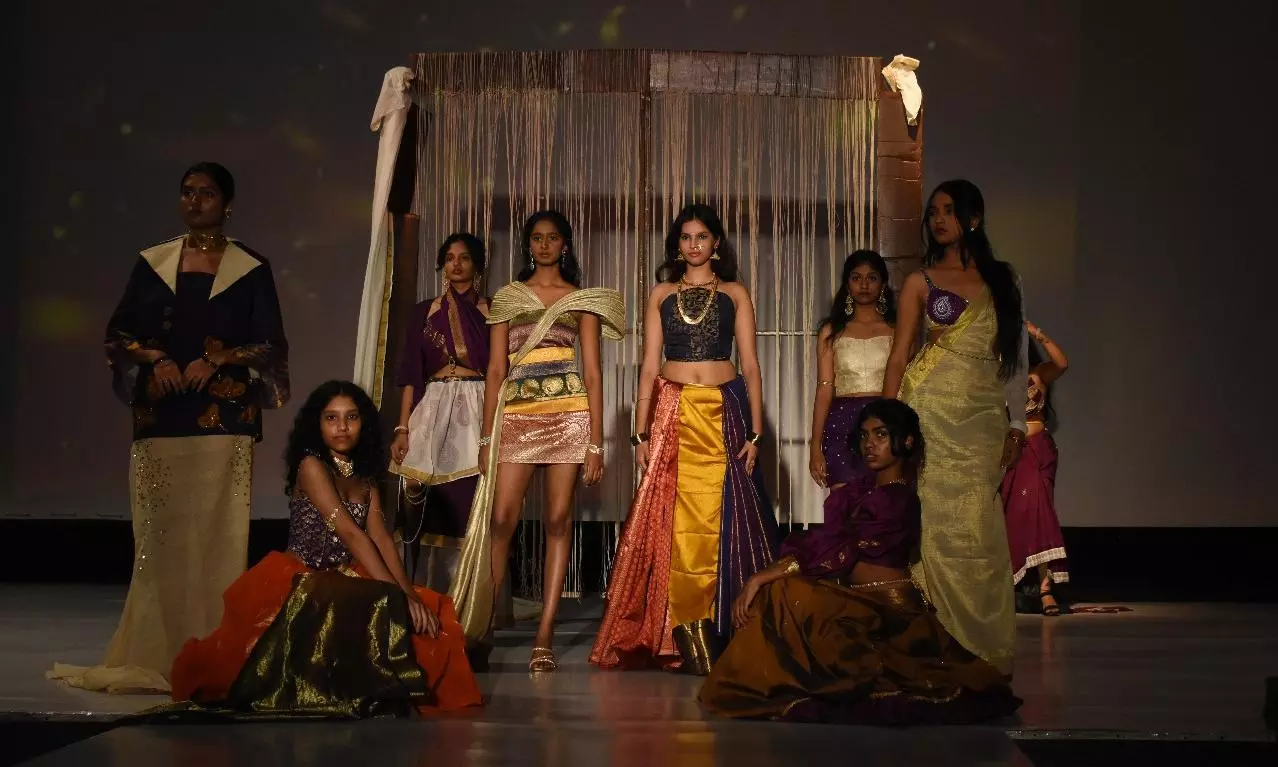
Hyderabad: The Footwear Design and Development Institute (FDDI), Hyderabad, brought the spotlight back to India’s traditional crafts and textiles through “Virasat”, a student-led cultural programme that celebrated India’s design traditions and handicraft legacies. Conceptualised and presented by the Fashion Design department, the event placed regional crafts, languages and materials in conversation with contemporary fashion education.
The programme featured thematic exhibits and live demonstrations, transporting attendees into the textures and rhythms of various Indian craft practices. Textile installations, traditional motifs and heritage accessories formed part of the visual storytelling, reinterpreted through student work that remained grounded in its source inspirations.
Students led the curation and presentation process, using the auditorium space as a stage for a walk through India’s material histories. The exhibits moved between geography and story — from tribal embroidery to woven heritage — and paid attention to detail without lapsing into nostalgia.
Faculty and visitors engaged with the displays both as aesthetic compositions and as educational inquiries into heritage, sustainability and belonging. While the tone remained celebratory, the event was more of a reflection on what it means to inherit and reinterpret.
The student committee described Virasat as “a tribute to the roots that define us,” and chose to focus less on grandeur and more on grounding. The event closed with a collective acknowledgement of the importance of slowing down, looking back, and listening to the craftspeople, communities and classrooms that continue to mould Indian designs from the margins.
EFLU hosts conference on tribal knowledge systems
Hyderabad: “Let us not merely learn about indigenous communities. Let us learn from them,” said Telangana Governor Jishnu Dev Varma at the inauguration of a three-day international conference at The English and Foreign Languages University (EFLU), Hyderabad, on Thursday. The Governor urged institutions to discard colonial academic models that continue to treat tribal worldviews as objects of study rather than sources of insight.
“It is high time we acknowledge the seriousness of tribal knowledge systems,” he said, adding, “It is the very foundation of our understanding of life, nature and community.” Echoing Rigoberta Menchú’s words, he added, “We are not myths of the past… We are people and we want to be respected.” He warned against attempts to validate indigenous knowledge through Western standards and argued that the challenge before the nation was not only to offer modern systems such as healthcare and education to tribal communities, but to do so without erasing the values rooted in their traditions.
The conference, titled Indigenous/Tribal Communities – Reframing Research Methodologies, is hosted by the Department of Indian and World Literatures, and invites scholars, researchers and community leaders to rethink dominant research approaches and foreground tribal and indigenous epistemologies. The sessions explore oral traditions, ecological knowledge systems, language preservation, decolonial frameworks and participatory methodologies across the humanities and social sciences. Filmmakers and storytellers are also presenting creative projects that challenge conventional academic boundaries and offer alternate modes of knowledge production.
EFLU Vice Chancellor Prof. N. Nagaraju spoke of the university’s role in nation-building and called for a wider acceptance of indigenous worldviews in the academy. The conference features speakers including Prof. Y. L. Srinivas, Vice Chancellor of Sammakka Sarakka Central Tribal University, Prof. Deepak Kumar Behera, Prof. Amareswar Galla, Prof. Hari Prasad, Prof. Shyam Rao Rathod, Prof. Sonba M. Salve and Dr. Rajunayak.

