Before seed companies entered the market, farmers traditionally used good quality produce as seed for the next crop season: Reports
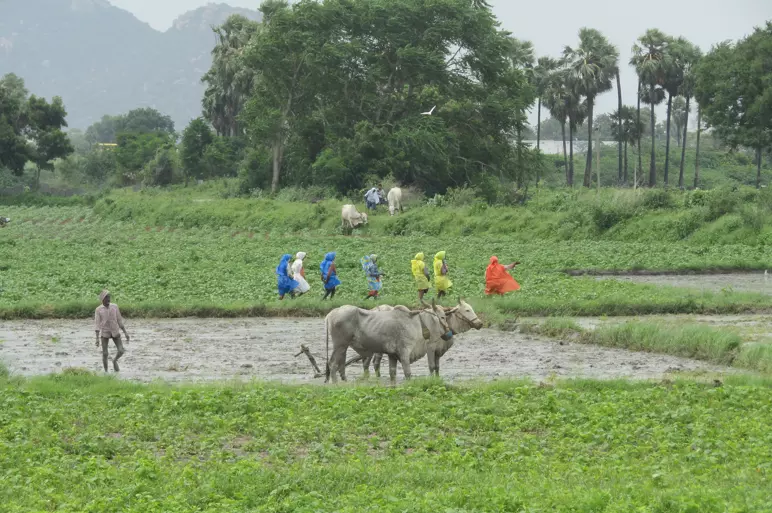
NALGONDA: To reduce farmers’ dependence on seed companies for cultivation, the district agriculture department has come out with a plan to distribute seeds of paddy and other crops with regeneration capacity. Farmers will be encouraged to use these seeds and share them with fellow farmers for the next season’s cultivation.
Before seed companies entered the market, farmers traditionally used good quality produce as seed for the next crop season. Other farmers often purchased the best quality produce for this purpose, and in some places, they even paid double the normal quantity of paddy for superior seeds. However, with the introduction of hybrid seeds, this practice declined. Hybrid varieties lacked regeneration capacity, forcing farmers to buy fresh seeds every season, which in turn created scope for spurious seeds to enter the market.
To address this issue, the district agriculture department has decided to distribute paddy and green gram seeds to selected farmers through Rythu Vedikas. A total of 1,669 farmers from 569 villages, three farmers from each village, were chosen for the initiative. Of these, 1,128 farmers will cultivate paddy, while 554 will grow green gram. Each farmer will cultivate these seeds on one acre of land.
District agriculture officer Palvai Sravan Kumar said that seeds of paddy varieties WGL-564, WGL-1246, and WGL-1355, and green gram variety MGG-385, were distributed to farmers at a 95 per cent subsidy. “We created awareness about the initiative through meetings in Rythu Vedikas. Farmers were selected on the condition that they would share their produce as seed with others in their villages. The main objective is to turn villages into seed storage hubs,” he explained.
He added that agricultural scientists from various research organizations would conduct periodic field visits to guide farmers on cultivation practices.
Farmer N. Yadagiri expressed hope that the initiative, if successful, would bring revolutionary changes in agriculture within five to six years. He said it would solve the problems of seed shortages and spurious seed sales, while also reducing cultivation costs.