Extend Validity of 2023 Media Accreditation Cards Till Sept 15: HC to Govt

The NDSA submitted that the petitioner’s contentions relating to agricultural hardship were matters of policy and lay in the domain of the state government.
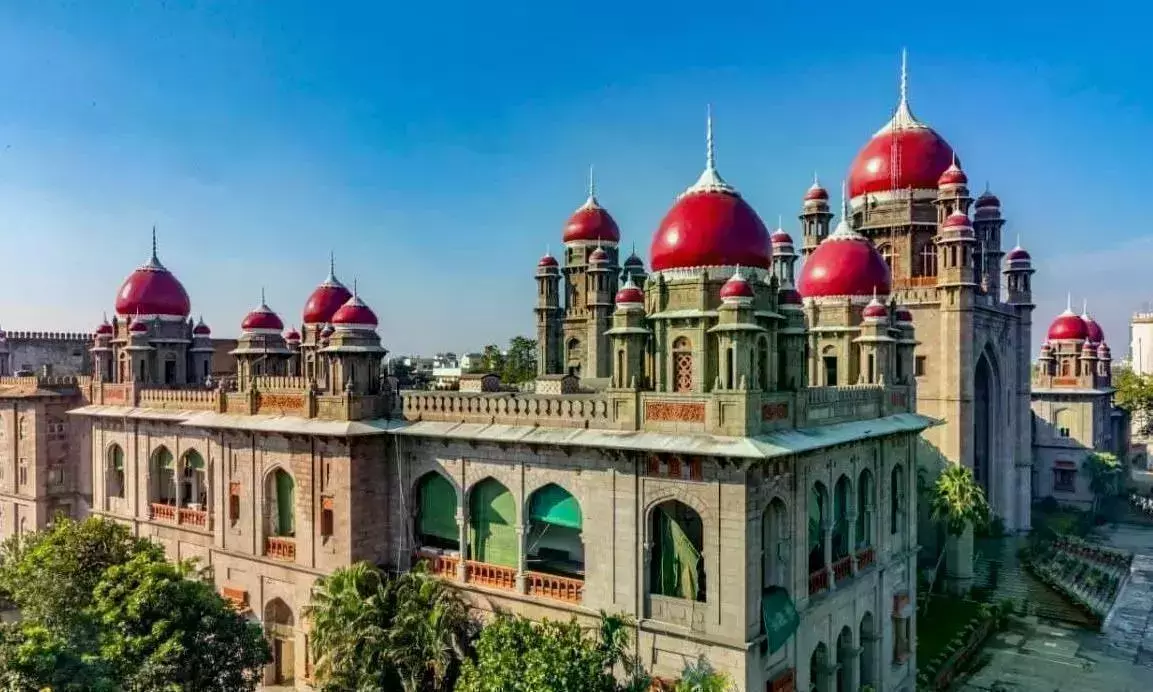
Hyderabad:The Telangana High Court on Tuesday directed the state government to extend the validity of accreditation cards issued in the year 2023, held by eligible working journalists, till September 15, while making it clear that no interim relief could be granted to new applicants or those who do not presently possess accreditation cards.
A division bench comprising Chief Justice Aparesh Kumar Singh and Justice G.M. Mohiuddin was hearing a batch of petitions challenging the state’s revised accreditation eligibility criteria. The petitions were filed separately by the Hi-Tech Print and Electronic Media Association, Telangana Urdu Working Journalists Federation and Creative India Broadcasting Private Limited, challenging the government order issued last year prescribing eligibility criteria for media accreditation.
Counsel for the petitioners raised objections on the distinction made in the accreditation norms between cable and satellite channels. Special government counsel S. Rahul Reddy, appearing for the state, informed the court that the government had scrutinised the list of 535 members furnished by the Telangana Urdu Working Journalists Federation and found that only 268 had previously held accreditation cards. Some of them had been issued cards, counsel submitted.
The petitioners contended that the present accreditation rules were contrary to earlier orders passed by a division bench of the High Court. The bench adjourned the matters for final hearing on September 15.
NDSA Submits Medigadda Probe Report to HC; Recommends Rehabilitation Before Operations
Hyderabad:The National Dam Safety Authority (NDSA) informed the Telangana High Court that it had completed the task entrusted to it of examining the causes of distress at the Medigadda barrage and submitting a report, which also included recommendations for rehabilitation of the structure before opening it for operations.
The NDSA also submitted that on the request of state government about specific safety concerns of the Medigadda barrage and associated structures, a technical oversight committee had been constituted by the department of water resources, under the chairmanship of a member (technical) of the NDSA to oversee the rehabilitation works, if and when such works were taken up by Telangana. The committee comprised members from the Central Water Commission (CWC), Central Water and Power Research Station (CWPRS), Pune and Central Soil and Materials Research Station (CSMRS) of Delhi.
The NDSA stated that the State Dam Safety Organisation (SDSO) was responsible for issuing instructions to the owner of a specified dam regarding safety and remedial measures.
The NDSA filed the affidavit in a pending writ petition concerning the utilisation of the Kaleshwaram lift irrigation scheme (KLIS). The petition was filed by S. Sharath, who urged the High Court to direct the NDSA to undertake a comprehensive technical inspection of the barrages and associated infrastructure and submit a reasoned technical report on their structural and operational safety, including whether any part of the project was capable of safe restricted utilisation.
The NDSA denied the allegations of the petitioner that that due to non-discharge of duties by the authority, farmers were facing hardships in getting water from the KLIS and its components. The NDSA submitted that the petitioner’s contentions relating to agricultural hardship were matters of policy and lay in the domain of the state government.
NDSA report attributed the distress at the Medigadda barrage to a combination of deficiencies in planning, design, construction quality and operation and maintenance. It recommended that the structure be rehabilitated before being put back into operation and called for urgent examination of the Annaram and Sundilla barrages, citing their similar design and construction features.
The affidavit said interim measures were prescribed for the three barrages. In the case of Medigadda, the committee recommended that the gates of Block-7 be kept fully open before the monsoon to minimise hydraulic forces. It also recommended removal of the damaged gates adjacent to Pier No. 20 wherever necessary. Similar measures were suggested for the Annaram and Sundilla barrages.
The NDSA also stated that the rehabilitation process of the KLIS barrages was subject to “rigorous, multi-layered technical scrutiny” covering investigations throughout the execution of the rehabilitation works.
