Experts Red Flag Telangana Ignoring Wet Bulb Temperatures

Experts warn humidity-driven heat stress could worsen health risks this summer.
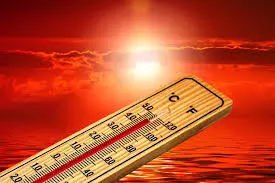
Hyderabad: With a scorching summer predicted this year by the IMD, and scientists warning about potentially deadly wet bulb temperatures occurring on high humidity days in the country, Telangana could be walking into summer with blinders on.
Though the state has a heat wave action plan, it takes into consideration only dry heat waves, and the Indian Meteorological Department does not offer alerts on wet bulb temperatures, which are also a leading cause of heat strokes.
“Typically, records of heat stroke or heat stress related hospital admissions are available with individual hospitals. Only records pertaining to heat strokes resulting in deaths are maintained at the state level,” according to director of public health Dr Ravindra Nayak.
In the last nine years — between 2012 and 2022 — for which official records are available, Telangana recorded 1,172 heatstroke deaths, but data on a much larger number of people suffering from heat strokes, but walking away alive from hospitals, is not captured in official records.
The IMD provides information on relative humidity (RH) and dry temperatures which together are used to provide ‘real feel’ or the predicted ‘heat index’.
“When the temperature, let’s say, is 35 degrees Celsius and the ‘real feel’ is 40, then it is an indication of humidity adding to how hot it feels. This is a rough measure of discomfort felt on such days. But for instance, when the dry bulb temperature is say 35 degrees, and the wet bulb temperature is 25 degrees coupled with high RH levels, then more care is needed on such days,” according to Y.V. Rama Rao, a former additional director general of IMD, and a consultant for the Telangana State Planning Development Society.
The IMD, however, does measure both dry and wet bulb temperatures, with the former being the temperature recorded by a thermometer in a normal fashion, and the latter with a wet cloth placed on the bulb of the thermometer.
The temperature at which the water evaporates from the cloth is the wet bulb temperature and it is now universally accepted that wet bulb temperatures starting from 25 degrees Celsius can begin setting in of discomfort and as it reaches 31 degrees and climbs to 35 degrees, then conditions can get dangerous for those employed in work requiring any physical exertion.
Even the ‘real feel’ or ‘heat index’ are not normally understood well by people. According to the state’s Heatwave Action Plan (HAP), data from the US National Weather Service, shows that even when dry air temperature is just 34 degrees, and the RH is 75 per cent, the resulting heat index or real feel is a whopping 49 degrees. The same effect is reached when RH reaches 100 per cent, the state’s HAP says.
When “environmental temperature increases above 37 degree Celsius, the human body starts gaining heat from the atmosphere. If humidity is high, a person can suffer from heat stress disorders even with the temperature at 37 degree Celsius or 38 degree Celsius as high humidity does not permit loss of heat from the human body through perspiration,” the HAP says.
According to Heatwatch, an NGO that tracks heatwave-related issues and stresses, a wet bulb temperature of 35 degrees feels like a person is in a 45-degree environment.
In its report, ‘Struck by Heat: A News Analysis of Heatstroke Deaths in India in 2025’, Heatwatch said India’s current heatwave warnings still focus mainly on dry bulb temperatures, without fully accounting for humidity which significantly affects how the body experiences heat.
India, the report said, does not have a “comprehensive system in place to monitor or forecast wet-bulb temperatures. Without accurate and localised warnings, millions especially the most vulnerable remain exposed to dangerous heat stress.
