Everyday Life at The Edge of Death: Vinay Varma Brings ‘Passwala’ to the Hyderabad Stage

The production mixes Marathi, Hindi and Bombay slang
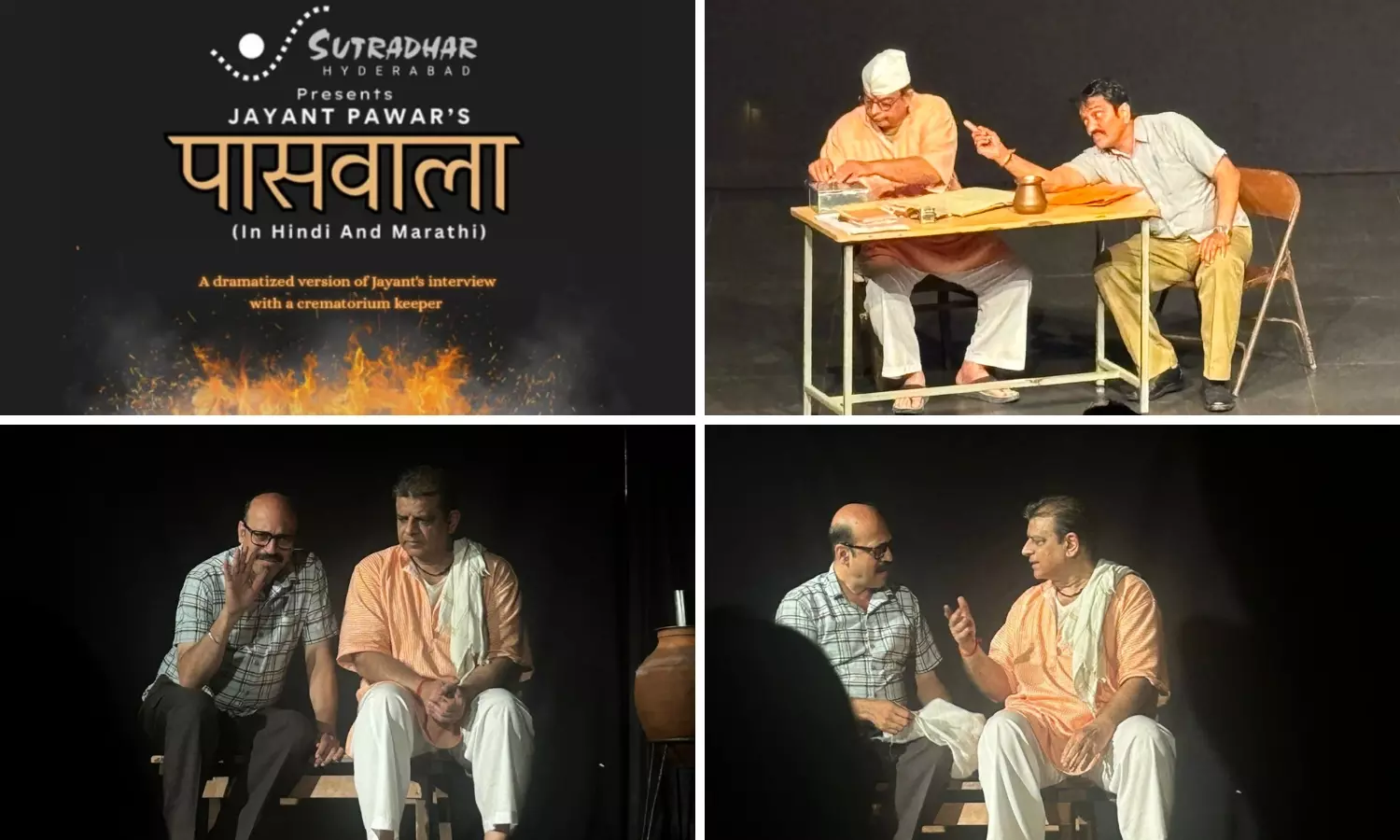
HYDERABAD: A crematorium keeper ends an interview by asking his visitor to come again, the kind of courtesy that belongs at any doorstep except, perhaps, this one. Vinay Varma remembers audiences breaking into laughter at the line because nobody quite knows what an invitation back to a crematorium is supposed to mean. That matter-of-fact absurdity is what makes most of ‘Passwala’, Varma’s stage adaptation of Jayant Pawar’s 1993 interview with a crematorium keeper in Bombay (now Mumbai), where death has long since become part of somebody’s working day.
Pawar had gone there curious about the clerk who recorded dead bodies and dealt each day with families, unclaimed corpses and final rites. What Varma found in the interview was less a catalogue of death than the strange normalcy around it. People chatted and filled water on the premises; couples met there; a homeless person came to rest. “And all this is happening in a crematorium,” Varma said.
Dr Maya Pandit had first sent Varma a translation of another Pawar work for his opinion. When he asked if there was more to read, she pointed him to the little-known interview. “That is what struck me, because not many people talk about such marginalised communities,” he said. The keeper’s own tragedies and his numbness after years of seeing corpses every day stayed with Varma too. “Numbness overtakes after a particular time when you see body after body every day, and it just becomes a part of your life.”
Around 18 to 20 people appear across the original interview. Varma chose two of them for the stage version, a policeman who brings unclaimed bodies and a poor labourer whose two-month-old baby has died. He uses theatrical suggestion to create funeral pyres, burial grounds and the shed that stores wood. Most of the piece remains a conversation between Pawar and the keeper.
Sutradhar Hyderabad presents ‘Passwala’ at Marathi Granth Sangrahalay, Koti, at 7.30 pm on August 15 and at Nishumbita, Begumpet, at 7.30 pm on August 16. The production mixes Marathi, Hindi and Bombay slang. Varma said that speech pattern belongs to the Mumbai setting and to the way the characters speak.
Varma resists treating the subject as relentlessly sombre. “I have not made this dark. The darkness is interspersed with a lot of dry, wry and black humour,” he said. Pawar asks about unclaimed bodies, burial charges, leftover ash and rituals at the crematorium. Varma described much of the humour in these exchanges as matter-of-fact, the sort that arrives unexpectedly in everyday conversation.
Varma does not prescribe a response for the audience. “I’m giving a situation to the audience,” he said. The keeper’s casual answers sometimes landed, for Varma, as philosophy. “In schools we are taught that death is an abstract thing. But I find that life is abstract.”