Around the world, governments increasingly use El Niño forecasts as planning tools. Countries like China, Peru, Brazil and Australia routinely incorporate seasonal climate forecasts into agricultural and water-management decisions.
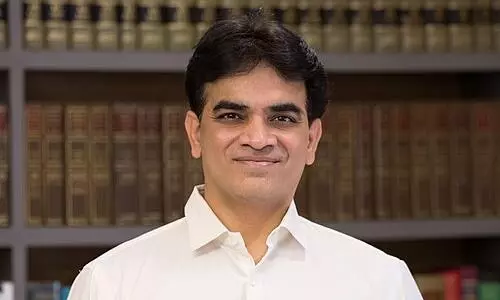
By S. Niranjan Reddy
Whether one likes it or not, El Nino is here and there appears to be no escape from what it can, and may likely do to the Indian monsoon season. And with Telangana firmly in the crosshairs of the El Nino that has formed over the far way in central Pacific Ocean, it is time for the state to move towards a comprehensive preparedness framework.
Telangana needs a dedicated El Nino task force bringing together agriculture, irrigation, health, municipal administration and disaster-management departments. The tasks at hand are multifold - reservoir levels and groundwater conditions need to monitored, district-wise crop advisories, drought-risk mapping, heat-action plans and forest-fire surveillance systems need to be activated – and these must be in place before monsoon disruptions begin to affect livelihoods.
Telangana cannot control Pacific Ocean temperatures. It can, however, control how prepared it is. But the risks are already visible in Telangana. Meteorologists have warned that El Nino could bring prolonged heat and uneven rainfall across the state. Several districts have already recorded temperatures touching 44–45°C.
To be fair, Telangana has already taken an important first step by encouraging farmers to shift away from water-intensive paddy cultivation in vulnerable areas towards pulses, oilseeds and horticulture crops. However, climate-resilient agriculture must go beyond crop diversification. Recognizing this challenge, I had raised a question in Parliament in 2022 regarding the promotion of heat-resistant wheat varieties. The government informed Parliament that newer varieties such as DBW-187 and DBW-222 had demonstrated yield gains of 3.6 per cent and 5.4 per cent respectively under heat-stress conditions.
For Telangana, the greatest concern is not necessarily food shortages. Investments in irrigation, improved seeds and public procurement systems have made foodgrain production more resilient than in previous decades. The bigger risks lie in water stress, heatwaves, environmental degradation and rising food prices caused by localized crop failures.
Around the world, governments increasingly use El Niño forecasts as planning tools. Countries like China, Peru, Brazil and Australia routinely incorporate seasonal climate forecasts into agricultural and water-management decisions.
The Pacific Ocean may seem far removed from the fields of Karimnagar or the reservoirs of Nalgonda. Yet a warming patch of water thousands of kilometres away has the power to shape Telangana’s agriculture, water security and economy. Should the government prepare in anticipation? The answer is a firm yes. It is time for Telangana too take firm steps towards a well-integrated El Nino management plan.
The author is a Rajya Sabha member.