El Nino Leaves Paddy Farmers In Mancherial, Nirmal In Distress

The state government is discouraging paddy cultivation during the current kharif season in view of scanty rainfall and the anticipated impact of El Nino.
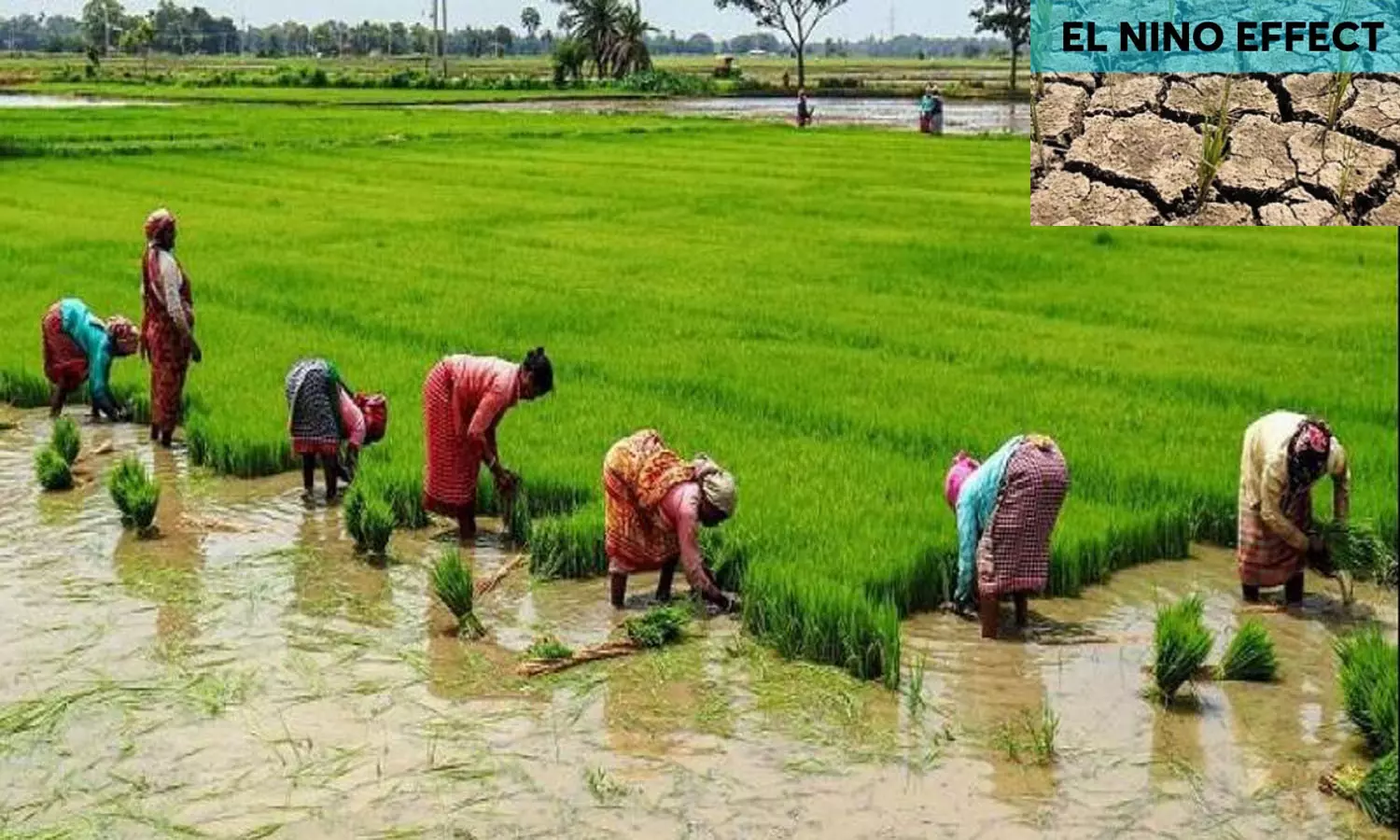
Adilabad: Paddy farmers in Mancherial and Nirmal districts are facing uncertainty due to prolonged dry spells and poor water availability, while agriculture experts have advised them to shift to pulses and other alternative crops.
This is to minimise the impact of El Nino. Many farmers under the Kadam ayacut are still waiting for rains to begin transplantation, while those who have already planted paddy are struggling to irrigate their crop.
The state government is discouraging paddy cultivation during the current kharif season in view of scanty rainfall and the anticipated impact of El Nino.
Agriculture scientists have advised farmers to diversify their cultivation to pulses and other less water-intensive crops to reduce crop losses and investment risks.
Water availability has emerged as a major concern in the Khanapur Assembly constituency, where there is little prospect of irrigation releases from the Sriram Sagar Project. Farmers in Jannaram, Dandepalli, Kadam and Luxettipet mandals are also facing uncertainty as water levels in the Kadam project have fallen sharply.
Officials indicated that the available water may have to be reserved for drinking purposes.
Agriculture experts said paddy transplanted at this stage is unlikely to produce optimum yields and advised farmers to avoid fresh paddy cultivation. They said pulses and other alternative crops would be more suitable under the prevailing conditions.
Farmer Rajeshwar of Dandepalli said many cultivators were waiting for rainfall to begin transplantation and were worried after learning that water availability in the Kadam project had declined significantly.
Experts pointed out that long-duration paddy varieties require about 150 days of continuous water supply, making cultivation difficult under the present conditions. They also noted that paddy seedlings, which are ideally transplanted within 20 to 25 days of raising nurseries, are now 40 to 50 days old, which could affect productivity even if transplanted.
According to irrigation officials, the Komaram Bheem project has a full storage capacity of 10.399 tmc-ft. The reservoir currently holds 4.878 tmc-ft of water at a level of 235.85 metres, which they said is sufficient to meet drinking water needs for about 174 days.
Khanapur MLA Vedma Bojju said water levels in the Kadam project were declining rapidly and the available storage was sufficient for only about 60 days of drinking water supply. The reservoir at present holds only 0.5 tmc-ft against its capacity of 3.49 tmc-ft, leaving irrigation officials unable to release water for paddy cultivation under its ayacut.