Inscription Dates Telangana Bonalu to 1516 Pre Qutb Shahi

A proposal will be placed before the state government to shift the inscription to a prominent location such as the Ujjaini Mahankali temple in Secunderabad.
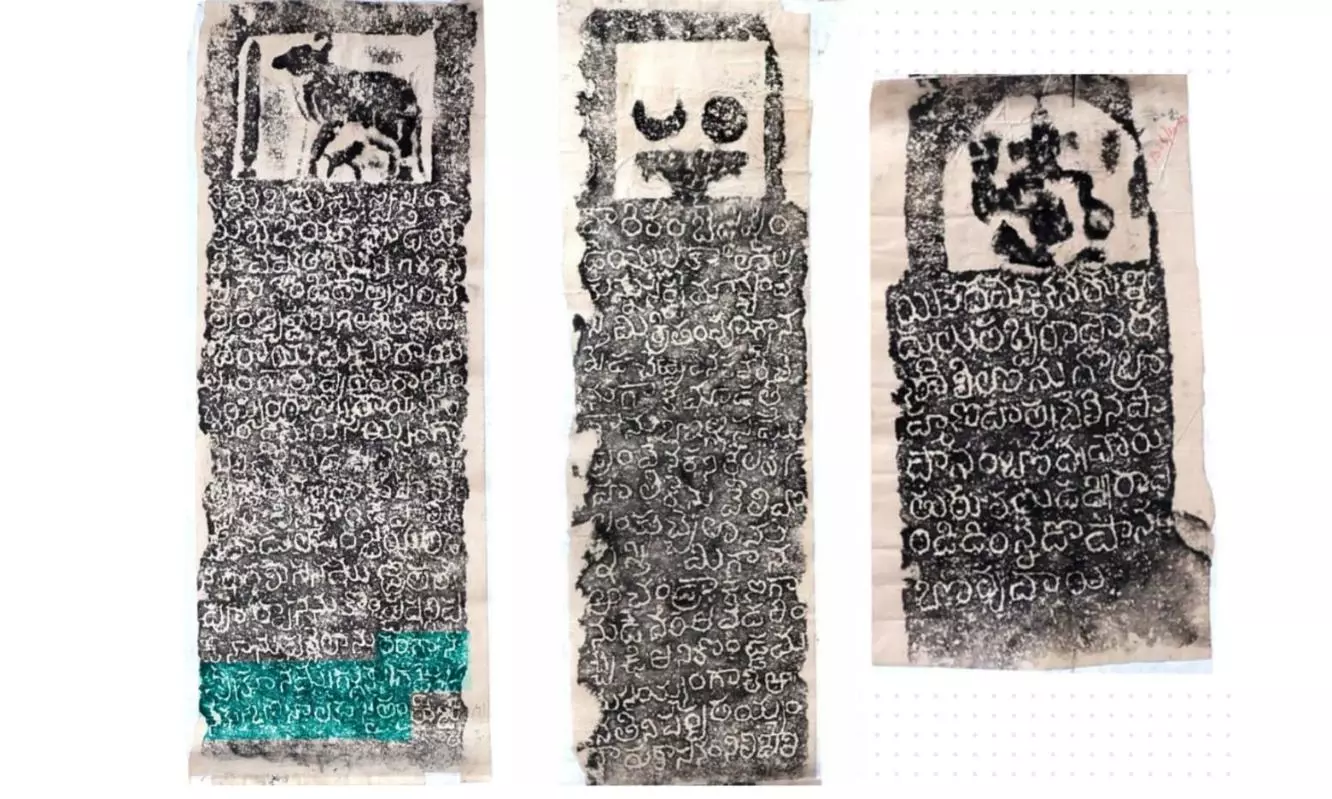
Hyderabad: A newly discovered inscription has rewritten the history of Bonalu, revealing that Telangana’s folk festival predated the Qutb Shahi period, with evidence tracing it back to 1516 CE.
The epigraphic reference, found in Gobbur near the Telangana–Karnataka border, dates to the reign of the Vijayanagara emperor Sri Krishnadevaraya. Written in Telugu script, the inscription (Saka 1438, Dhatu, Jyesṭha Shukla 3; correspondeing to Sunday, May 4, 1516 CE, in the Gregorian calendar) records tax exemptions on rituals such as Rangam (foretelling), Kunamuggu, Gaddapattana, and Bonalu.
It also mentions land grants under the Pedacherruvu and Bollasamudram tanks, made to support Bonalu celebrations at Kondapalli, on the orders of Rayasam Kondamarasayya. The pillar was set up by Parvatayya during Krishnadevaraya’s rule.
Dr K. Munirathnam Reddy, director (Epigraphy), Archaeological Survey of India, said the inscription was copied in 1961 but has now been rediscovered while re-examining estampage copies for the South India volumes. He noted that Sri Krishnadevaraya’s tax exemptions reflected his administrative vision to sustain festivities without burdening the people.
A proposal will be placed before the state government to shift the inscription to a prominent location such as the Ujjaini Mahankali temple in Secunderabad.
Dr M.A. Srinivasan, assistant professor at Suravaram Prathap Telugu University, said: “This is the first-ever inscription that explains Bonalu. While history often attributes its origin to the Qutb Shahi period, the text shows the festival existed even earlier, likely in the pre-Qutb Shahi era.”
