Drought Relief Bypassing Tenant Farmers, Study Says

The committee warned that this omission could deprive actual cultivators of the Rs 10,000 per acre disaster relief promised by the state government for severe crop damage.
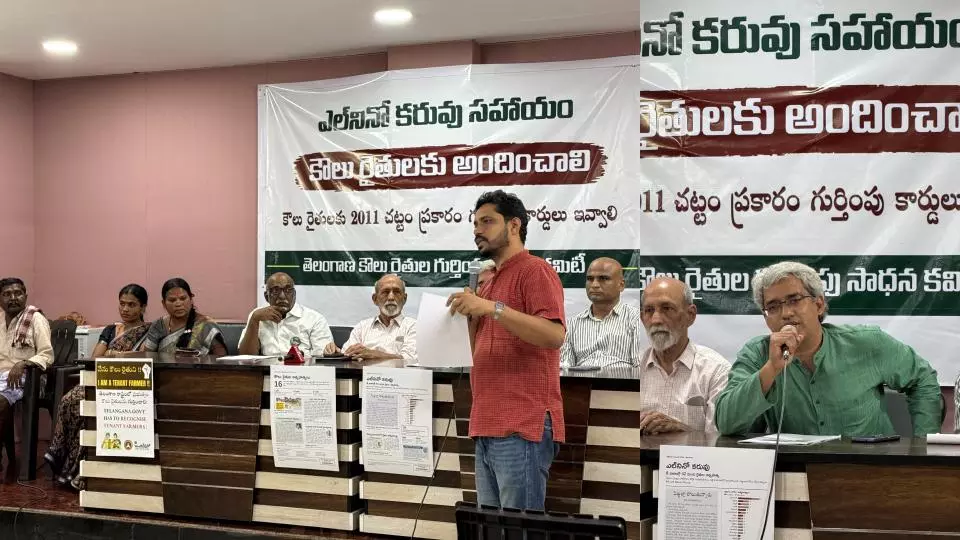
Hyderabad:Telangana’s ongoing drought relief exercise risks compensating absentee landowners for crop losses borne entirely by tenant farmers, according to a field study released on Thursday by the Telangana Tenant Farmers Recognition Struggle Committee.
The report, titled ‘Tenant Farmers Left Out of Telangana El Nino Crop Loss Survey,’ found that none of the 89 tenant cultivators interviewed across Adilabad and Vikarabad districts were recorded as cultivators in the state government’s crop loss enumeration. The exclusion is even starker in Sangareddy district, where official data cited in the study showed only eight tenant cultivators among 1,74,846 farmers registered for crop damage—despite an earlier statewide survey estimating that tenants make up 36 per cent of Telangana’s farming population.
The committee warned that this omission could deprive actual cultivators of the Rs 10,000 per acre disaster relief promised by the state government for severe crop damage. Historically, relief funds transferred to landowners have rarely reached the farmers working the land. An earlier survey of 1,816 tenant farmers across 22 districts revealed that out of 1,548 who suffered crop losses, only 11 had ever received compensation directly in their bank accounts.
For tenant farmers, who pay steep upfront rents and bear all input costs, crop failure leads to severe financial distress. “I cultivate four acres of leased land and one acre of my own. The rent is Rs 15,000 per acre, and we have to pay for two years in advance. Whether we get a harvest or not, we have to pay the rent,” said Kuruva Manjula, a tenant farmer from Tondapalli village in Vikarabad’s Parigi mandal.
Yield data collected from 113 farmers in the latest study underscored the scale of the crisis: 112 reported crop losses of at least 33 per cent, with the average yield decline standing at 66 per cent. Cotton yields across 376 acres plummeted from a normal average of 10 quintals per acre to just 3.6 quintals.
Despite the widespread damage, field assessments appear patchy. Farmers in six of the 10 surveyed villages said no government officials had visited their fields to evaluate losses. “My cotton crop dried up, and I managed to harvest just one quintal from two acres. No officials have come to my field to assess the crop damage,” said Ramulu, a tenant farmer from Dharur mandal in Vikarabad.
Researchers noted that while the state’s Rythu Bharosa application includes a provision to record tenant cultivators’ personal and banking details, officials on the ground are reluctant to use it. An agriculture extension officer informed the research team that a tenant’s details could not be entered into the system once a land plot had already been registered under the landowner’s name.
To ensure relief reaches actual cultivators, the committee has demanded strict enforcement of the 2011 Licensed Cultivators Act and the issuance of loan eligibility cards to tenant farmers.
Because landowners frequently refuse to sign formal lease agreements out of fear of losing land rights, the committee has proposed a self-declaration form in Telugu allowing tenants to register without a landowner’s signature or written lease agreement, with verification through field inspections and local evidence.