Dr Sajja urges India-specific heart studies; leads major trials and surgical innovations.
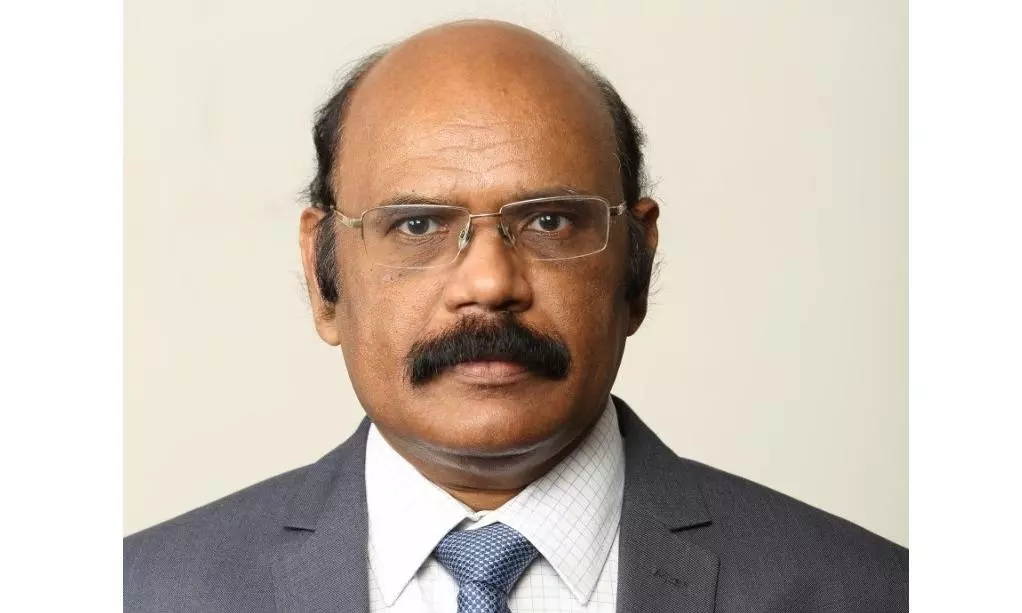
Hyderabad: Emphasising the need for an India-specific ‘heart health improvement analysis’, Dr Lokeswara Rao Sajja highlighted that nearly half of the patients undergoing bypass surgery in India are diabetic — a factor often overlooked in global cardiac guidelines. Dr Sajja, a pioneering cardiac surgeon, was recently inducted as an Associate Member of Sigma Xi, the Scientific Research Honor Society, a prestigious global body comprising leading scientists, including Nobel Laureates.
Renowned for leading India’s first multicentre randomised controlled trial (RCT) in cardiac surgery, Dr Sajja stressed the importance of building a national registry of diabetic patients to link diabetes with cardiovascular outcomes. “We cannot keep extrapolating data from the US and Europe and applying it here. Indian patients need tailored research and solutions,” he said.
An alumnus of Guntur Medical College, JIPMER and AIIMS New Delhi, Dr Sajja refined his surgical expertise under the legendary Prof. Denton A. Cooley at the Texas Heart Institute in the United States. He led the landmark PROMOTE Patency Study, India’s first multicentre RCT on coronary artery bypass graft (CABG) surgery. Traditionally, CABG used vein grafts from the leg, which degrade faster. Dr Sajja’s study demonstrated the long-term superiority of arterial grafts, such as the radial artery from the arm and the internal mammary arteries from the chest.
Building on its success, he is now heading the PREDICT Study, supported by the Indian Council of Medical Research (ICMR). This project aims to predict and enhance surgical outcomes, with a particular focus on diabetic patients undergoing CABG.
Dr Sajja also developed the Mammary Artery Support Platform (MASP) — a surgical innovation that improves the use of bilateral internal thoracic arteries (BITA) during bypass surgery. BITA is proven to deliver better long-term results, especially for diabetic patients, but is technically challenging. The MASP stabilises the arteries, making the procedure safer and more accessible.
In another breakthrough, Dr Sajja designed a mechanical heart valve that could eliminate the need for lifelong use of blood thinners. “Traditional mechanical valves require anticoagulants like warfarin, which carry risks of internal bleeding and dietary complications. This new valve is designed to function without those medications, significantly improving patients' quality of life,” he said.
Dr Sajja serves as president of the Indian Association of Cardiovascular-Thoracic Surgeons (IACTS) and founder-president of the Society of Coronary Surgeons. Through the Sajja Heart Foundation, recognised as a scientific and industrial research organisation (SIRO), he continues to spearhead innovation in cardiac care and research.

