Deficit Start to Monsoon a Pointer For Rest of Season, Recovery Tough

The IMD, however, said, that if viewed against the long period average (LPA) rain, which incorporates data for 50 years, the current status was that the country as a whole received minus-48 per cent rainfall.
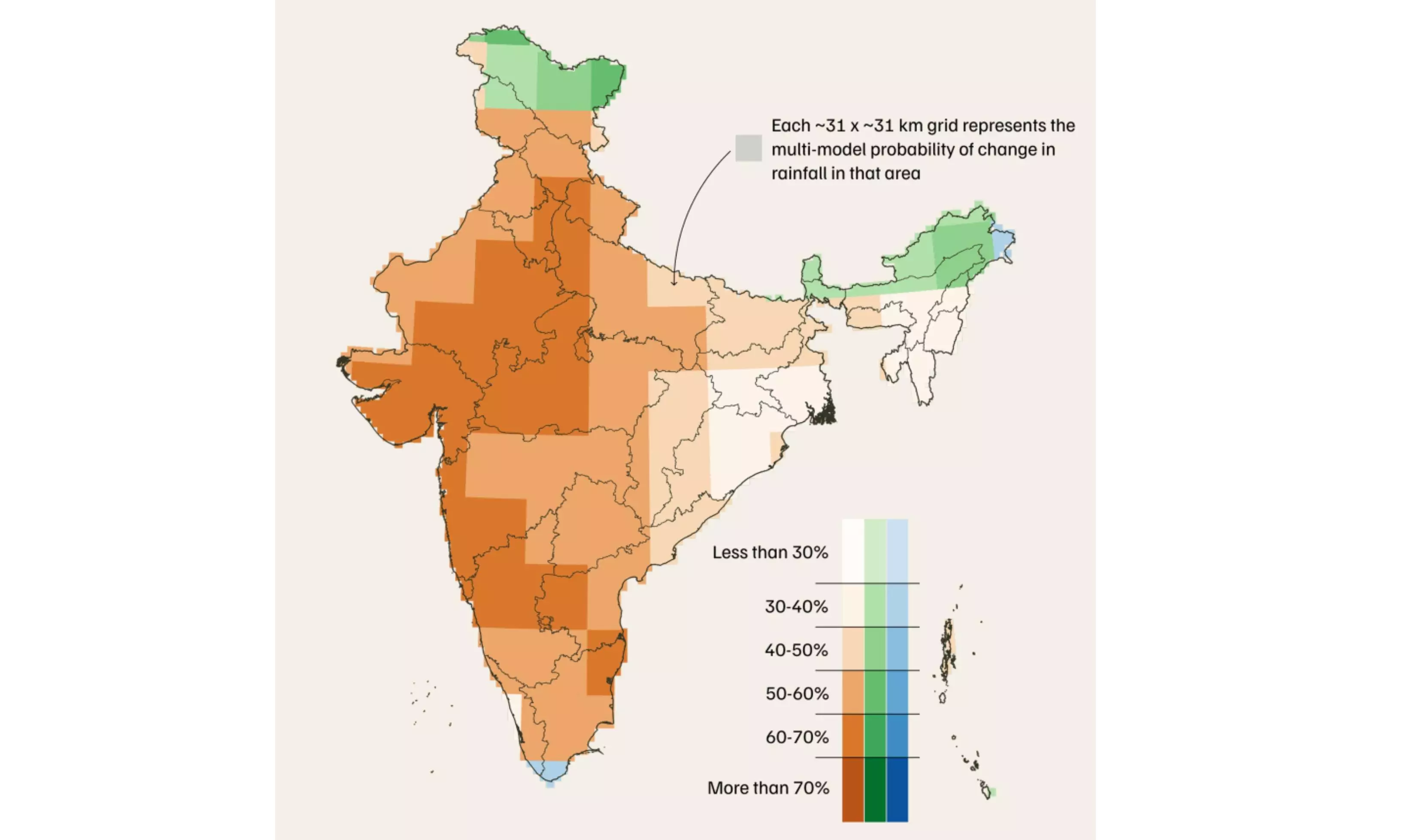
Hyderabad: Fears over this year’s southwest monsoon getting worse than what it already has been may be coming true, with the India Meteorological Department saying that the overall deficit from the time the clouds rolled into Kerala on June 4 till date stood at minus-8 per cent. The country has received an overall 46.2 mm of rain against 74.3 mm, the normal for this period.
The IMD, however, said, that if viewed against the long period average (LPA) rain, which incorporates data for 50 years, the current status was that the country as a whole received minus-48 per cent rainfall.
“As of now, the current monsoon signal (MISO signal) does not show a strong all-India wet phase that can quickly erase the deficit in the next one or two weeks,” said Dr Roxy Mathew Koll, scientist at the Centre for Climate Change Research of the Indian Institute of Tropical Meteorology, Pune, and lead author of recent Intergovernmental Panel on Climate Change (IPCC) reports.
Dr Koll also cautioned that a pan-India seasonal total could hide large regional differences, long dry spells and short bursts of heavy rain. “Even if the final number improves later, early-season deficits can already affect sowing, soil moisture, groundwater recharge and reservoir storage,” he said.
Dr Koll explained that the indications of a weak start and progress of the monsoon were present early on, and had been communicated well in advance. “However, the forecasts did not anticipate it to be this strong and extended at a sub-seasonal scale. The general expectations were that the monsoon active phase will revive later in the month, despite a weak start or overall weak monsoon forecast.”
On whether preparations to face a poor monsoon year could wait a further consolidated forecast from the IMD, Dr Koll said: “The all-India rainfall number is useful for climate monitoring, but it is not enough for agriculture, drinking water, reservoirs, floods, or groundwater,” adding that that from a risk perspective, any and all preparations should not wait.
With large variations in rainfall over different regions, and within the existing meteorological divisions of the country, the future of monsoon preparedness, he said, should be local, dynamic, and impact-based.
“India should move much more strongly toward localised monsoon forecasts and impact-based advisories. The IMD has been gradually scaling up their forecasts in this direction.” Dr Koll explained that localised forecasts at the district or agro-climatic zone level could help decide sowing windows, crop choices, irrigation scheduling, drinking-water supply, water release from reservoirs, flood preparedness, and heat-health actions.
