Cyclone Damage Pushes Up Vegetable Prices in Nalgonda

Except for tomatoes, the prices of all major vegetables have crossed ₹50 per kg, burning a hole in consumers’ pockets
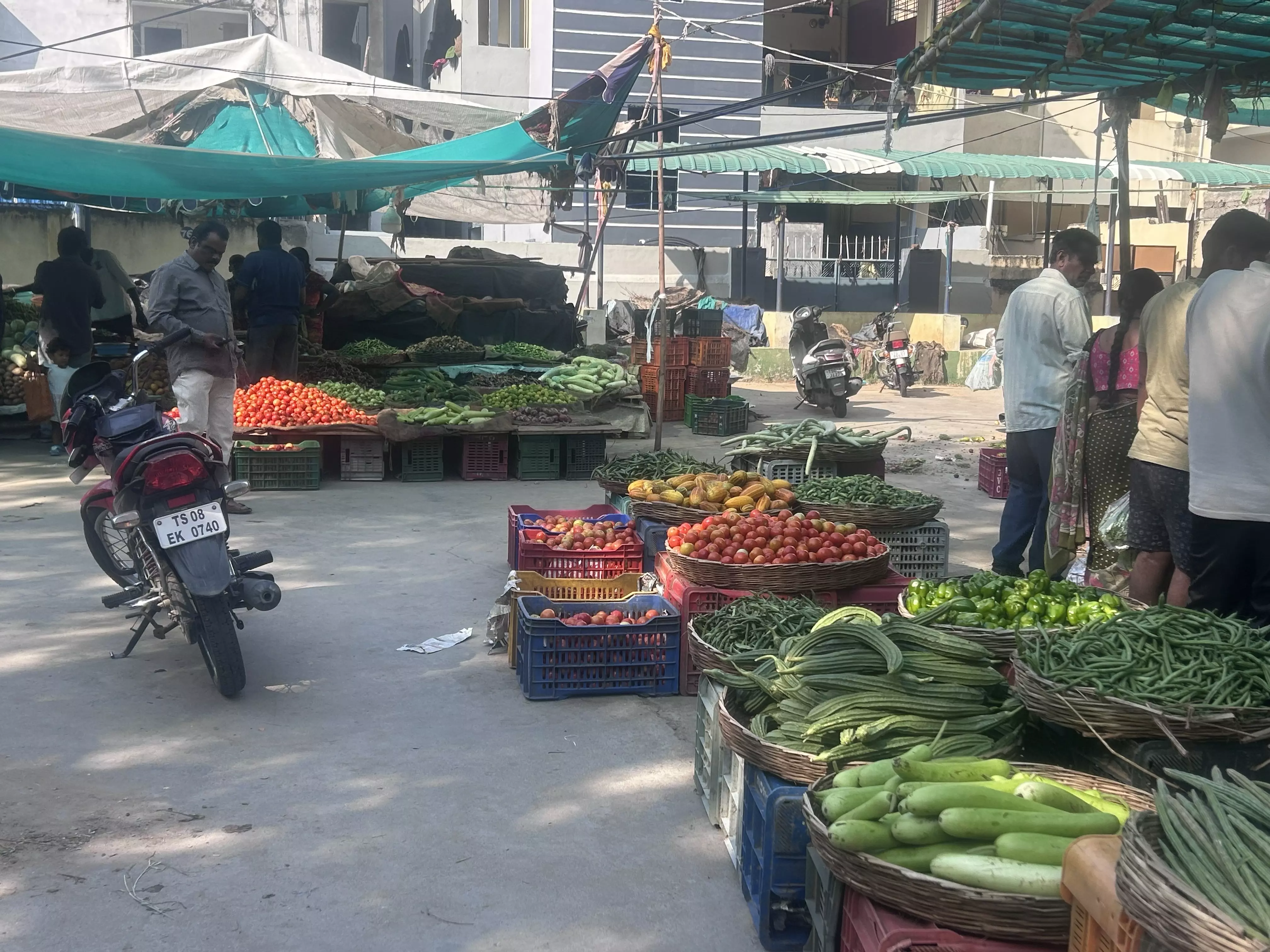
Nalgonda: The prices of vegetables have witnessed a steep rise in Nalgonda markets following damage to horticultural crops caused by Cyclone Montha.
Except for tomatoes, the prices of all major vegetables have crossed ₹50 per kg, burning a hole in consumers’ pockets. The impact of the cyclone on vegetable supply is expected to continue for another two days until fresh produce from the current harvest reaches the markets.
The price of a cucumber has risen to ₹80 per kg, while capsicum has gone up to ₹120 from ₹80. The price of cluster beans increased to ₹120 from ₹60, beans to ₹150 from ₹60, and lady’s finger to ₹80 from ₹60 per kg. Carrots are being sold at ₹100 per kg at the Rythu Bazaar, compared to the earlier ₹60, and ridge gourd prices have also touched ₹80 per kg.
Vegetable cultivation in Nalgonda is concentrated in mandals such as Kanagal, Madgulapally, Anumula, Peddavoora, Gurrampode, Nakrekal, Kattangur, and Thipparthy. Farmers in these areas grow cucumber, lady’s finger, cluster beans, bitter gourd, and ivy gourd, supplying produce to both local markets and Hyderabad. However, due to cyclone damage, the supply from these mandals has significantly dropped, creating a large gap between demand and availability and causing the sharp price hike.
The total daily requirement of vegetables for Nalgonda district’s population is around 526 to 600 metric tonnes, but the markets are currently receiving only about 60 per cent of the needed quantity.
Vegetable trader K. Praveen said the price hike has affected their profits as sales have fallen. “Usually, vegetable prices are much lower in November, but now they have increased by 60 to 100 per cent,” he said.
A local resident, K. Sandhya, said fresh leafy vegetables are unavailable in Nalgonda’s Rythu Bazaar after the cyclone. “Even the available leafy greens are damaged, yet prices have gone up by about 50 per cent,” she added.
