Communities Adopt Clay Idols, On-Site Immersion

Hyderabad communities in Manikonda, Neredmet, Nagole and Saroornagar embrace clay Ganesha idols and on-site immersion to cut pollution.
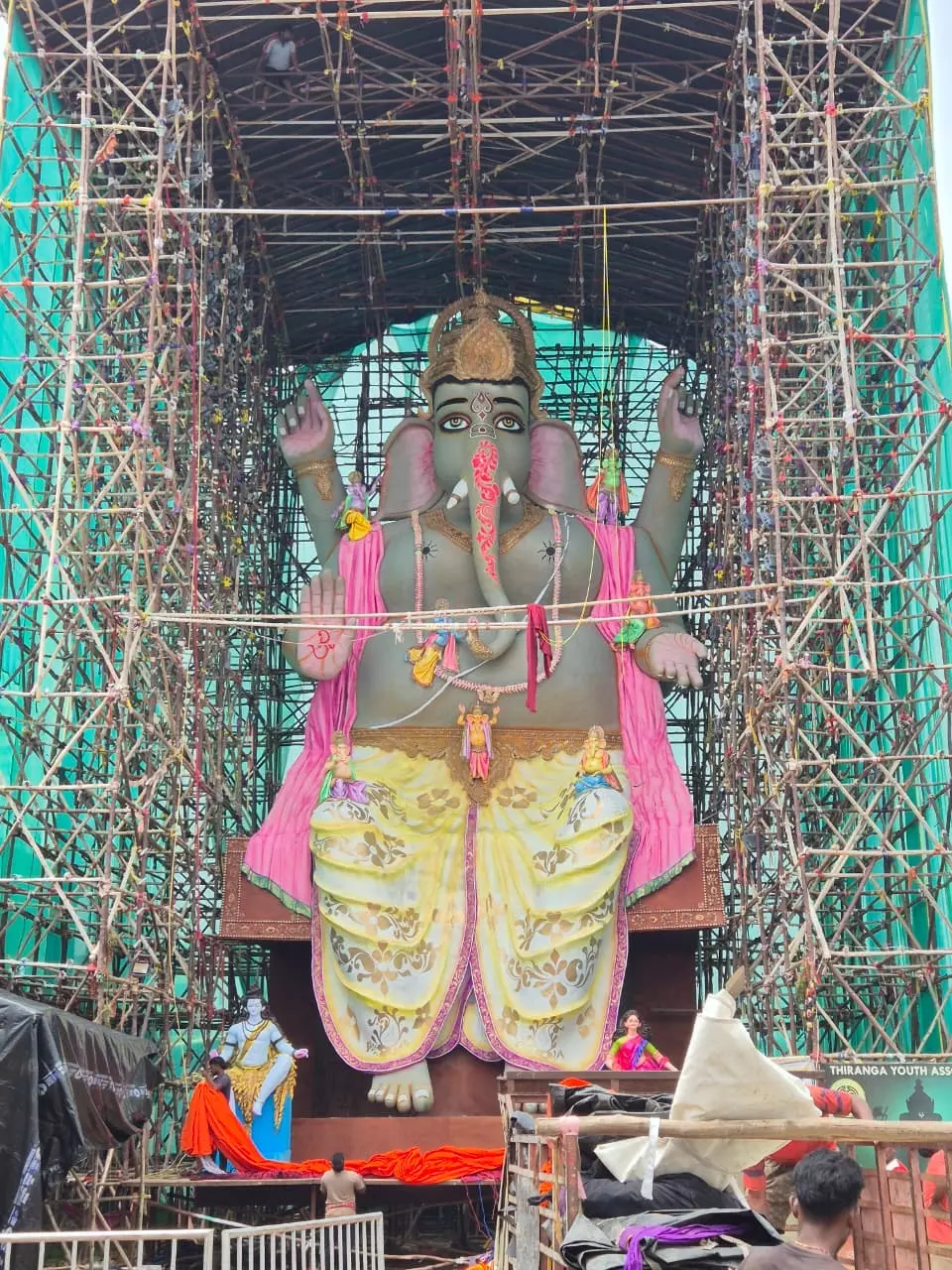
From apartments in Manikonda to neighbourhood associations in Neredmet and Nagole, some communities are opting for clay idols, natural colours and on site immersion to keep their festival celebrations away from the pollution associated with conventional idol immersion.
In an apartment community in Manikonda, residents have been installing a clay idol of Lord Ganesha for the past eight years. After the festival, the idol is immersed in a rainwater harvesting pit within the apartment premises, where it dissolves without being taken to a lake or other water body.
“We have been following this practice for the past eight years. We install a clay idol and immerse it within our premises,” said resident Srikanth Appani.
In Deen Dayal Nagar, Neredmet, the Ghana Friends Association has followed the clay idol tradition since 2003. For 23 years, the association has been installing clay idols and promoting the use of natural colours.
This year, the association has installed a 30-foot-tall idol in the Kurma Avatar form. The idol is being worshipped for 13 days before being immersed within the premises on September 26.
The organisers said their objective was to ensure that religious celebrations did not come at the cost of the environment. They have also been encouraging neighbouring residents and other associations to opt for clay idols and natural colours.
A similar initiative is being taken up in Nagole by the Tiranga Youth Association, which has installed a 72-foot-tall Shri Ashta Siddhi Mahaganpati idol using natural materials. Organisers said no POP or chemical based materials were used, with grass, wood, Ganga clay and watercolours going into its preparation.
One of the organisers, Kotakonda Nagesh, said the material and clay were sourced from Kolkata and coloured entirely with watercolours. The construction took around two and a half months, with 21 workers labouring day and night to bring it to life. The total cost of building the idol has been estimated at around ₹50 lakh, he said.
He also noted that around 20 artisans were brought from West Bengal specifically for this work. The puja rituals are performed according to traditional scriptures, and the celebrations are expected to draw around 10,000 devotees daily for darshan. The organisers said the idol will also be immersed at the same site.
In Saroornagar, the Sri Vigneshwara Youth Association has installed a 30-foot-tall clay idol this year, Panchamukha Rudra Mahaganapati, at Shankeshwar Bazaar crossroads.
“We have been using clay idols for the past four years, and the immersion is carried out within the same premises,” said association member Ch. Madhusudhan Reddy.
For these communities, the change is not in how Ganesha is worshipped but in what happens to the idol after the celebrations. By choosing clay, natural colours and on site immersion, they are seeking to preserve the spirit of the festival while reducing the environmental impact of idol immersion.