Combating Air Pollution in Hyderabad – Delhi Like GRAP Kept Under Wraps
Hyderabad had been witnessing regular recordings in excess of these numbers over the past few months as per TGPCB’s own air pollution monitoring data.
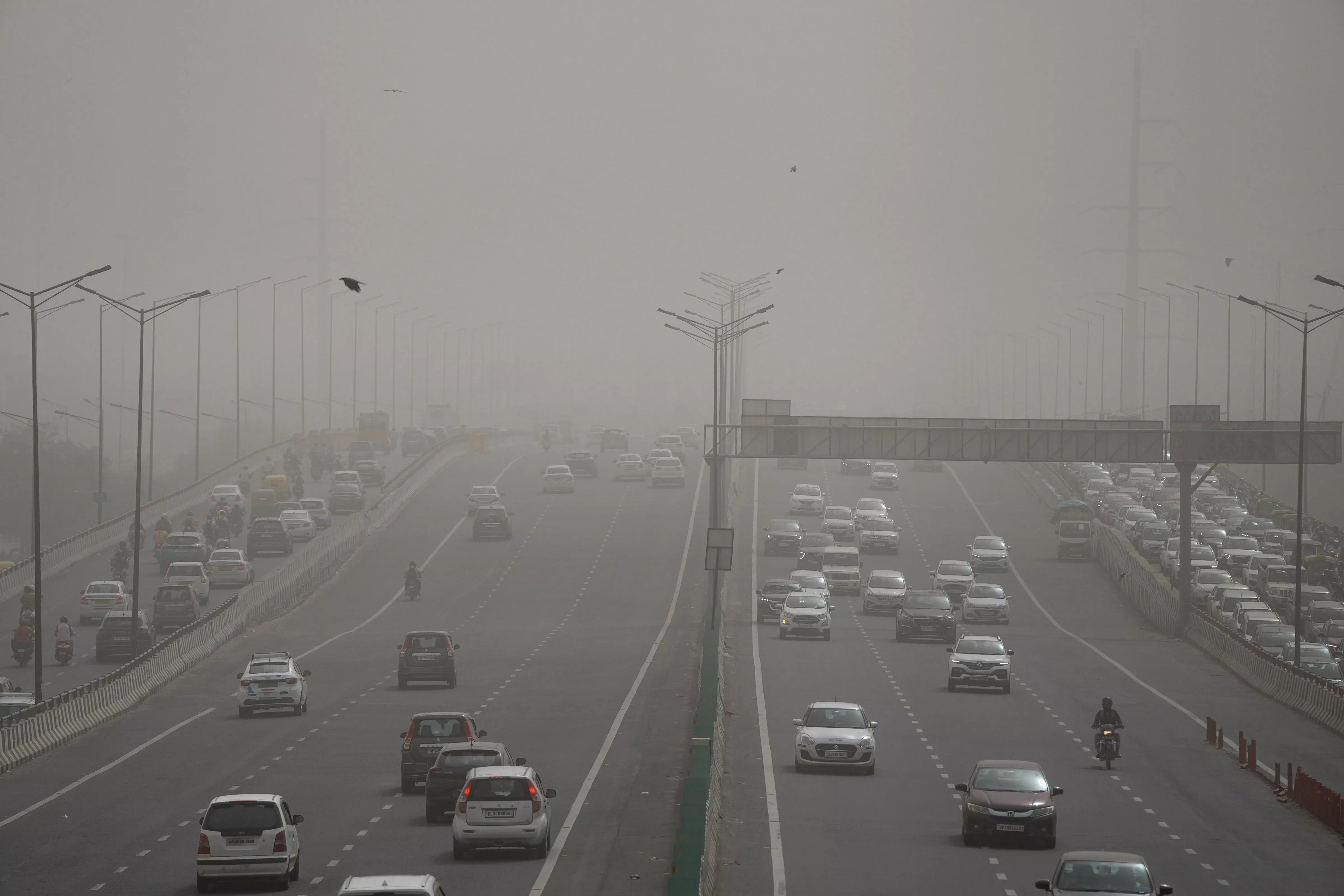
Hyderabad: The city has its own Graded Response Action Plan (GRAP) — just like the one New Delhi has been implementing for some years now when air quality plummets to dangerously unbreathable levels. The Hyderabad GRAP, however, is shrouded in the smog of inaction, resulting in zero awareness among citizens that they can question the authorities on steps they are taking to mitigate the impact of dirty air.
The GRAP is neither talked about in official circles, nor has it ever been discussed in the public domain by successive governments.
What makes matters stranger, is the fact that according to a Telangana Pollution Control Board (TGPCB) document, Hyderabad’s GRAP “is prepared in lines with the Central Pollution Control Board action plan for Delhi (sic)”. While Delhi got its GRAP in 2017, Hyderabad’s GRAP was prepared, and submitted to the Centre, two years later, in 2019, and approved by the Union ministry of environment, forest and climate change.
The Hyderabad action plan was created to take steps to mitigate air pollution when they hit ‘moderate’ (air quality index, AQI, levels from 101 to 200), and ‘poor’ (AQI 201 to 300), categories by enforcing GRAP provisions. According to the GRAP for Hyderabad, moderate to poor categories mean concentrations of particulate matter (PM)2.5 and PM10 between 61 and 120 micrograms per cubic metre of air.
Hyderabad had been witnessing regular recordings in excess of these numbers over the past few months as per TGPCB’s own air pollution monitoring data.
Despite several government departments, as well the GHMC and traffic police being made responsible for steps to mitigate air pollution when GRAP enforcement becomes mandatory, there has been no action.
AIMIM floor leader Akbaruddin Owaisi who raised Hyderabad’s worsening air quality in the Assembly recently, following which the government admitted that the situation was alarming, told Deccan Chronicle that “there is a need to revise the AQI standards to reflect the changing realities. There are more people, more vehicles, more construction. AQI standards that were set by CPCB in 2014, and they need to change, and reflect the current conditions.”
Though authorities have so far been claiming that Telangana follows the guidelines on AQI levels set for the country by the CPCB, which are not as stringent as those of the World Health Organisation. “There is nothing that stops any state government, including the Telangana government, from forming its own AQI standards. There is absolutely nothing in India’s laws that stop a state from doing so,” an expert in pollution issues told Deccan Chronicle.
For clean air
Hyderabad’s GRAP, and how it should be implemented.
GRAP comes into force when the Particulate matter (PM)2.5 and PM10 levels fall to between 61 and 120 micrograms per cubic metre of air
GHMC must enforce stoppage of garbage burning, impose heavy fines on violators.
TGPCB must close or enforce pollution control regulations in brick kilns and industries.
GHMC must take up mechanised sweeping of roads with heavy traffic, sprinkle water on unpaved roads/streets every two days.
Traffic police must identify heavy traffic roads.
Chief engineers of public works departments must identify unpaved roads/streets and inform civic bodies.
GHMC, traffic police must impose stringent dust control norms enforcement in construction/non-compliant sites.
Transport department, traffic police must ensure no tolerance of visibly polluting vehicles, impound/impose heavy fines on such vehicles, strict enforcement of pollution under control (PUC) norms
Traffic police must ensure smooth traffic in identified vulnerable areas.
