Cobras Top List of Rescued Snakes in Telangana

Hisstorical 2025 for snake rescues
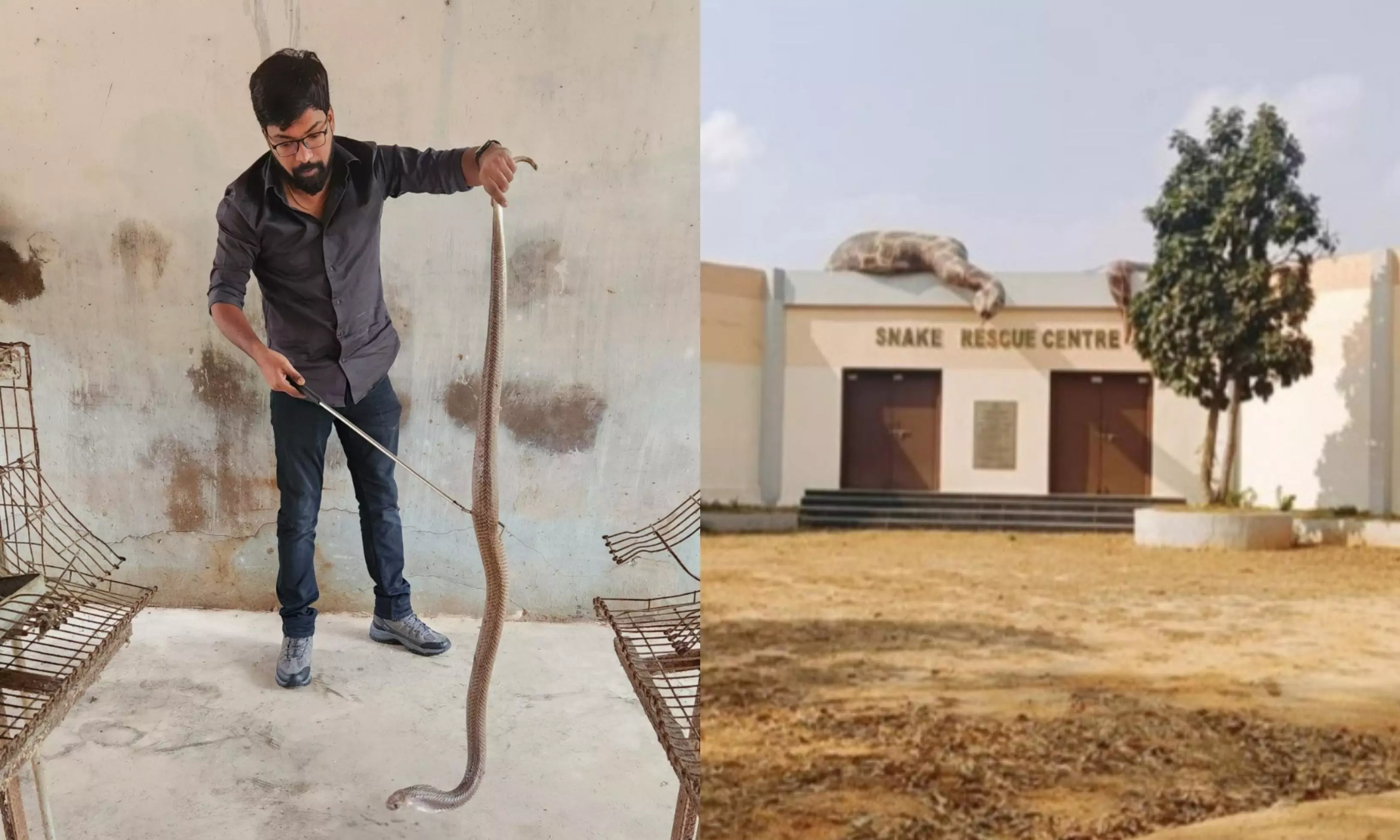
Hyderabad: Cobras. Vipers. Kraits. These are just the venomous snakes. Rat snakes, and pythons, and a host of other non-venomous snakes. All these are quite at home within the increasingly bustling Hyderabad, if the number of snakes rescued last year in the city is any indication. As human-wildlife conflict situations go, snakes clearly top the charts.
Last year, according to the Friends of Snakes Society (FOSs), 15,265 snakes were rescued in the state, 98 per cent, or 14,960, from the Hyderabad landscape, which also includes areas adjacent to the outer side of the Outer Ring Road. Ten years ago in 2016, the number was 3,097.
“The fact that in the last decade around 87,000 snakes were rescued shows that snakes have become an essential component of urban wildlife management. This aspect is growing in scale, in complexity, and resource demands,” Avinash Viswanathan, FOSS general secretary, said.
The increasing rescues each year reflect a combination of factors. “As the city expands, contact between snakes and people has intensified. At the same time, greater trust in professional rescue services has led to higher reporting rates,” Vishwanathan said.
The FOSS, a fully volunteer force, has around 150 members of whom around 70 specialise in rescues. Once a snake is caught, it is taken to the rescue centre in Bowrampet built by the forest department and kept there. After the rescued snakes reach a certain number, they are taken and released in non-conflict forest areas.
One of the significant findings of the data that FOSS has gathered over the years is that the number of spectacled cobras is increasing in the overall rescues. The cobras thrive in human disturbed landscape. Most other species try and move away from disturbed areas but cobras are well-suited for such areas, and are generalist feeders and sometimes even feed on other snakes, he said.
While most female snakes typically lay between 10 and 12 eggs at a time once a year, the champion mothers are the vipers that give birth to 30 to 40 live young ones.
Within the ORR limits the venomous snakes that are rescued are the cobra, viper, and the common krait. Last year, 7,525 cobras were rescued, followed by 897 Russell’s vipers, and 67 common kraits.
“This has important implications for public safety and underscores the necessity of trained expert intervention. The high frequency of venomous species in urban and peri-urban settings reflects their ecological adaptability and association with human-modified environments that provide prey, shelter, and water. While non-venomous rescues are fewer, their displacement into human spaces signals increasing habitat compression and loss of ecological buffers,” Vishwanathan said.
The most ‘rescued’ snakes (total 23 species)
Spectacled cobra: 7,275
Rat snake: 3,587
Checkered keelback: 1,195
Russell’s viper: 897
Bronzeback tree snake: 557
Banded racer: 353
Common sand boa: 313
Common trinket snake: 264
Indian rock python: 142
Common krait: 67
Banded krait: 65
Other rescued snakes: Russell’s wolf snake, long-nosed vine snake, red sand boa, yellow-collared wolf snake, buff-striped keelback, streaked kukri, green keelback, barred wolf snake, Nagarjunasagar racer, Brahminy worm snake, beaked worm snake, common cat snake.
Climate governs snake activity
Jan.-March: Cooler temperatures limit snake movement, most rescues are of snakes seeking shelter.
April-May: Pre-monsoon months see increasing foraging, and more rescues
June-Sept.: Peak rescue period driven by flooding of natural shelters, habitat displacement, emergence of hatchlings
Oct.-Nov.: More rescues in this post monsoon dispersal of snakes that continues into December.
*All data from Friends of Snakes Society
Year-wise snake rescues
Year – Number
2016 – 3097
2017 – 4504
2018 – 5644
2019 – 6,689
2020 – 8,895
2021 – 10,525
2022 – 9,101
2023 – 10,282
2024 – 13,028
2025 – 15,265
