CM Revanth Orders 100 Telangana Public Schools With Modern Amenities

Model schools, AI lessons, and breakfast scheme planned statewide
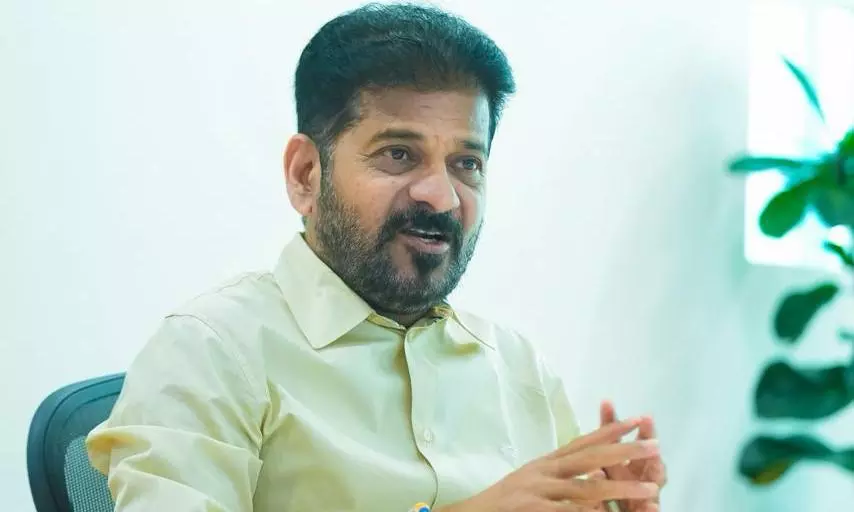
Hyderabad: Chief Minister A. Revanth Reddy has ordered the setting up of 100 Telangana Public Schools across all assembly constituencies (outside Hyderabad city) from the academic year 2026-27.
As per the government’s plan, one model school would be developed in each constituency on a pilot basis. The schools will be designed on the lines of the Arutla Telangana Public School in Manchal mandal of Rangareddy district. These would be equipped with modern classrooms, playgrounds, teaching staff and transportation facilities.
Reviewing the education department’s performance on Thursday at the Integrated Command Control Centre, the chief minister said government schools must emerge as centres of quality education.
Revant Reddy said the government would allocate adequate funds for this purpose. He instructed engineers to construct government schools in the Core Urban Region Economy (CURE) areas, on par with corporate institutions and using modern technology.
Officials must complete the work on 12 integrated new schools within a year. These institutions, he said, should offer facilities comparable to reputed schools such as Bharatiya Vidya Bhavan and Jubilee Hills Public School in Hyderabad.
He also stressed that there should be no compromise in upgrading 17 schools and providing additional infrastructure in 164 schools in CURE region, under the programme.
As part of the government’s proposed 99-day initiative, one week would be dedicated exclusively to educational activities, during which public representatives and officials would visit schools and colleges to assess infrastructure gaps and take corrective action.
Highlighting the growing influence of Artificial Intelligence (AI), the Chief Minister directed the officials to introduce AI education from the school level and organise short-term training programmes for teachers and lecturers to help them adapt to emerging technologies.
He emphasised that students must be prepared to seize global opportunities arising from technological advancements.
Revant Reddy also ordered implementation of a breakfast scheme for students from primary to Class XII in all government schools from the 2026–27 academic year. Along with breakfast, milk would be supplied to every student. This, he said, should be procured from Vijaya Dairy. Technology will be used to monitor nutritional and calorie intake.
Students would also receive comprehensive school kits including bags, stationery, geometry boxes, dictionaries, shoes and socks, with necessary budgetary provisions to be made, the Chief Minister said.
Revanth Reddy called for the immediate introduction of AI-based courses in polytechnics and Advanced Training Centres (ATCs). Outdated courses would be phased out to improve the employment prospects for graduates.
The Chief Minister reiterated the government’s commitment to strengthening universities. He recalled that Rs 1,000 crore had been allocated to Osmania University. The Telangana Council of Higher Education has been asked to submit a report detailing the financial requirements of other universities.
On regulation of private school fees, the Chief Minister instructed district-level committees led by collectors and DEOs to examine the fee structure in all schools and submit recommendations to the government.
A state-level final committee headed by a retired judge or retired chief secretary would take decisions on the fee structure. After consultations with experts, a draft framework would be placed in the public domain for feedback from parents, intellectuals and civil society.
Earlier, members of the state-level education commission, led by its chairman Akunuri Murali, submitted the Telangana Education Policy document to the Chief Minister. The report, prepared after studying best practices in the United States, Vietnam and Malaysia and several Indian states, was reviewed in detail.
The Chief Minister entrusted a committee headed by government adviser K. Keshava Rao with examining the provisions requiring legal backing and identifying recommendations that could be implemented from the next academic year.
Senior officials, education experts and members of the commission attended the review meeting.
