CM Revanth Leaves for Delhi Ahead of Delimitation Bill in Parliament
During the visit, the Chief Minister will attend the swearing-in of Vem Narender Reddy, recently elected to the Rajya Sabha from Telangana.
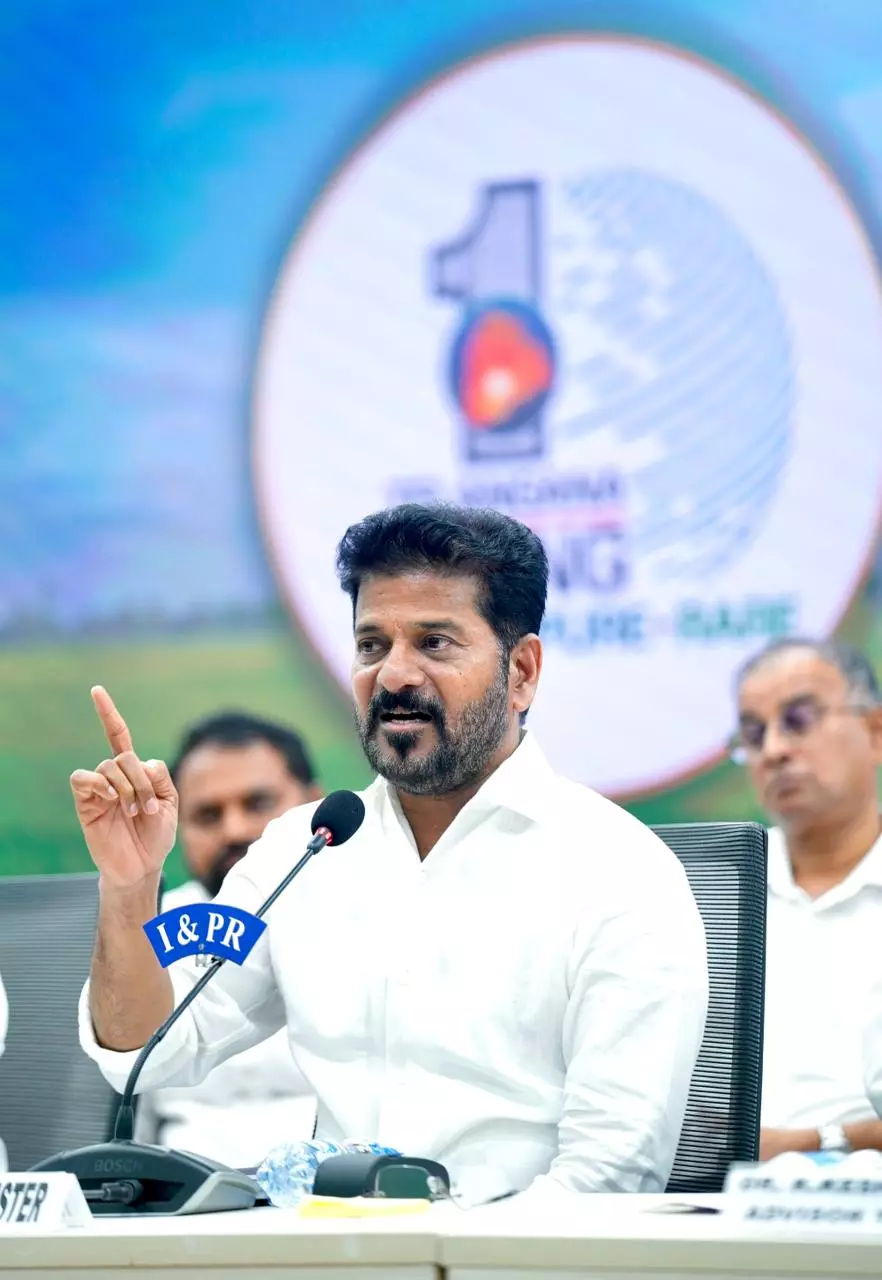
Hyderabad: Chief Minister A. Revanth Reddy left for New Delhi on Wednesday ahead of the special three-day sitting of Parliament beginning Thursday, with plans to remain in the national capital for two days.
According to party sources, he is expected to convey his gratitude to the All India Congress Committee for its decision to oppose constituency delimitation based on the 2011 Census, as the Centre prepares to introduce the delimitation Bill, 2026.
During the visit, the Chief Minister will attend the swearing-in of Vem Narender Reddy, recently elected to the Rajya Sabha from Telangana. He is also likely to meet senior Congress leaders, including Rahul Gandhi and Mallikarjun Kharge, urging them to raise concerns over the impact of the proposed delimitation on southern and smaller states.
The Chief Minister has opposed the proposed 50 per cent increase in Lok Sabha seats based solely on population. He has advocated a “hybrid model” linking population with Gross State Domestic Product (GSDP), stating that a population-based approach would disadvantage southern states, including Telangana. He has written to Narendra Modi outlining these concerns.
He has also reached out to Chief Ministers of Andhra Pradesh, Karnataka, Tamil Nadu, Kerala and Puducherry, calling for a coordinated response to the proposed model. He said the expansion of Lok Sabha seats to 850 under a pro rata system could widen disparities in representation among states.
Citing projections, he noted that while Tamil Nadu and Puducherry together may see their seats increase from 40 to around 60, Uttar Pradesh could rise from 80 to nearly 120. Telangana’s seats may increase from 17 to 26, Andhra Pradesh’s from 25 to 38, and Karnataka’s from 28 to 42.
The Chief Minister said southern states, despite better performance in population control, public health, education and economic growth, could be adversely affected under the proposed model. He also flagged disparities in Central fund allocations, stating that the changes could deepen political and fiscal imbalances.
He said the proposed hybrid model would balance representation with economic contribution and called for coordinated efforts by southern states to raise the issue in Parliament.
