Revanth Urges Farmers To Avoid Rabi Crops To Save Water, Power
Rainfall deficit and low reservoir levels prompt conservation drive; CM seeks Central assistance.
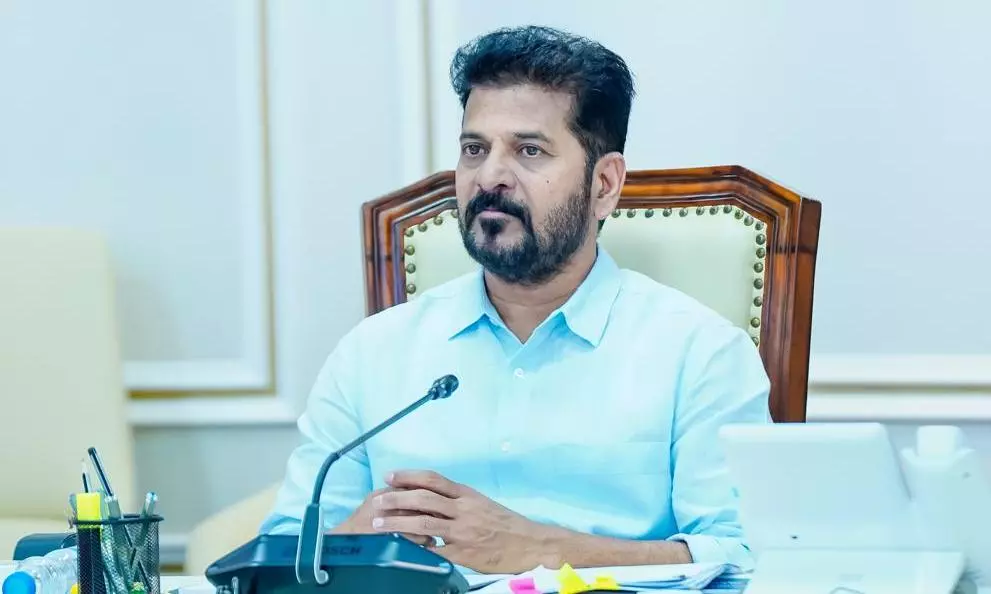
Hyderabad: Chief Minister A. Revanth Reddy on Thursday appealed to farmers to avoid rabi cultivation, particularly paddy, in view of the impending water and power crisis triggered by deficient rainfall under the impact of the El Niño weather system. Urging people to conserve water and electricity for eight to 10 months, he said he would lead an all-party delegation to Delhi to meet Prime Minister Narendra Modi and Home Minister Amit Shah in the first week of November to seek Central assistance to tackle the drought situation in the state.
Addressing a press conference here after an informal Cabinet meeting, Revanth Reddy compared the impending crisis to the Covid-19 pandemic and warned of severe heat, drinking water shortages and agricultural distress. The government had prepared an action plan, he said and called for collective efforts to tackle the natural disaster.
Telangana had recorded a 23 per cent rainfall deficit, with water availability in the Krishna basin 72 per cent lower and in the Godavari basin 40 per cent lower. Reservoirs held just 209 tmc ft of water against 460 tmc ft in October last year. With drinking water to be supplied to state, the government had to conserve existing water, he said.
“Water cannot be purchased like other commodities. We must save every drop,” Revanth Reddy said, warning that paddy nurseries could dry up if farmers sowed without adequate water. He urged them to postpone rabi cultivation and avoid water-intensive crops.
Reports indicated the possibility of kharif crop losses across 10 lakh acres. Officials had been directed to protect standing crops, with the government purchasing electricity from the market at prevailing prices to save crops nearing harvest, expected in about 20 days. Non-paddy crops were cultivated on 13 lakh acres during the kharif season, against paddy on 56 lakh acres, he said.
Power demand had surged to 20,003 MW on Thursday against the normal October requirement of 15,000 MW. Around 30 lakh agricultural pump sets were operating amid unusually high temperatures. Electricity demand had increased by 14,000 MW in 13 years, including 6,000 to 7,000 MW in the last two years. Several neighbouring states were also facing shortages, he said.
The government was expanding employment under the VB-G RAM G scheme to support rural households. Participation had risen from 25,000 people during the corresponding period last year to 2.5 lakh now. Officials were asked to prioritise repairs to tanks and ponds to improve water storage.
Revanth Reddy said farmers who suffered kharif losses and those forced to forgo cultivation in the next rabi season should receive generous Central assistance. Officials were preparing reports to seek support under CSS schemes funded in a 60:40 ratio by the Centre and the state government. The government was also planning measures to provide drinking water and fodder for livestock, address weather-related health risks and assist poor families.
He urged the Centre to facilitate power transfers from surplus states to deficit states at affordable prices. Recalling the collective response to Covid-19, he called on political parties to set aside differences and cooperate with the government.
An all-party meeting would be held after Dasara. The government would appoint a media nodal officer, establish a toll-free number and enlist cultural troupes, film actors and sportspersons to spread awareness about water and power conservation.
Revanth Reddy urged people to avoid wasting water on washing vehicles and other non-essential activities and use electricity judiciously. Expressing confidence that Telangana could overcome the crisis through collective effort, he sought the cooperation of farmers, political parties, employee unions, the media and the Centre.
