Clearances, Consensus Slow Down AP’s River Link Dream

The PFR was then forwarded to KRMB, GRMB and co-basin states on June 11, for their comments.
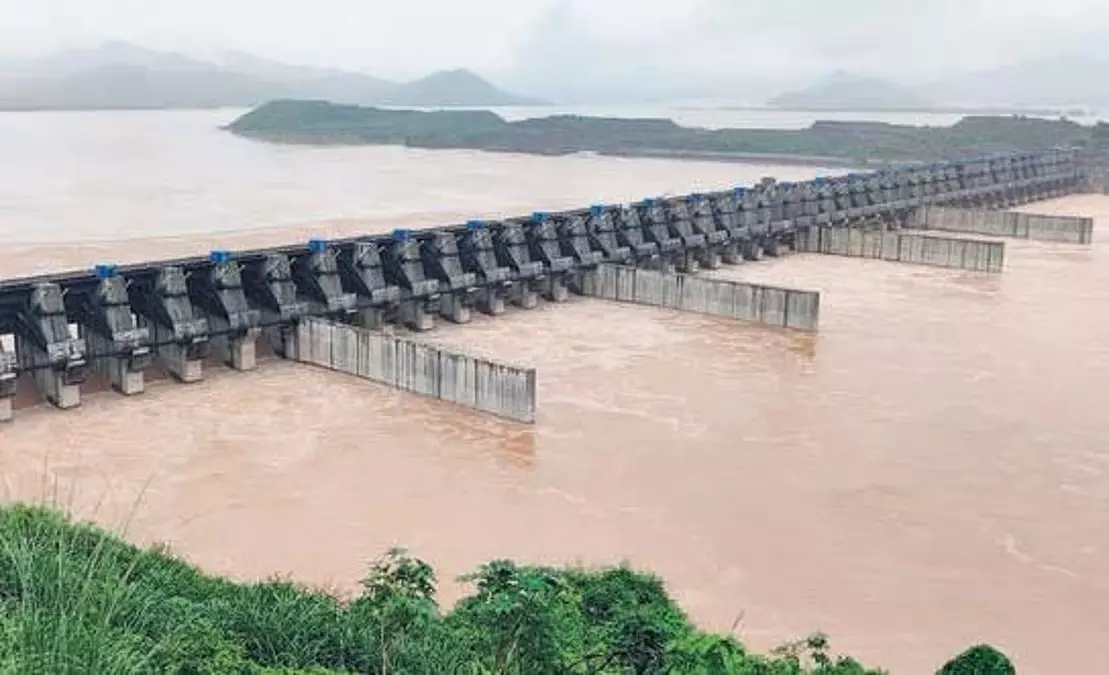
Hyderabad:An ambitious bid to link the Godavari and Krishna basins through the Polavaram–Banakacherla Link Project has hit a wall of No objection certificates, leaving Andhra Pradesh’s plans stalled until it clears a maze of central approvals and wins over wary co-basin states.
On May 22, 2025, AP government sent the Preliminary Feasibility Report (PRF) of Polavaram-Banakacherla Link Project to the Central Water Commission. The PFR was then forwarded to KRMB, GRMB and co-basin states on June 11, for their comments.
In June, following directions from the Ministry of Jal Shakti, Andhra Pradesh submitted the Technical Project Report (TPR) to the Central Water Commission (CWC) and began preparing a Detailed Project Report (DPR) as part of ongoing procedural requirements. A meeting on 2 June 2025, chaired by the Additional Secretary of the Ministry of Finance with Andhra Pradesh officials, confirmed that the state’s Preliminary Feasibility Report (PFR) is under active review and that it has been instructed to submit the DPR by the end of June.
On 5 June 2025, Andhra Pradesh sent a proposal to the Ministry of Environment, Forest and Climate Change (MoEFCC) seeking Terms of Reference (ToR) to carry out an Environmental Impact Assessment (EIA) for the project. However, when the Expert Appraisal Committee (EAC) examined the proposal on 17 June, it returned the request without approving the ToR, advising the state to first secure a No Objection Certificate (NoC) from the CWC. This recommendation was made to address concerns over inter-state water sharing raised by Telangana.
The Polavaram Project Authority (PPA) and the Godavari River Management Board (GRMB) have also voiced environmental and legal objections, citing potential ecological damage and unresolved regulatory issues. The Centre has clarified that no construction has commenced, with the CWC still undertaking a detailed assessment in consultation with co-basin states.
The project also requires clearance under the Wildlife Protection Act, 1972, as the tunnel passes through a notified wildlife sanctuary. This necessitates review by the Standing Committee of the National Board for Wildlife (NBWL). The total land requirement stands at 59,427 acres, including 17,738 acres of forest land spread across several reserved forests—Unguturu No. 2, Adavinekkalam, Koppukonda, Kakirala, and the Nagarjuna Sagar–Srisailam Tiger Reserve. Stage-I Forest Clearance remains pending, and compliance with the Forest Rights Act, 2006, has yet to be confirmed.
A major point of contention is the 19.5-kilometre tunnel segment planned through the Nagarjuna Sagar–Srisailam Tiger Reserve, which triggers mandatory central-level environmental appraisal under the Environmental Impact Assessment Notification of 2006. To limit ecological disturbance, the state intends to deploy Tunnel Boring Machine (TBM) technology and position the tunnel’s entry and exit points outside the reserve’s boundary. Water is proposed to be diverted into the Siddapuram Tank immediately after exiting the reserve, a measure aimed at reducing the tunnel length and minimising habitat disruption.
In terms of waste management, the project is expected to generate approximately 2,567 tonnes of solid waste annually from labour camps, along with an estimated 4.75 million cubic metres of muck from tunnel excavation and 375 million cubic metres from canal excavation. Detailed disposal and management plans will be outlined in the forthcoming Environmental Impact Assessment and Environmental Management Plan.
As of August 2025, the Andhra Pradesh government is still awaiting the CWC’s No Objection Certificate and further environmental approvals before it can begin any construction. Both the MoEFCC and the CWC remain in consultation with co-basin states, including Telangana, to address all outstanding regulatory and ecological concerns.
