Civic Bodies To Check Water Wastage By ‘Mineral’ Water Plants

Adilabad civic authorities plan to curb groundwater wastage by private water plants, mandate recharge pits and strengthen measures to address drinking water shortages.
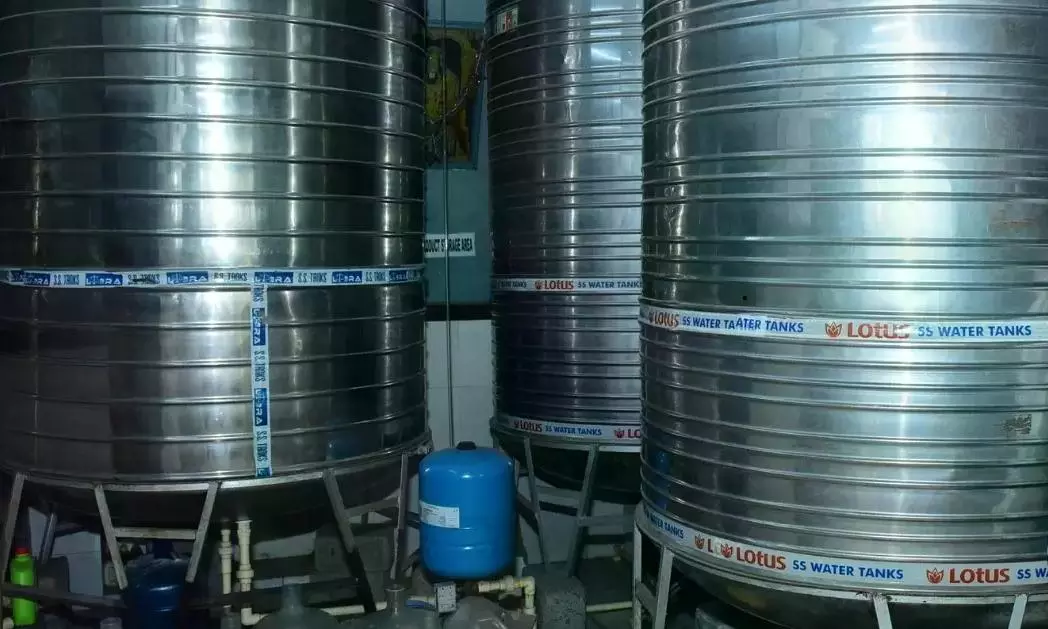
The state government is focusing its attention on controlling water wastage, especially at private water plants, to improve the groundwater table and mitigate drinking water problems in the coming months.
Municipal authorities have asked the district officials to ensure new 'mineral' water plants (water treatment plants) are set up only outside the towns where groundwater is sufficient. They were also advised to shift the water plants from the main city to outside the town to control the wastage of drinking water and preserve groundwater tables in the wake of a depletion in groundwater tables.
Private water plants are using huge amounts of groundwater in the urban areas, and each water plant sells 20,000 - 30,000 liters of mineral water per day. For this, they have to draw 1.20 lakh litres of groundwater to convert it into mineral water. Only 25 per cent will be converted into bottled drinking water while the remaining 70 per cent goes waste.
They use 5HP motors to draw the groundwater in the colonies. One water plant draws ground water useful for 5,000 families in the colony. It is estimated that there are 150 water plants in the Adilabad town alone.
Municipal officials are readying to issue notices to owners of water plants, asking them to recharge the groundwater with 70 per cent water that is going waste. The call is to release this water into the ground by setting up soaking pits at water plants and houses, like solar panels.
Adilabad municipal chairman Bandari Anusha said they would purchase 6 new tankers in addition to the existing 6 tanks to supply drinking water to the colonies and also construct a check dam with `4 crore at Landasangi river on the outskirts of Adilabad town to mitigate the drinking water problem. Adilabad municipality has a population of 2.20 lakh.
She appealed to the people not to waste drinking water, by fixing the tap, instead of dropping the water into drainage and at trees.
Groundwater is available at a depth of 200 feet in the cities, whereas this is available at 50 feet around the water tanks Mavala, Khanapur tank and Chanda rivulets and near the check dams around the Adilabad town.
The impact would be high on the groundwater table and. If the water plant owners draw ground water heavily, this would affect hundreds of households in the towns.
Municipal authorities are taking alternative measures to mitigate drinking water problems that it anticipates in the near future.
A few villages are already experiencing drinking water problems -- in Gadiguda, Narnoor, Indravelli, Kerameri and Wankidi mandals in the erstwhile Adilabad district.
Mineral water plants have mushroomed in Adilabad district. One can find them in every nook and corner of Adilabad town and in all the mandal headquarters and gram panchayats.
Adilabad municipal authorities held a meeting with the owners of the mineral water plants to control the wastage of water and asked them to dig up soaking pits. The wastewater coming out of the plants, they were advised, should be released into soaking pits in order to improve the groundwater table.
District collector Rajarshi Shah issued clear instructions to those digging borewells to use groundwater following the steep fall in the groundwater table and asked the owners of the water plants to set up recharging structures or community soak pits.
He further asked them to renew their trade licences and said those who do not have municipal permissions should obtain it to run water plants.
The district authorities are now focusing on effective implementation of the Jal Sachay Jan Bhagidari and Jalasiri programmes to control the wastage of drinking water and improve the groundwater table.
Officials said they would implement this effectively for water conservation and groundwater recharge to fight against the prevailing drought-like conditions, falling groundwater levels, and the impacts of El Nino.