Centre to Attract Private Investment for Rs 4 Lakh Crore

Kishan Reddy said the country has emerged as the second-largest coal producer and consumer in the world.
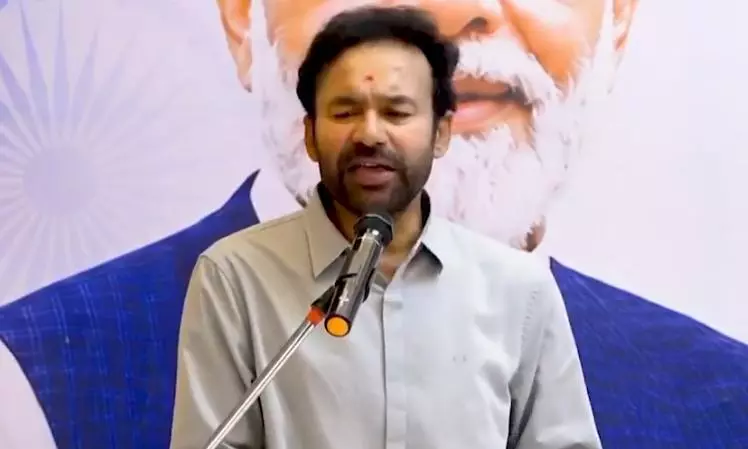
Hyderabad: Amid the West Asia crisis, rising global tensions and the resulting surge in petroleum import costs that have added pressure on foreign reserves, the Centre has decided to maximise the use of coal reserves through coal gasification with private sector participation. The move is aimed at attracting Rs 4 lakh crore in investment in the sector and save Rs 3 lakh crore in foreign exchange by building a stronger supply chain, Union minister for coal and mines G. Kishan Reddy said.
Briefing media in Hyderabad on the achievements of his ministry and his two years in office, Kishan Reddy said coal gasification has been given top priority as part of reforms. The ministry is focusing on converting solid coal into syngas, a cleaner and versatile gaseous fuel, with incentives worth Rs 46,000 crore.
Though India has substantial deep-seated coal reserves, the government is prioritising surface coal gasification in the first phase, instead of underground gasification, he said. The programme is intended to reduce import dependence in fuels and chemicals such as LNG, urea, ammonia, methanol, fertilisers, other petrochemicals and related downstream products.
Stating that the national target is to gasify 100 million tonnes of coal by 2030, Kishan Reddy said the third roadshow, after Hyderabad, would be held in Mumbai next week. He added that the government intends to generate one lakh jobs in this sector.
Pointing out that 72 per cent of power generation in the country is based on coal produced from 426 captive and commercial coal mines, he said India produced one billion tonnes of coal in both 2023-24 and 2024-25.
Kishan Reddy said the country has emerged as the second-largest coal producer and consumer in the world. Ahead of the monsoon season, he said India has 189 million tonnes of coal reserves, enough to meet demand for the next 85 days and ensure uninterrupted power generation.
Claiming that the government has set a target to minimise coal imports, he said imports had fallen by four per cent in the last financial year, saving Rs 60,000 crore in foreign exchange.
Giving details of the coal sector’s role in India’s circular economy, Kishan Reddy said it provides five lakh direct and 25 lakh indirect jobs. He also said coal freight, which is a major source of income for the Railways, accounts for nearly 51 per cent of railway revenue.
On another initiative, Kishan Reddy said 147 abandoned coal mines, closed after extraction since Independence, are being scientifically reclaimed by 2028 and developed into eco-parks, water bodies and tourism centres. Mining closure committees have been constituted in 600 districts, and the ministry is aiming for a Guinness record in this area, he said.
He said that if the 20th century belonged to the oil economy, critical minerals will drive the 21st century. Citing their importance in semiconductors, renewable energy, defence and other key sectors, he said the Centre has exempted import duty on 24 critical minerals and formed Khanij Bidesh India Limited (KABIL), which has acquired five critical mineral blocks in Argentina and is pursuing more in Australia and other countries. KABIL is a joint venture company among the three government enterprises: National Aluminium Company Ltd, Hindustan Copper Limited and Mineral Exploration & Consultancy Limited.
He added that the government has also announced Rs 1,500 crore in incentives to extract critical minerals from electronic waste and launched a special mission for rare earth elements in Odisha, Andhra Pradesh, Tamil Nadu and Kerala.
Responding to a question on Singareni, Kishan Reddy said a team from Coal India was deputed to study the high production costs of the company and suggest measures to reduce expenses. He said efforts have also been made to increase insurance cover for Singareni employees along with Coal India, with workers currently receiving Rs 1.25 crore insurance cover.
