Centre Sets 2029 Deadline for RRR North Stretch as Cost Escalates by Rs.9,000 Cr Due to Delays

The revised cost estimates have significantly increased the project outlay. Initially pegged at ₹15,000 crore for the 161.518-km stretch, the cost has now risen by nearly ₹9,000 crore, sources added.
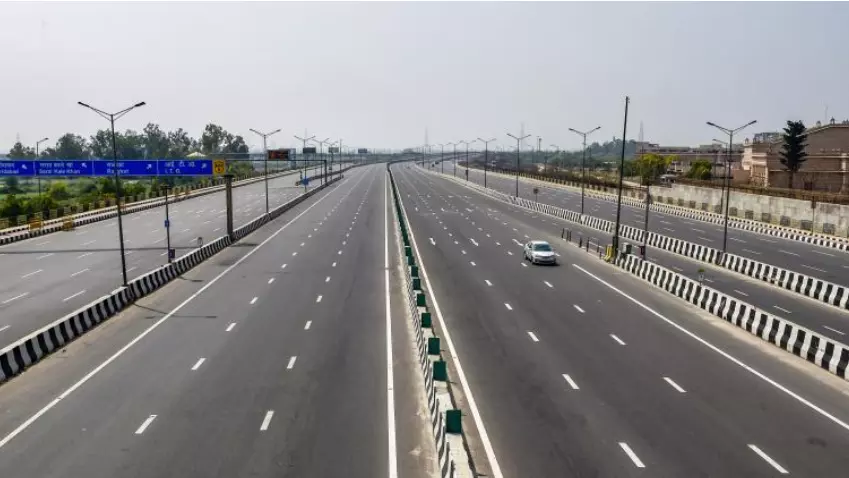
Hyderabad: The Centre has set a three-year deadline, up to 2029, for completion of the northern part of the Hyderabad Regional Ring Road (RRR-N), with the project cost escalating sharply by nearly ₹9,000 crore due to delays in execution. In a fresh letter to the state government, the Centre stated that the public private partnership (PPP) appraisal committee under the Union finance ministry had approved ₹23,995.60 crore for the RRR-N project, enabling officials to open long-pending tenders and effectively ending a prolonged delay in its execution, official sources said.
The RRR project had remained stalled for nearly a year despite completion of land acquisition and the calling of tenders, as both the Centre and the state government proposed changes to the project, leading to tenders being kept on hold. With the latest approvals now in place, construction is set to commence shortly.
The revised cost estimates have significantly increased the project outlay. Initially pegged at ₹15,000 crore for the 161.518-km stretch, the cost has now risen by nearly ₹9,000 crore, sources added.
The proposed six-lane access-controlled road will intersect national and state highways at nine locations, where large interchanges spanning 100 to 120 acres each will be constructed. The northern stretch will be divided into Package 1 covering 83.518 km from Girmapur in Sangareddy district to Pragnapur in Siddipet district and Package 2 spanning 78 km from Pragnapur to Tangedpalli in Yadadri-Bhuvanagiri district.
Originally planned as an eight-lane highway, the RRR project has been scaled down to six lanes, with the alignment width reduced from 100 metres to 90 metres. The remaining 10 metres will be handed over to the state government.
The Centre has opted for the hybrid annuity model (HAM) for execution after evaluating other models such as public-private partnership and build-operate-transfer. Under HAM, the Centre will fund 40 per cent of the project cost, while the contractor will mobilise the remaining 60 per cent. The National Highways Authority of India will enter into a 15-year agreement with the contractor and repay the contractor’s share, along with interest, in instalments during this period, with the contractor responsible for maintenance of the road.
The project includes a range of major and minor infrastructure components, including 44 major bridges, 127 minor bridges, 1,262 box culverts, four road overbridges, 44 underpasses, and one vehicle overpass.
A detailed cost break-up showed ₹8,106.19 crore allocated for civil construction, ₹5,357.59 crore for utility shifting, ₹1,366.65 crore towards pre-construction expenses, ₹683 crore for escalation provisions, and ₹5,349.26 crore for land acquisition.
Meanwhile, the alignment for the southern stretch of the RRR is yet to be finalised. The state government has proposed a 208-km alignment, which is currently under review by the NHAI, with a detailed project report expected to provide clarity on the costs and execution plan.
