Cancer Turns Our Own Cells Against Us, Says Dr Bruce Levine

Genome Valley award recognises a pioneer of engineered T-cell therapy
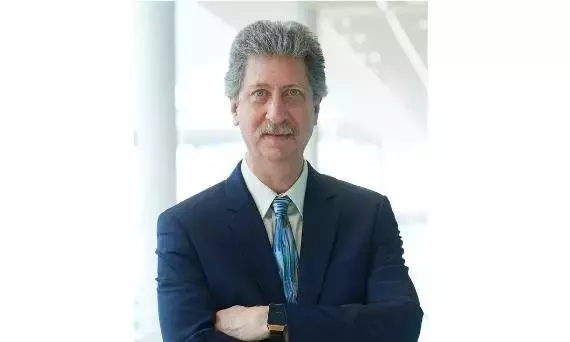
Hyderabad: “The enemy in cancer is ourselves,” said Dr Bruce Levine, explaining how tumours arise from the body’s own cells and evade the immune system, as he outlined the science behind CAR-T therapy and the next phase of AI-driven cell engineering.
He described CAR-T as a living drug in which a patient’s T cells are genetically modified, expanded in the laboratory and reinfused to identify and destroy cancer cells.
Dr Levine, who is Barbara and Edward Netter Professor in cancer gene therapy at the University of Pennsylvania Perelman School of Medicine, was conferred the Genome Valley Excellence Award for his contributions to cell and gene therapy, engineered T cells and cancer immunotherapy. The award was presented by Chief Minister A. Revanth Reddy and IT minister D Sridhar Babu.
Tracing the evolution of CAR-T therapy, Dr Levine said the process involves collecting a patient’s T cells, inserting genetic instructions using a modified viral vector, expanding the cells in a controlled setting and infusing them back into the patient. These engineered cells then multiply and continue targeting tumour cells.
He recalled early clinical trials launched in 2010 for patients who had exhausted available treatments. Referring to long-term remission cases, including paediatric patient Emily Whitehead, he said such outcomes paved the way for regulatory approvals of CAR-T therapies in the United States, Europe and India.
Dr Levine also discussed next-generation approaches to improve outcomes, particularly in solid tumours. These include shortening manufacturing timelines, enhancing T-cell function and developing off-the-shelf or in vivo CAR-T therapies using messenger RNA delivered through lipid nanoparticles.
He said ongoing research is exploring applications beyond cancer, including autoimmune diseases and fibrosis, and aims to expand access through improved manufacturing strategies.
