Cancer Prevention Must Focus on Immune Strength and Healthy Aging: Leading Cancer Biologist

How silent cancers hide for decades and why prevention begins with healthy aging.
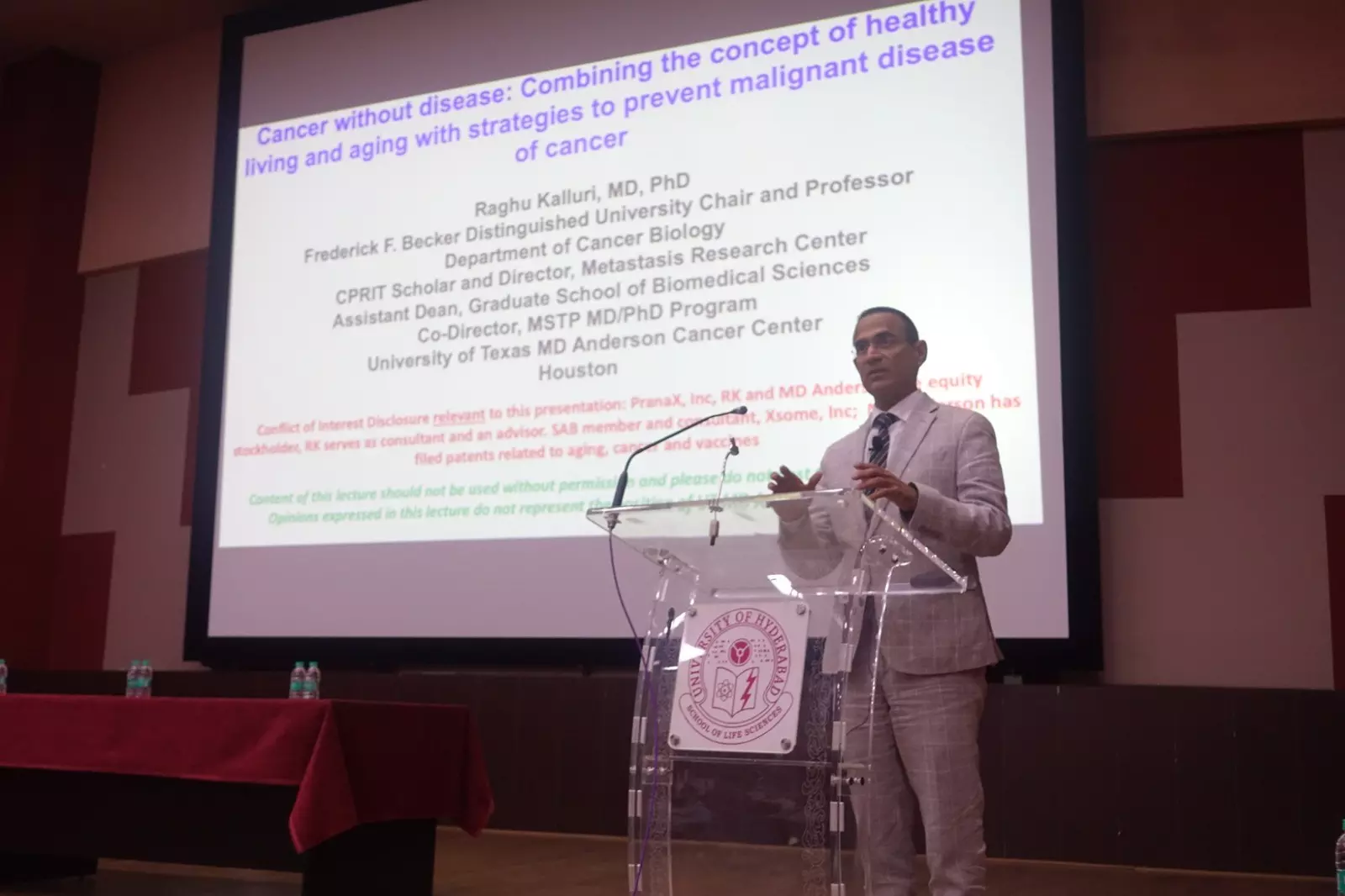
Hyderabad: A silent window of 15–20 years in which cancer can remain unnoticed inside the body is central to understanding prevention, cancer biologist Dr Raghu Kalluri told researchers during a lecture at the University of Hyderabad. Drawing on 37 years as a physician scientist, he said cancer develops slowly and silently, and added that prevention must focus on immune strength and healthy aging.
Dr Kalluri explained that cells face constant damage, a process he described as “cell insult,” and said the body works continuously to repair it. He noted that mutations which escape repair accumulate over time, yet “the body often contains them, which is why many cancers remain hidden for years.” He said the p53 gene, often called the guardian of the genome, is the most frequently mutated gene in cancer.
He told the audience that it typically takes 15–20 years for an uninjured or apparently normal cell to transform into cancer, and pointed to breast and thyroid cancers to show how silent lesions can persist for long periods. He added, “Aneuploidy is seen across organs but “does not always lead to disease.”
Addressing why only some people develop cancer despite accumulating mutations, Dr Kalluri said, “Cancer is fundamentally a genetic disease, but one that the body is often able to contain,” and referred to National Cancer Institute work to explain how immune surveillance prevents most mutations from progressing.
Dr Kalluri said aging was a chronic biological process in which mutations increase, but added that only a small fraction become invasive because the body continues to hold most of them in check. He said, “The long window gives the immune system enough time to eliminate or control damaged cells,” and noted that strong immunity is central to prevention. He explained that efficient DNA repair, controlled inflammation and balanced metabolism can delay or prevent malignancy, saying “anti-aging strategies should be seen as cancer-preventive strategies.”
Discussing advances in cancer biology, Dr Kalluri said the KRAS gene —Kirsten rat sarcoma virus, a gene that directs cell growth and diversifaction — is a major driver of pancreatic cancer and outlined efforts to target it. He also explained how collagen and fibrosis shape the tumour environment. Introducing the idea of cancer without disease, he said, “Up to 35 per cent of individuals over 40 may harbour such cancers without ever developing symptoms.”
Dr Kalluri urged researchers to rethink prevention by strengthening immunity and supporting healthier aging, saying long-term containment should guide how we understand cancer.
