Cabinet Releases Rs 2,550 Cr in Telangana’s Share in VB G RAM G

Telangana's daily wage rate of Rs 308 per day lowest among South states
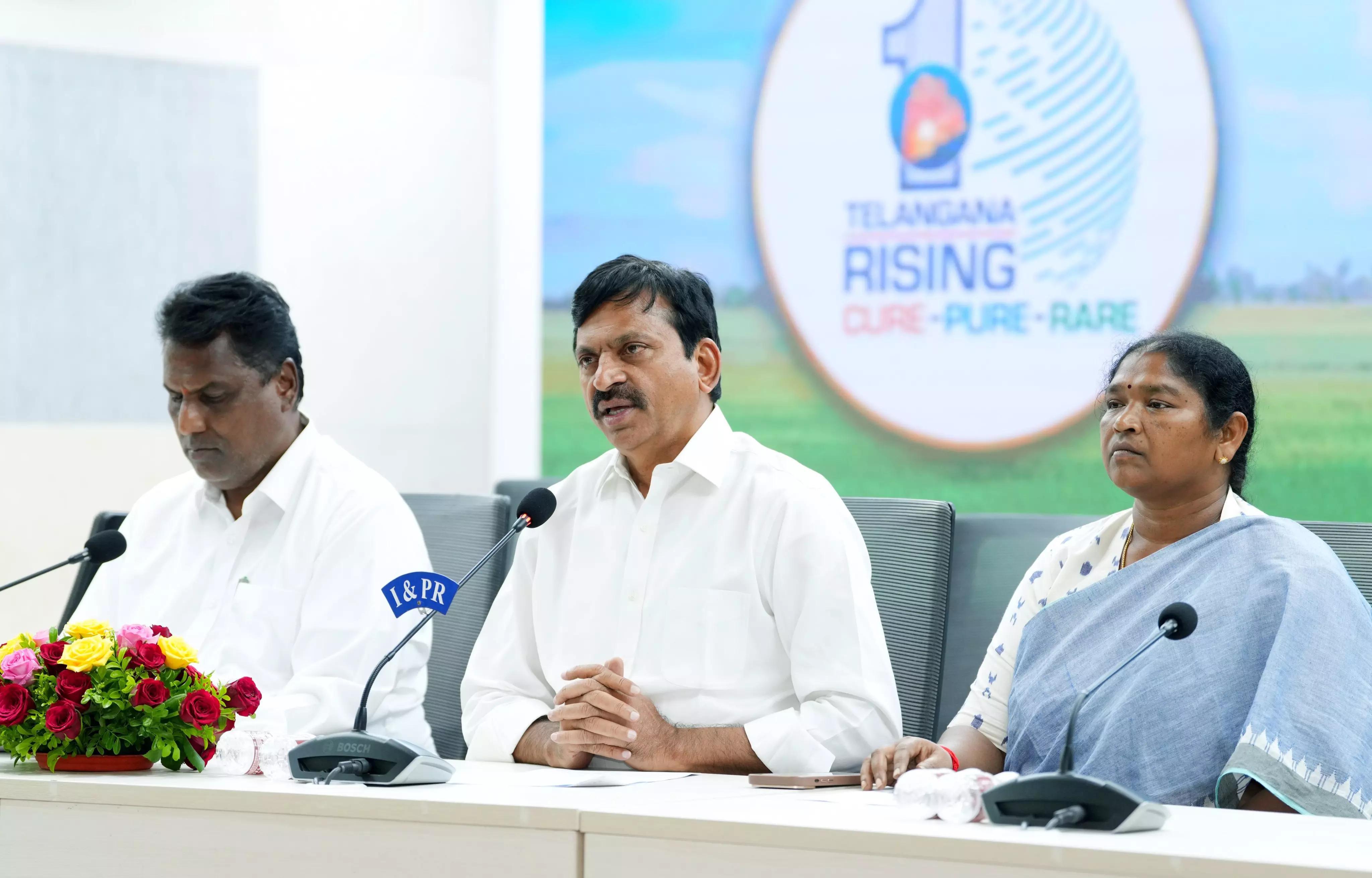
Hyderabad: A day after the state cabinet approved the implementation of the Centre's newly introduced Viksit Bharat Guarantee for Rozgar Ajeevika Mission-Grameen (VB-G RAM G), the state government on Friday issued a gazette notification bringing the scheme into force in Telangana with effect from July 1.
The state also committed to contributing Rs 2,550.21 crore towards its mandatory 40 per cent share of the programme, while the Centre has allocated Rs 3,825.31 crore for Telangana for the 2026-27 financial year.
The Centre has also notified revised wage rates under the new legislation, fixing a national interim base wage of Rs 300 per day. Telangana's daily wage has been fixed at Rs 308, the lowest among the southern states. In comparison, Andhra Pradesh workers will receive Rs 312 per day, Karnataka Rs 382, Kerala Rs 401 and Tamil Nadu Rs 340.
The state government completed the required financial formalities by opening a dedicated bank account for the scheme and another account with the Reserve Bank of India to facilitate the transfer of funds. It also informed the Centre that 94.58 per cent of eligible workers in Telangana had completed e-KYC verification and that a facial recognition system was being implemented to authenticate workers and streamline wage payments.
The Centre recently replaced the Mahatma Gandhi National Rural Employment Guarantee Scheme (MGNREGS), whose term ended last month, with the VB-G RAM G programme. While MGNREGS guaranteed 100 days of employment, the new scheme extends the entitlement to 120 days but mandates a two-month suspension during the agricultural season. Telangana has strongly objected to this provision, arguing that it would deprive rural workers of livelihood opportunities during crucial periods.
The state government has decided to continue the remaining works sanctioned under the previous employment guarantee scheme, including construction of women self-help group buildings, gram panchayat offices, anganwadi centres, school rooms and compound walls, by utilising the unspent workdays from the previous financial year. Telangana had completed about eight crore of the 8.5 crore person-days allocated last year.
The Congress government is also preparing for a legal challenge against the new scheme. The government is expected to move the Supreme Court next week, contending that several provisions of the VB-G RAM G Act violate the federal structure and infringe upon the constitutional powers of states. The proposed petition will argue that the Act violates Articles 258(3), 246, 162, 266(3), 280, 40 and 21 of the Constitution.
Telangana has consistently opposed two major provisions of the scheme. Unlike MGNREGS, under which states could propose works based on local requirements, the new programme requires works to be undertaken strictly according to the Centre's priorities. The state has also opposed the mandatory two-month halt in works during the agricultural season, maintaining that it would adversely affect rural labourers and disrupt ongoing development activities.
Rural development minister Danasari ‘Seethakka’ Anasuya had recently visited New Delhi seeking a postponement of the scheme and relaxation of these conditions, but the Centre did not accede to the request. Despite its objections, the State Cabinet has decided to implement the scheme while simultaneously pursuing legal remedies against the contentious provisions.
