Hyderabad Airport Slows After Fourth Bomb Hoax

The email, received by the GMR Arena, claimed that members of “ISIS and LTTE” had planted an IED inside the airport premises. The police, however, did not find any incriminating material during their searches.
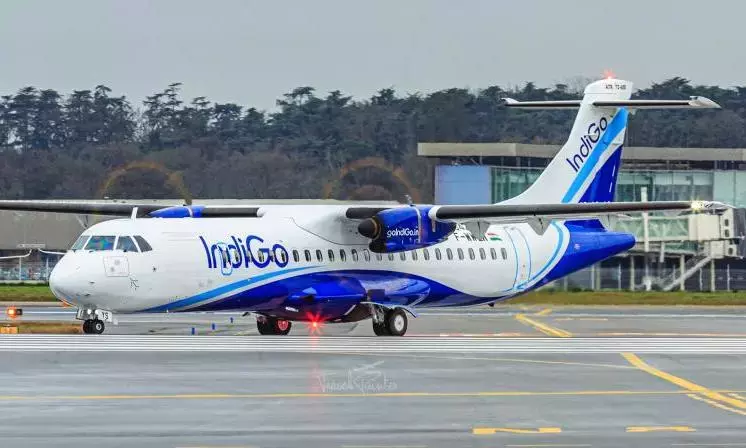
Hyderabad: The city’s Rajiv Gandhi International Airport (RGIA) received yet another bomb threat on Tuesday morning, the fourth in the last two weeks. The bomb threat email, claiming that a terminal in the airport would be blown up, slowed down airport operations for three hours, leaving passengers stranded.
The email, received by the GMR Arena, claimed that members of “ISIS and LTTE” had planted an IED inside the airport premises. The police, however, did not find any incriminating material during their searches.
“We did not find any incriminating material. However, we could not have neglected the threat. A case has been registered and we will trace the perpetrator,” Airport Police said.
This is the fourth threat since the Delhi car blast, which also turned out to be a hoax. Officials say such threats leave passengers anxious and cost airlines crores of rupees.
An airport official told Deccan Chronicle that hoax bomb threats had become “very frequent” in recent weeks. “The airlines suffer the most, both in terms of manpower and revenue,” the official said. A response from airline representatives is awaited.
According to the former general manager of Air Traffic Control (ATC), V. Mallikarjun, even a single bomb threat in a month can cause substantial losses for airlines. “The exact figure can only be assessed by the airlines, but any aircraft—whether on the ground or in the air — will incur losses in such situations,” he said, adding that the extent of loss depends on the aircraft size, sector, and location.
In 2024, on October 22 alone, 80 flights reportedly received bomb threats within 24 hours, leaving airlines with an estimated loss of `600 crore. “Security checks are part of the Standard Operating Procedure (SOP) during a bomb threat and cannot be ignored. The losses double when an aircraft already in the air has to be diverted to the nearest safe airport,” Mallikarjun said.
He added that diversion-related costs — tickets for passengers from the diverted point to their destination, food and accommodation for stranded travellers — further increase the financial burden. “In diversion cases, the aircraft must land as soon as possible, leading to additional fuel consumption. It also leaves pilots and cabin crew fatigued, as the process is long and stressful,” the former ATC chief said.
