Amended THOTA Will Save Many Lives in Telangana

Before 2011, the grandparents were not eligible to donate organs. However, an amendment to the Transplantation of Human Organ Act brought in by the Central government included the grandparents and helped in saving the child.
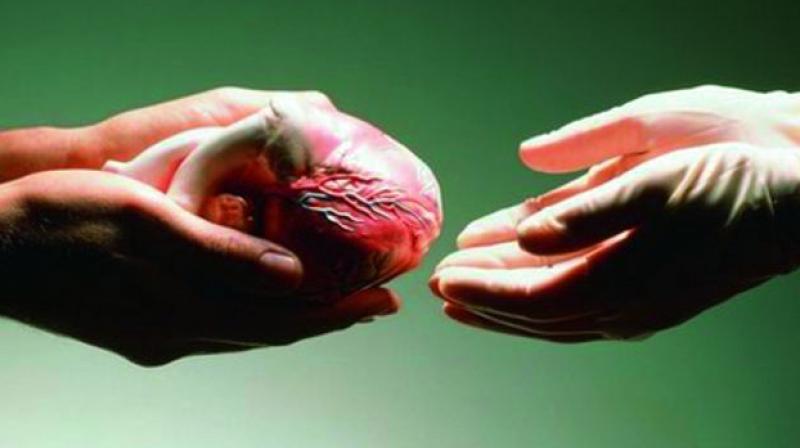
Hyderabad: Four years ago, a 10-month-old baby suffering from a rare liver disease, biliary atresia, was brought to a Hyderabad-based doctor, who examined the infant and advised an immediate liver transplant. The blood group of both parents was different, and therefore, they could not donate a portion of their liver. Finally, it was decided that the grandmother would make a partial liver donation for the child.
Before 2011, the grandparents were not eligible to donate organs. However, an amendment to the Transplantation of Human Organ Act brought in by the Central government included the grandparents and helped in saving the child.
According to the new ‘Transplantation of Human Organ and Tissues Act’ (THOTA), grandparents were defined as ‘near relatives’. This meant that besides mother, father, spouse, siblings and children, grandparents and grandchildren could also donate their organs and tissues. The law was implemented in 2014 and 24 states, including Tamil Nadu, where the 10-month-old baby was operated upon, adopted the amended act.
On March 24, Telangana, which was not among the early adopters of the new Central law, finally adopted it, which could potentially save many lives in the state.
Another such couple based in Hyderabad had a five-year-old child grappling with metabolic liver disease at age one. The child had itching associated with abdominal distension. A liver transplant was suggested by doctors. Father had already donated liver to their first child suffering from the same condition and mother was underweight. Hence, one of the grandparents had to chip in.
“Adding grandparents in the list of near relatives helps in speeding up the process of acquiring donor liver or kidney for transplantation. For example, a small baby may need an urgent transplant, but the father and mother may not be fit. In such cases, a grandparent, if healthy, can be considered as a partial liver donor after detailed testing,” said Dr Mettu Srinivas Reddy, a liver transplant surgeon.
“The amendment also makes it legally feasible to perform swap transplants between pairs of near relatives. This will help in the case of blood group mismatched donors or mismatch in liver graft size. Swap liver transplants are being regularly performed in states like Delhi, Maharashtra and Tamil Nadu successfully. Approving the 2014 rules provides this opportunity to patients in Telangana to utilise this option,” he added.
The transplant for the Hyderabad-based family was done in 2021, with special approvals and additional documentation. “It helps in saving time, as getting a cadaveric donor is difficult, especially for children. Cons of this donation are that it requires more thorough documentation,” the father said.
“A good thing is that family members sit and discuss the pros and cons of donating organs which helps in strengthening relationships,” he said, adding that it is important to have relatives as donors as there might be multiple children in the same family affected.
“While recovery may take longer for older donors, the inclusion of grandparents in the transplantation process can save time by allowing early transplantation, offering a faster process if a grandparent is a suitable match, and reducing reliance on deceased or unrelated donors. It also strengthens family bonds, fostering a deep sense of gratitude, reinforcing the importance of family support during health crises, and showing unconditional love and sacrifice,” said a grandmother from Chennai.
Moreover, the new law is also significant for the addition of tissue donation. “Tissue donation involves the recovery of useful tissues from deceased donors, such as skin, heart valves, and bones. These donations are crucial for treating patients: skin donations help those with severe burns or accidents causing skin loss, bone donations are used for reconstructing after bone injuries or surgeries for bone cancer, and heart valves are needed for patients with heart disease requiring valve replacements,” Dr Reddy said.
