Amateur Historians Lead Heritage Revival In Telangana

Farmers to PhDs, citizens chronicle Telangana’s past
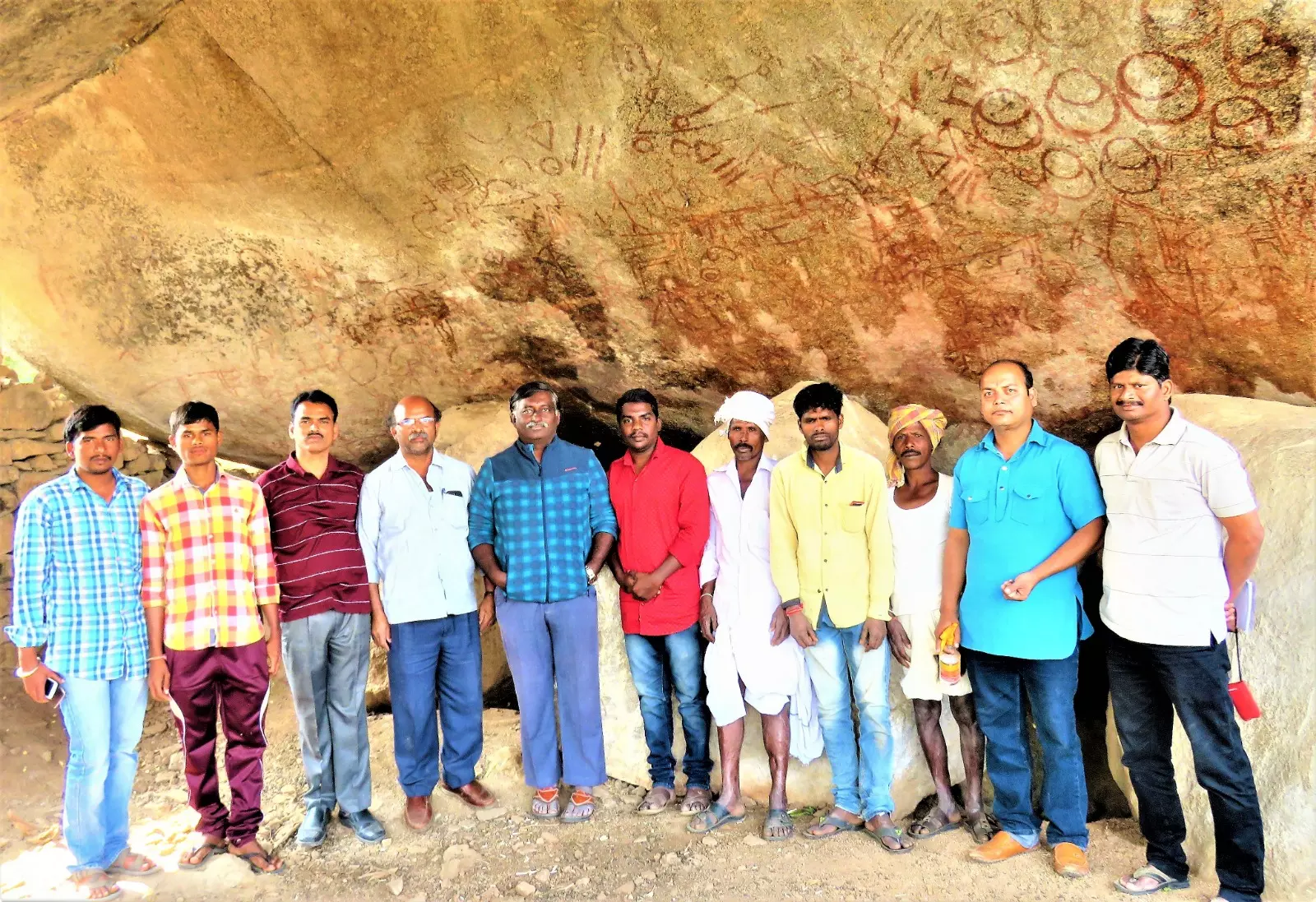
Hyderabad: From farmers and Class 10 pass-outs to PhD scholars, retired teachers, archaeologists and serving government officers, people from diverse walks of life are working beyond their professions to document and protect heritage sites across the state.
Despite holding full-time jobs, these amateur heritage activists spend their free time exploring villages, studying ancient sites, rock art, monuments, coins, inscriptions and sculptures, helping bridge gaps in Telangana’s historical record while creating awareness among local communities.
One such heritage research collective is Kotha Telangana Charithra Brundam (KTCB), which has nearly 200 volunteers. Before field visits, members discuss potential sites and treat each exploration as an educational exercise. “Whenever a member reports a finding, we study it in detail, identify its period and focus on in-situ research. Many people may have seen these remains but are unaware of their historical value. We ensure only accurate information is shared,” said Sriramoju Haragopal, convener of KTCB and a retired teacher.
Guided by Viruvanti Gopal Krishna, Haragopal began taking students for field exploration in 1999 while working as a teacher. “I learned how to take estampages of inscriptions. After retirement, I intensified my work after seeing the neglect of history and heritage sites,” he said. The group consults experts, including scholars from the University of Hyderabad and the Geological Survey of India, whenever significant findings emerge.
Heritage exploration is also drawing the interest of younger generations. Aravind Arya Pakide, secretary of the Team of Research on Culture and Heritage (TORCH), said the group has around 140 volunteers, including students, architects, teachers and doctors. Through its initiative Untold Telangana, TORCH documents heritage using photographs and videos.
A journalism graduate, Aravind said his team has identified nearly 50 dilapidated Kakatiya-era temples and stepwells. “Telangana has very few ASI-protected sites compared to Andhra Pradesh and Maharashtra. While the rock art site Bimbetka has a Unesco tag, Pandavula Gutta here is yet to be declared a protected heritage site,” he said. Founded in 2019, TORCH has contributed to securing protection for around 20 monuments so far.
Another citizen-led effort is Telangana Heritage Friends, formed two years ago by teacher and research scholar Kondaveti Gopi, doctor Naseeruddin and businessman Ahobhilam Karunakar. The group focuses on documenting rock art sites and prehistoric burial remains. “Whenever villagers inform us about rare artefacts or ancient remains, we visit the site, conduct field exploration and document the findings,” members said.
Even serving officials and retired archaeology professionals continue their work in the field. Dyavanpalli Satyanarayana, deputy director in the tribal welfare department, said he began field explorations as a student in 2001 and continues the work even today. “I carry out explorations on Sundays, holidays and festivals, often with the help of local villagers,” he said.
He added that his journey began during his Master’s degree in History, when he realised the lack of primary research on Telangana’s prehistory. “I documented 25 rock art sites to establish that Telangana has a deep-rooted past,” he said, noting that he later presented a comprehensive account of Telangana’s prehistory as president of the AP History Congress.
Veteran heritage expert E. Sivanagi Reddy, 71, former director of the department of heritage and CEO of the Pleah India Foundation, continues to campaign for heritage preservation even after retiring in 2013. “Out of nearly 15,000 villages in Telangana, only about 25 per cent have been documented. Over the past 10 years, we have explored 748 villages and recorded sites ranging from prehistoric times to the Asaf Jahi period,” he said.
Dr Reddy warned that monuments, coins, sculptures and inscriptions risk being lost to neglect, road-widening projects and rapid urbanisation unless systematic efforts are made to protect them.
