AIG’s Doctors Use Zap-X to Treate 20 Patients Monthly

High-precision radiosurgery offers non-invasive treatment for select patients.
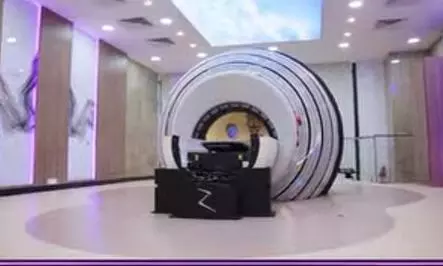
Hyderabad: At AIG Hospitals, the ZAP-X NeuroRadiosurgery programme, inaugurated a few months ago, is currently evaluating and treating around 20 patients a month. Referrals are coming from neurosurgery, radiation oncology, medical oncology, neurology and allied specialties.
Speaking to Deccan Chronicle, Dr Subodh Raju, director and HOD, neurosurgery, AIG Hospitals, said ZAP-X is being used in carefully selected patients where high-precision, non-invasive treatment can offer a meaningful clinical advantage.
These include patients with benign and malignant brain tumours, brain metastases, residual or recurrent tumours after surgery, skull-base tumours located near critical nerves and blood vessels, arteriovenous malformations, trigeminal neuralgia and select functional neurological conditions.
Every case is reviewed through a multidisciplinary approach involving neurosurgeons, radiation specialists, neuroradiologists, medical physicists and clinical teams to ensure that the right patient receives the right treatment, he added.
Since its introduction at AIG Hospitals, the first few cases have demonstrated the practical benefits of this approach, especially in terms of patient comfort, procedural ease and faster return home. However, radiosurgery outcomes are not measured overnight, Dr Raju said.
One example was a patient treated for residual vestibular schwannoma, a tumour located close to critical hearing and balance nerves.
Traditionally, such skull-base lesions are challenging because of their proximity to delicate neurovascular structures. With ZAP-X, the residual tumour could be targeted precisely without another open surgical procedure. The patient tolerated the treatment well and was able to return home the same day, Dr Raju explained.
Another early case involved glomus jugulare, a complex skull-base tumour situated near important cranial nerves and blood vessels. Such tumours often require highly specialised treatment planning. ZAP-X enabled a focused, non-invasive radiosurgical approach, offering the patient precision treatment without the trauma of open surgery.
