AIG Hospitals Offers South India’s First ZAP-X Gyroscopic Neuro-Radiosurgery Platform

Brain metastases are among the most common brain tumours worldwide
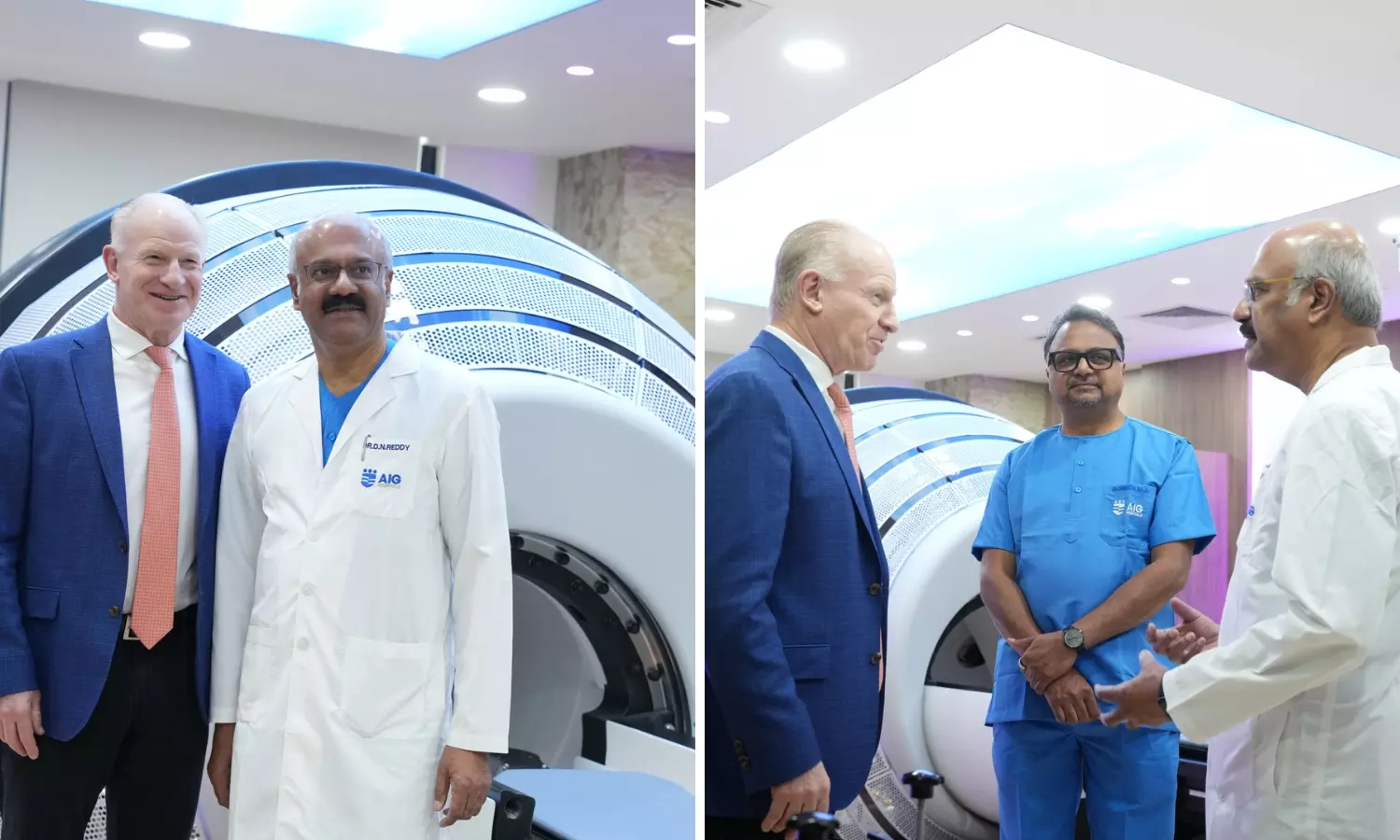
Hyderabad: AIG Hospitals launched the ZAP-X Gyroscopic Neuro-Radiosurgery Platform, the first installation of its kind in South India and only the second in the country. There are 36 of these platforms worldwide and four in Asia.
It will treat 5-cm and below tumours. If the tumours are 10cm and 20cm in size, surgeons partially remove them and subsequently use ZAP-X.
This platform uses protons sourced from the machine itself and treats the patient within 45 minutes. When data of MRI-CT Scan is transferred to the ZAP-X platform, it sends the protons to the exact site of tumour in 1,600 directions and kills it.
“We are conducting research into depression and obesity treatments which will serve a larger population in future. The system delivers highly focused radiation beams with sub-millimetre accuracy, targeting tumours and abnormal tissues while sparing healthy brain structures. For patients, this means a completely non-invasive treatment that is painless, requires no hospital stay, and allows them to return to normal life quickly,” said ZAP-X inventor Prof John Adler
Brain tumours and related neurological disorders represent a growing health burden in India. Traditionally, many conditions have required complex neurosurgery involving craniotomy, prolonged hospitalisation, and significant recovery time.
Stereotactic radiosurgery has emerged globally as a safer alternative for carefully selected cases, and the introduction of ZAP-X at AIG Hospitals brings one of the world’s most advanced neuro-radiosurgical technologies to patients across South India, said Dr D. Nageshwar Reddy, chairman, AIG Hospitals.
“We believe this technology will significantly benefit patients across Telangana, Andhra Pradesh, and it is included in insurance policy. The interaction with governments will explore if this can be added to the Aarogyasri scheme,” he said.
The ZAP-X platform is designed to treat a wide range of intracranial conditions, including benign and malignant brain tumors, brain metastases, arteriovenous malformations (AVMs), trigeminal neuralgia, and other complex neurological disorders said Prof John.
One of the areas where ZAP-X is expected to make a particularly significant impact is in the treatment of brain metastases, tumours that spread to the brain from cancers elsewhere in the body, most commonly from the lung, breast, or melanoma.
Brain metastases are among the most common brain tumours worldwide. Traditionally, treatment options have included open surgery or whole-brain radiation therapy, which can expose large areas of the brain to radiation and may lead to side effects affecting cognition and quality of life, he added.
