AI Driven 'Project Shudh' To Abolish Manual Scavenging

The HMWS&SB, in collaboration with Bot Factory, witnessed the demonstration of the autonomous robotic system capable of cleaning both vertical manholes and horizontal pipelines, including corner manholes: Reports
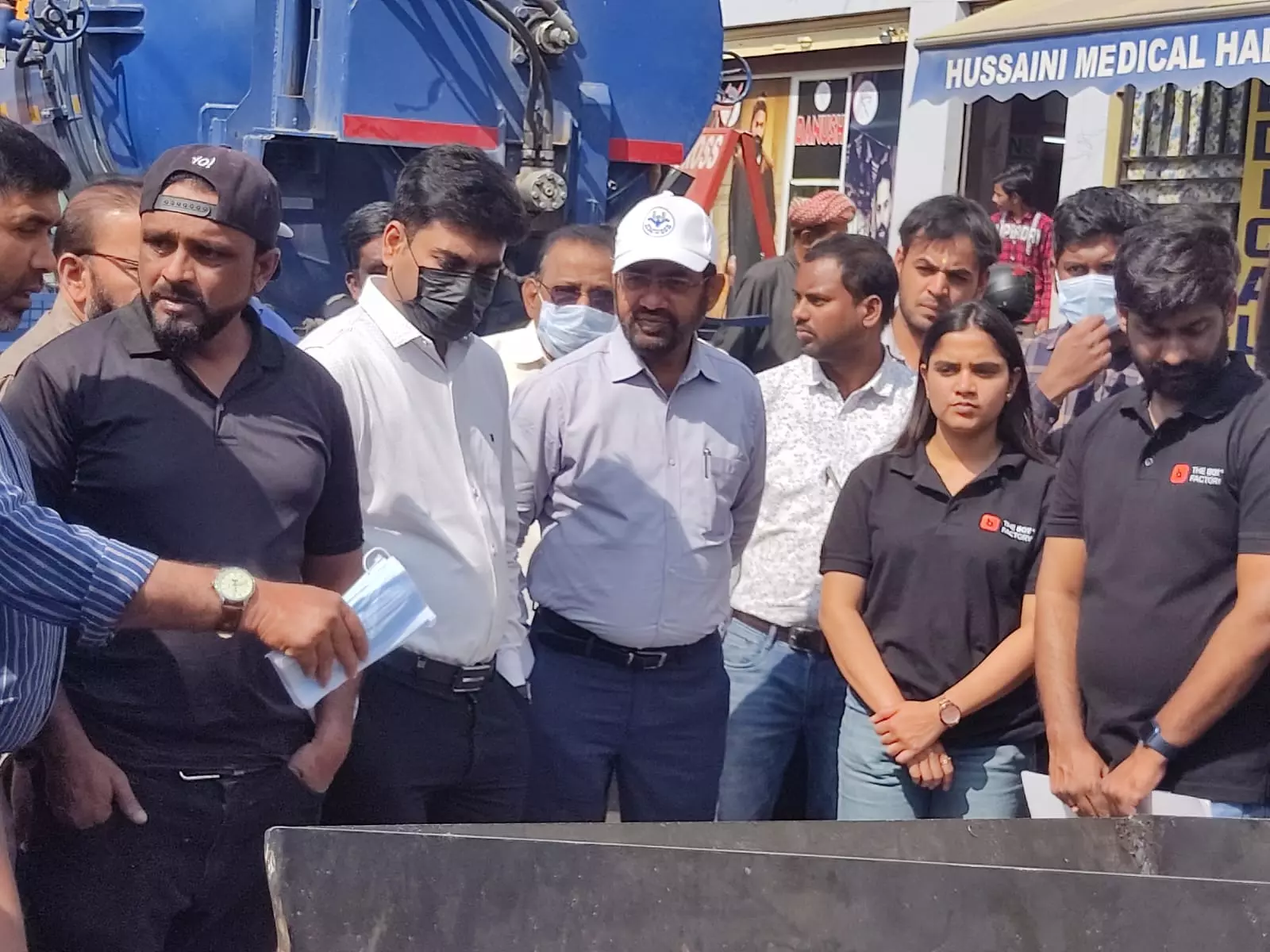
HYDERABAD: In a bid to end manual scavenging, Project SHUDH, an urban sanitation system integrating robotics, artificial intelligence (AI), and satellite intelligence, was launched on a pilot basis in Hyderabad. A demonstration of the technology for sewer manhole cleaning with minimal human interference was conducted at Chilla-e-Moula Ali in Yakutpura.
The HMWS&SB, in collaboration with Bot Factory, witnessed the demonstration of the autonomous robotic system capable of cleaning both vertical manholes and horizontal pipelines, including corner manholes.
Key features showcased included AI-driven predictive models to forecast blockages, GIS and satellite-integrated monitoring to create a live digital map of underground sewage systems, and real-time dashboards enabling officials to track and plan sanitation operations citywide.
Officials noted that the system eliminates human risk at openings and uploads all operations into a satellite-enabled GIS dashboard, allowing real-time monitoring of drainage health. “Our priority has been predicting failures early,” said an HMWS&SB official, highlighting benefits such as
reduced emergency costs, extended sewer infrastructure life, and prevention of environmental penalties and public health crises.
Water Board managing director K. Ashok Reddy said HMWS&SB has consistently adopted cost-effective technologies to ensure safety and dignity by preventing manual labour from entering sewage manholes. He cited the success of the 90-days desilting programme, which reduced complaints by 60 per cent, as part of the city’s goal to become a “No Sewage Overflow City.”
Engineers added that adopting and successfully implementing new technologies while ensuring cost-effectiveness has been the guiding principle of the water board.
