AI and Quantum to Enter Mainstream Curriculum, VCs Told

The Central Zone Vice Chancellors’ Meet 2025–26, hosted by Osmania University in collaboration with the Association of Indian Universities, opened at the Tagore Auditorium with a strong call for structural academic reform.
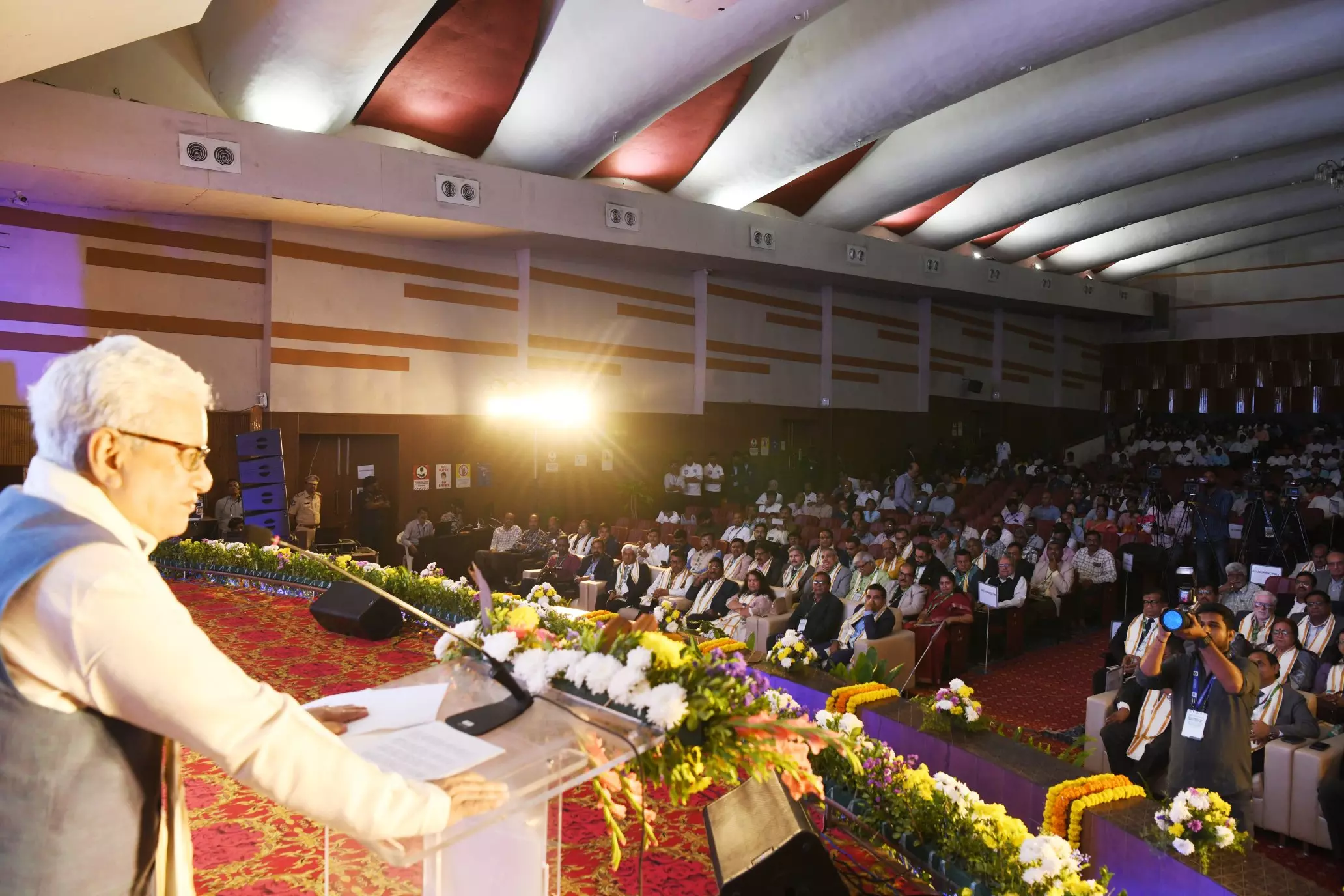
Hyderabad:Artificial intelligence and quantum technologies must move from research labs into everyday classrooms, vice-chancellors were told at Osmania University on Thursday, as over 100 university heads gathered to redraw the future of higher education.
The Central Zone Vice Chancellors’ Meet 2025–26, hosted by Osmania University in collaboration with the Association of Indian Universities, opened at the Tagore Auditorium with a strong call for structural academic reform. The two-day conclave is built around the theme ‘Creating AI- and Quantum-Enabled Higher Educational Institutions’, placing advanced computing, governance reform and curriculum redesign at the centre of discussion.
Governor Jishnu Dev Varma said universities must not remain consumers of imported technologies. “Our institutions should become architects of indigenous AI solutions rooted in Indian ethics and values,” he said, calling the AI-quantum convergence “a necessity for academic survival and relevance.”
Vice-chancellor Kumar Molugaram urged academic leaders to move beyond conventional roles. Universities, he said, must transform from “knowledge transmitters” into “designers of intelligent systems,” ensuring that AI literacy is embedded across disciplines and not limited to engineering streams. He added that technological ambition must be matched with cultural and ethical grounding.
Telangana Council of Higher Education chairman V. Balakista Reddy described the digital transition as inevitable. “The shift from conventional classrooms to AI-enabled ecosystems is no longer optional,” he said, adding that Telangana aims to align universities with global industry needs while strengthening domestic research capacity.
Association of Indian Universities President Vinay Kumar Pathak said collective institutional effort would be key to building computational capacity at scale. Secretary general Pankaj Mittal observed that integrating AI into governance and pedagogy requires “regulatory clarity and shared frameworks.”
Deliberations revolved around four pillars including curriculum integration of AI and quantum technologies, AI-assisted governance for transparent administration, promotion of indigenous research, and ethical regulation of emerging technologies. The meet will also serve as a preparatory platform ahead of the National Conference of Vice Chancellors. A special issue of University News was released during the inaugural session.
