Adilabad’s Adivasi Gudems Gear Up Gussadi-Dandari Fete

Troupes play role in arranging marriages during sacred fest
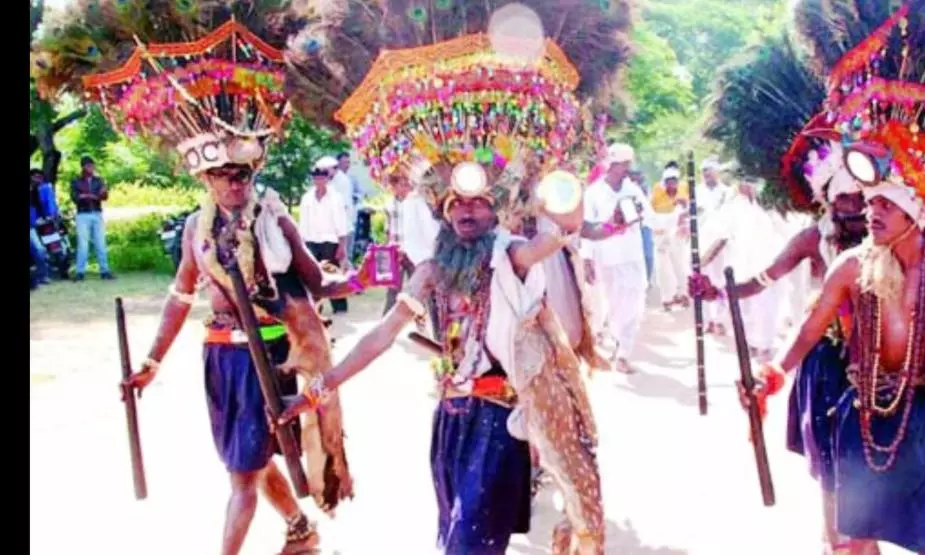
Adilabad: It is the time of the Gussadi-Dandari cultural celebrations in Adivasi gudems across the erstwhile Adilabad district, marking the Diwali festival. Adivasis, who take on the role of Gussadis, travel in troupes from one village to another as guests, performing the traditional Gussadi and Dandari dances while wearing headgear made of peacock feathers.
The unique attire of the Gussadis, Adivasi men, youth, and teenagers, adorned with small bronze bells, flowers, mirrors, and decorative ornaments, draws crowds wherever they perform.
For the Adivasis, Diwali is one of the most important festivals, celebrated with devotion, joy, and distinctive rituals. Community elders organise Gussadi and Dandari events, inviting troupes to perform in their villages. The festivities conclude two days after Diwali with a ritual called Kolabodi.
Political leaders and district officials, including collectors and superintendents of police from Nirmal, Adilabad, Mancherial, and Komaram Bheem Asifabad districts, are also visiting interior gudems to take part in the celebrations.
The Gussadi-Dandari troupes not only perform but also strengthen social bonds between villages. Traditionally, they play a role in arranging marriages between prospective brides and grooms, as the festival is considered sacred for matchmaking. Villagers often enquire with Gussadis about the well-being of other villages and potential alliances for marriage.
During the dances, it is common for young Adivasi men and women to meet and form relationships that sometimes lead to marriage. Prospective couples express interest after observing each other’s behaviour, dance, and hospitality during the celebrations. The entire village community actively participates in these festivities, making it a collective celebration of culture and kinship.
Khanapur MLA Vedma Bojju said Diwali is a major festival for Adivasis, who celebrate it grandly while preserving their age-old traditions and passing them to the next generation. He described the Gussadi-Dandari as a vibrant and colourful event, featuring men and youth dressed as Gussadis and women performing traditional Dhimsa dances.
Bojju added that he would host Gussadi and Dandari celebrations at his residence in Utnoor on October 19, with four troupes from Kallurguda, Rajampet, Durgapur, and Takkuguda performing on the occasion.
The sticks used in ‘Kolatam’ and ‘Rokal’ dances, and the Gussadi hats decorated with peacock feathers, are preserved after performing rituals to the traditional Ethmasar Pen deity of the Gussadi tradition.