Activists Highlight Procedural Lapses And Threat To Wildlife After SC Halts KBR Park Flyover Works

The dispute was more than tree cutting and about what they described as the weakening of the buffer zone around the national park: Reports
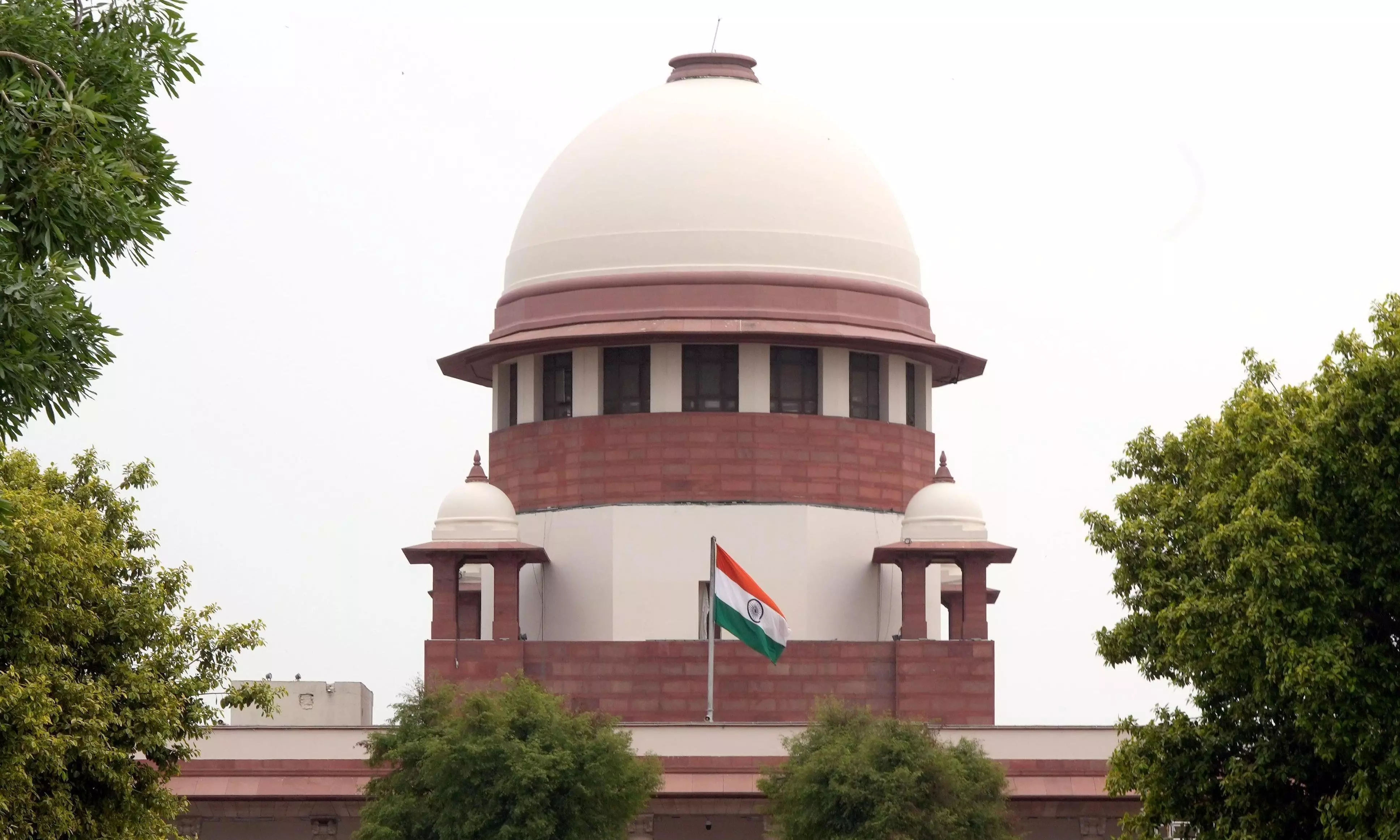
HYDERABAD: Citizens and environmental activists campaigning against tree-felling at the KBR National Park for flyover and underpass works on Tuesday said the Supreme Court’s interim stay had validated years of objections over the reduction of the park’s eco-sensitive zone. “This is almost a decade-long battle to save the KBR Park,” said petitioner and environmental activist Kaajal Maheshwari, speaking at a press conference at the Press Club
Members of the Save KBR campaign said the dispute was more than tree cutting and about what they described as the weakening of the buffer zone around the national park.
Maheshwari focused on explaining what the eco-sensitive zone, or ESZ, around the KBR Park meant, and described it as a legally protected buffer to shield the national park from traffic, noise and other urban disturbance. She said such buffer zones were recognised internationally under names such as ecology corridors and conservation zones. Referring to Supreme Court observations on eco-sensitive zones, she argued that fragile ecosystems required larger protective buffers and said reducing KBR’s ESZ to as little as three meters defeated the purpose of the safeguard.
According to the petitioners, officials and environmental authorities had earlier agreed that the protected buffer around most parts of KBR Park should remain between 25 and 35 metres wide from the park boundary outward into the surrounding roads and the urban area. Activists say this was later reduced in some stretches to as little as three meters, while a few portions still remained wider at around 29.8 meters. The dispute before the courts now concerns whether this reduction was legally valid.
Activists argued that while the GHMC has maintained that the flyover works are outside the park itself, but the petitioners’ case is that the eco-sensitive zone functions as part of the same ecological system and cannot be treated as empty roadside land.
“When all of you make a house, don’t you have a setback from your neighbors? KBR Park deserves the same setback,” she said. “This setback is supposed to act as a buffer zone, a shock absorber.”
Petitioners argued that the notification reducing the ESZ was finalised without a mandatory public hearing. “This case was filed because there was a procedural lapse and a mandated public hearing did not happen,” Maheshwari said.
She claimed citizens filed more than 1,000 objections and gathered around 19,000 signatures opposing the reduced ESZ notification. According to her, the Ministry of Environment had earlier indicated that a public hearing would be required before the notification was finalised.
Maheshwari repeatedly told reporters that the ESZ and the park could not be separated simply by a fence line. She also described how traffic, drilling, artificial lights and constant noise could affect wildlife inside the park. Birds use sound to communicate and warn their flocks, she said, while nocturnal animals such as owls and bats depend on darkness and sound sensitivity for survival. “They don't understand a fence. They won't be able to regulate their body temperature. The park every day will die a silent death, just like the lakes of the city,” she said.
