530 Villages in Erstwhile Nalgonda Lack TGSRTC Bus Services

Around 530 villages in the erstwhile Nalgonda district remain without TGSRTC bus connectivity, forcing students and residents to rely on overcrowded shared autorickshaws.
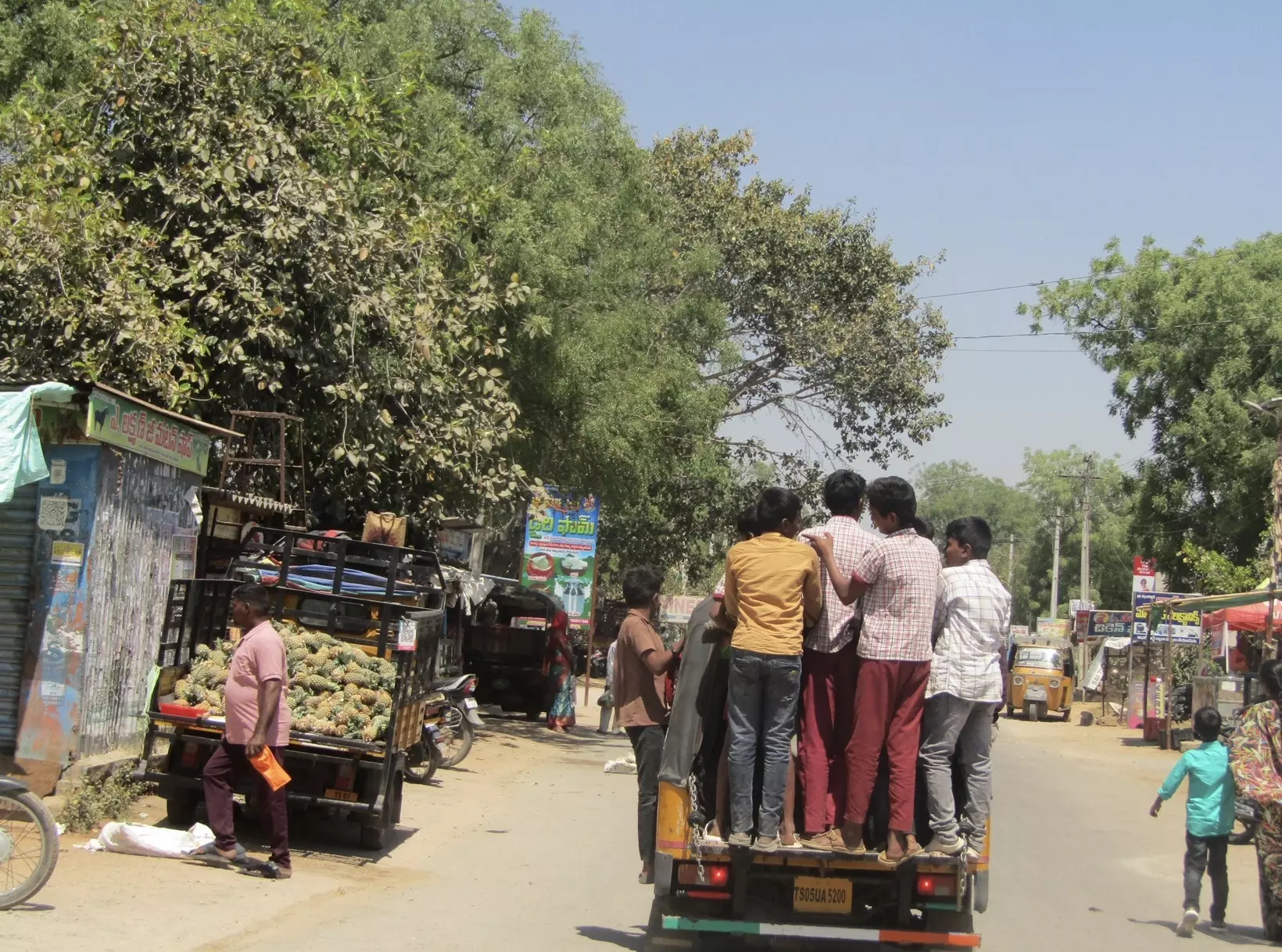
The absence of TGSRTC bus services to 530 villages in the erstwhile Nalgonda district is forcing residents, particularly students, to travel in overcrowded shared autorickshaws to nearby mandal headquarters and towns.
Students from these villages depend on shared autorickshaws to commute to high schools and colleges, adding to the financial burden on their families while exposing them to unsafe travel conditions.
TGSRTC operates services from seven bus depots covering 1,713 villages in the erstwhile Nalgonda district. However, around 30 per cent of villages in Nalgonda, Suryapet and Yadadri-Bhongir districts remain without bus connectivity. The corporation generally operates services only to villages with a population of more than 2,000.
TGSRTC officials attributed the lack of services to inadequate road infrastructure and low population in many villages.
The corporation’s ‘deemed to be connected’ policy has also drawn criticism. Under the policy, a village is treated as connected if a bus route passes within a three-km radius. As many as 392 villages, or about 22 per cent of those in the erstwhile Nalgonda district, fall under this category despite having no direct bus service.
Thellakunta village in Kethepally mandal has never had an RTC bus service. As the government school in the village offers classes only up to Class V, students travel to Gudivada or Korlapahad for higher classes, mostly in overcrowded shared autorickshaws.
L. Shaker, a Class VII student from Thellakunta, said he travels daily by shared autorickshaw to Gudivada to attend school as there is no bus service. Shaker said he spends `40 a day on transport.
Similarly, Ambaripeta village in Shaligouraram mandal has an upper primary school only up to Class VII. Students pursuing higher classes travel about five km to Shaligouraram either by bicycle or shared autorickshaw due to the absence of RTC buses.
K. Kranthi, a resident of Ambaripeta, said some parents admit their children to private schools as school buses reach the village, increasing their educational expenses.
Educationalist Syed Nasireddin said a study by Educational Consultants India Limited, a Government of India enterprise, found that poor accessibility and inadequate transport facilities contribute to absenteeism and, in some cases, school dropouts. He stressed the need for reliable transport where schools are not available locally.
Deputy regional manager (operations) K. Sucharitha said TGSRTC operates special services to some villages for the benefit of students. However, services are discontinued when student patronage declines significantly or road conditions are unsuitable for bus operations. She said the corporation was making efforts to expand services and accorded priority to student transportation.
