37 Researchers From Hyderabad Feature in World’s Top 2% Scientists List

The UoH researchers represented disciplines including chemistry, life sciences, computer and information sciences, physics, humanities, earth and ocean sciences, and high-energy materials research.
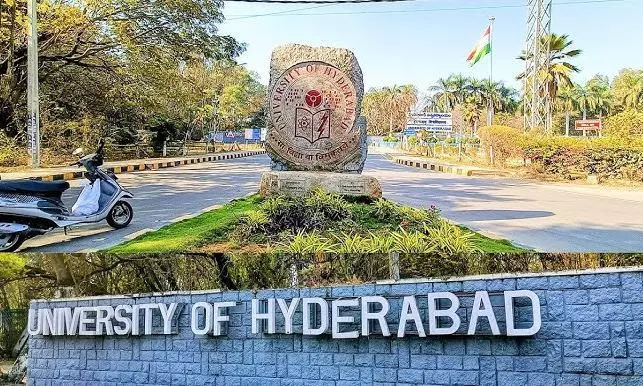
Hyderabad: At least 37 researchers from the University of Hyderabad (UoH), Gokaraju Rangaraju Institute of Engineering and Technology (GRIET) and Maulana Azad National Urdu University (Manuu) have featured in the 2026 Stanford-Elsevier World’s Top 2% Scientists list.
UoH accounts for 31 researchers, including 25 in the career-long impact database and 18 in the single-year database, with 12 appearing in both. The university ranks third among central universities and 18th in the institutional tally for India.
The UoH researchers represented disciplines including chemistry, life sciences, computer and information sciences, physics, humanities, earth and ocean sciences, and high-energy materials research.
Those featured include chemistry professors Goverdhan Mehta, Anunay K. Samanta and R. Chandrasekar, and life sciences researchers A.S. Raghavendra, M.N.V. Prasad and M.K. Arunasree.
Three GRIET faculty members have also made it to the list. They are Dr Swadesh Kumar Singh and Dr Ram Subbiah from Mechanical Engineering, and Dr K. Swaraja from Electronics and Communication Engineering. According to the institution, Singh and Subbiah have featured for the fourth consecutive year.
Maulana Azad National Urdu University, Manuu, has three researchers on the list — Prof. Salman A. Khan, Prof. Muhammad Rafiq Abuturab and Dr Mohammad Faizan.
Prof. Khan has been recognised for research in thermochemistry and materials, Prof. Abuturab for work in optoelectronics, photonics and optics, and Dr Faizan for research in plant physiology, nanotechnology, soil health and sustainable agriculture.
According to Manuu, Prof. Abuturab ranked fifth among Indian scientists in the career-long database and 12th in the single-year database.
The Stanford-Elsevier databases use standardised citation indicators drawn from Scopus records. The career-long database measures citation impact over a researcher's career, while the single-year database assesses research impact during a specific year.