Erstwhile united Andhra Pradesh recorded 24 cm of rainfall in a single day, breaking a 46-year-old record
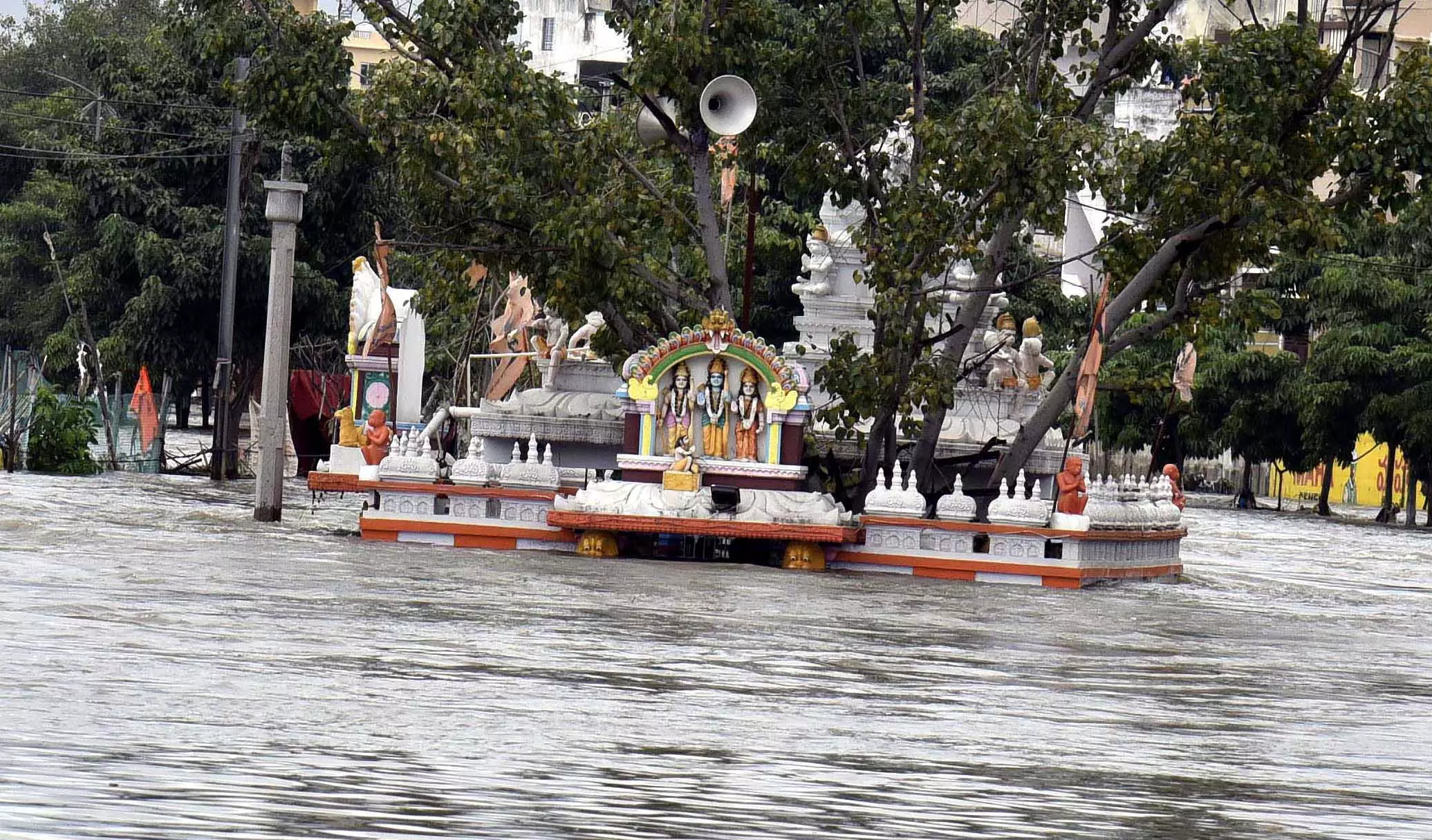
Hyderabad: On August 23, 2000, relentless rains brought undivided Andhra Pradesh to its knees. The initial death toll stood at 70, including eight from the twin cities. By the next day, the figure had climbed to 97, with Hyderabad alone accounting for 20 deaths. Hussainsagar lake overflowed. Across the state, more than 300 villages were inundated and over 400 major and minor roads and bridges were damaged or washed away.
Erstwhile united Andhra Pradesh recorded 24 cm of rainfall in a single day, breaking a 46-year-old record. Water had to be released from the Osmansagar reservoir after it reached the critical level of 1,788 feet. For the first time, the Indian Air Force (IAF) was called in to rescue stranded civilians. In a record-setting operation, IAF personnel rescued around 150 people in just 85 minutes and airlifted them to safety at Parade Grounds.
Several areas of Hyderabad bore the brunt of the flooding. Bowenpally, Safilguda, Maktha, Gandhinagar, Ashoknagar, Bagh Lingampally, Chikkadpally, Rasoolpura, Begumpet, Vimannagar, Indiranagar, Hasmathpet, Trimulgherry, Lalaguda, and Mettuguda were among the worst hit. Other inundated localities included Lakdikapul, MG Road, Secunderabad station, Basheerbagh, Chaderghat, Toli Chowki, Hakimpet, the Railway Quarters near Oliphant Bridge, and Bharatnagar. In Jubilee Hills, a section of the Chiran Palace wall collapsed under the force of the floodwaters.
As the scale of the disaster unfolded, citizens expressed deep frustration at the administration’s lack of preparedness. The then-Municipal Corporation of Hyderabad and the fire, water, and meteorological departments came under heavy criticism for failing to anticipate and respond effectively. People were stranded on rooftops, clinging to trees and telephone poles in desperation as floodwaters raged below.
Experts later warned that unregulated construction, encroachments and the blocking of natural drainage channels had worsened the crisis. In many localities, floodwaters reached depths of six to eight feet, destroying homes and shops. Over 10,000 houses were submerged, 35,000 people were stranded, and all national highways leading into Hyderabad were blocked. A report by Deccan Chronicle noted that such a flood had even been foretold during the Bonalu ‘Rangam’ ritual.
The calamity shook the administration to its core. It was a defining moment for then Chief Minister Chandrababu Naidu, as angry citizens declared that they did not want a hi-tech city but basic facilities for survival.
One of the most striking rescue stories emerged from Rasoolpura, where 30 people were trapped for over 24 hours on an asbestos rooftop. Among them was an autorickshaw driver who carried his telephone set with him and used it to contact people for help. The group included children, women and the elderly. Rescue helicopters could not reach the spot due to low-hanging electrical wires. The task was then taken up by the Greyhounds commando force, who tied a rope from the rooftop to the ground and rescued each individual by monkey-crawling across — saving all 30 people, one by one.
Just two days later, the city was hit again when the Foxsagar bund, about 15 km from Hyderabad, breached, flooding more than 20 surrounding colonies and unleashing another wave of destruction.

