Wellington Reservoir Gets ₹130 Crore Revamp

31 Aug 2026 6:36 AM IST31 Aug 2026 6:36 AM IST
The reservoir has a catchment area of 16.60 sq km and a 4,300-metre-long bund, with a full storage capacity of 2,580 million cubic feet
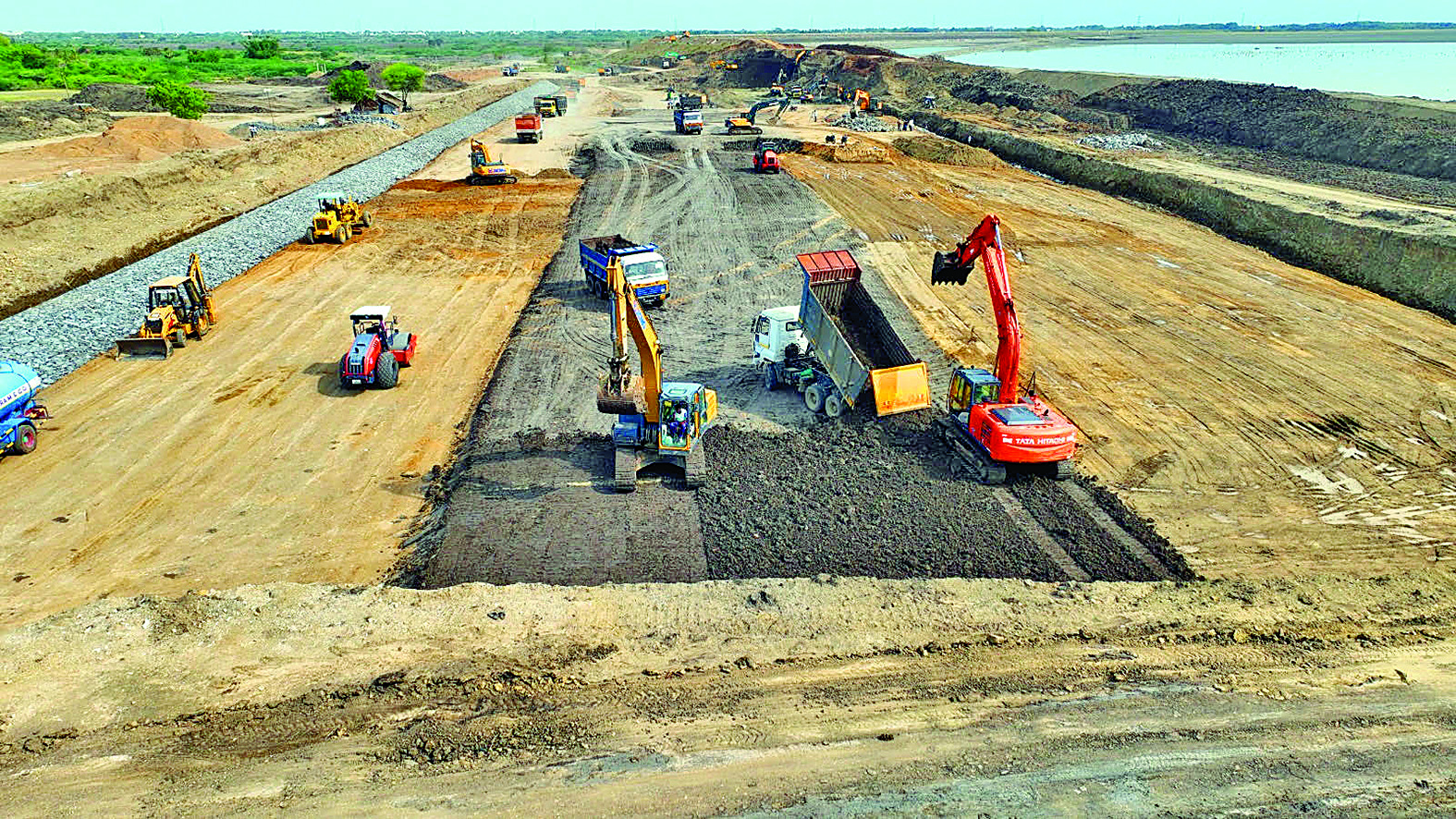
The 100-year-old Wellington Reservoir near Keelcheruvai in Tittakudi, Cuddalore district, is undergoing a major ₹130-crore rehabilitation.
Cuddalore: The 100-year-old Wellington Reservoir near Keelcheruvai in Tittakudi, Cuddalore district, is undergoing a major ₹130-crore rehabilitation aimed at finding a permanent solution to the recurring weakening and breaches of its bund. The Water Resources Department is adopting new engineering techniques to strengthen a vulnerable stretch of the reservoir and provide greater confidence to farmers dependent on its irrigation.
The reservoir has a catchment area of 16.60 sq km and a 4,300-metre-long bund, with a full storage capacity of 2,580 million cubic feet. It provides irrigation to around 26,000 acres of agricultural land in the region.
The reservoir has a long history of bund-related problems. After the bund caved in during 1996, it was repaired at a cost of ₹5 crore under the World Bank programme, following recommendations of the Dam Safety Committee. However, bund subsidence continued during successive monsoons.
In 2008, a team headed by Water Resources Department Chief Engineer Mohanakrishnan inspected the reservoir and submitted a detailed report to the government in 2010. Subsequently, urgent bund rehabilitation works were taken up at a cost of ₹29.71 crore. The works were completed and water was stored in the reservoir in 2011 before being released for irrigation.
Further works, including repairs to the sluices and bund, were carried out in 2017 at a cost of ₹6.5 crore. However, in December that year, a 15-metre-long and three-metre-deep breach developed around the 1,600-metre point of the bund, resulting in subsidence. Based on expert advice, a temporary curved structure was subsequently constructed at a cost of ₹1.48 crore.
With the problem recurring, the authorities brought the reservoir under the Dam Rehabilitation and Improvement Project to evolve a permanent solution. Based on expert recommendations, the latest rehabilitation project covers the vulnerable stretch between the 1,200-metre and 1,850-metre points.
With the problem recurring, the authorities brought the reservoir under the Dam Rehabilitation and Improvement Project to evolve a permanent solution. Based on expert recommendations, the latest rehabilitation project covers the vulnerable stretch between the 1,200-metre and 1,850-metre points.
The ₹130-crore project was sanctioned in January 2026 and work has commenced. The initiative was pursued by former Minister C. Ve. Ganesan for comprehensive rehabilitation of the reservoir.
However, questions remain among farmers over whether the latest intervention will withstand heavy monsoon inflows and bring an end to the recurring problem.
Vellar Basin Farmers Association president Somasundaram said repeated allocations for bund repairs had failed to provide a lasting solution. “The weakening of the Wellington Reservoir bund has become a recurring phenomenon. Every time funds are allocated, it appears as if the money also disappears along with the subsiding bund.
There is apprehension over whether the present work will provide a permanent solution. This time, new technology is being used. Only after the work is completed and the reservoir receives heavy rainfall and reaches full storage can the strength of the bund be assessed,” he said.
Water Resources Department Assistant Engineer Venkatesan, who is monitoring the strengthening works, said the current project was based on technical assessments of the vulnerable section.
He said the earlier repair undertaken after the 2017 subsidence had enabled water to be released for irrigation, but subsequent studies indicated the possibility of further subsidence in the stretch. “Based on the report of engineer Mohanakrishnan, it was decided to strengthen the bund from 1,200 metres to 1,850 metres at a cost of ₹130 crore,” he said.
As part of the new technology, a concrete wall is being constructed to a depth of 11 feet. Liquid concrete is being injected through five layers of soil around the structure to prevent seepage. The bund is also being strengthened to a height of 11 feet.
The project also envisages upgrading the water-release infrastructure. Thirty-three existing sluice gates, each three metres wide, are being converted into eight-metre-wide gates to facilitate the discharge of up to 32,000 cubic feet of water per second. Concrete walls are also being constructed along 900 metres of the water-discharge channels.
According to Venkatesan, the comprehensive strengthening works are intended to ensure the long-term stability of the reservoir.
“With these works, the reservoir is being strengthened to provide protection for the next 100 years. Farmers can therefore confidently depend on Wellington Reservoir irrigation for cultivation,” he said.
( Source : Deccan Chronicle )

Next Story