States should have freedom to spend: CM Stalin

This fiscal imbalance had worsened by the expanding number of Centrally Sponsored Schemes, he says
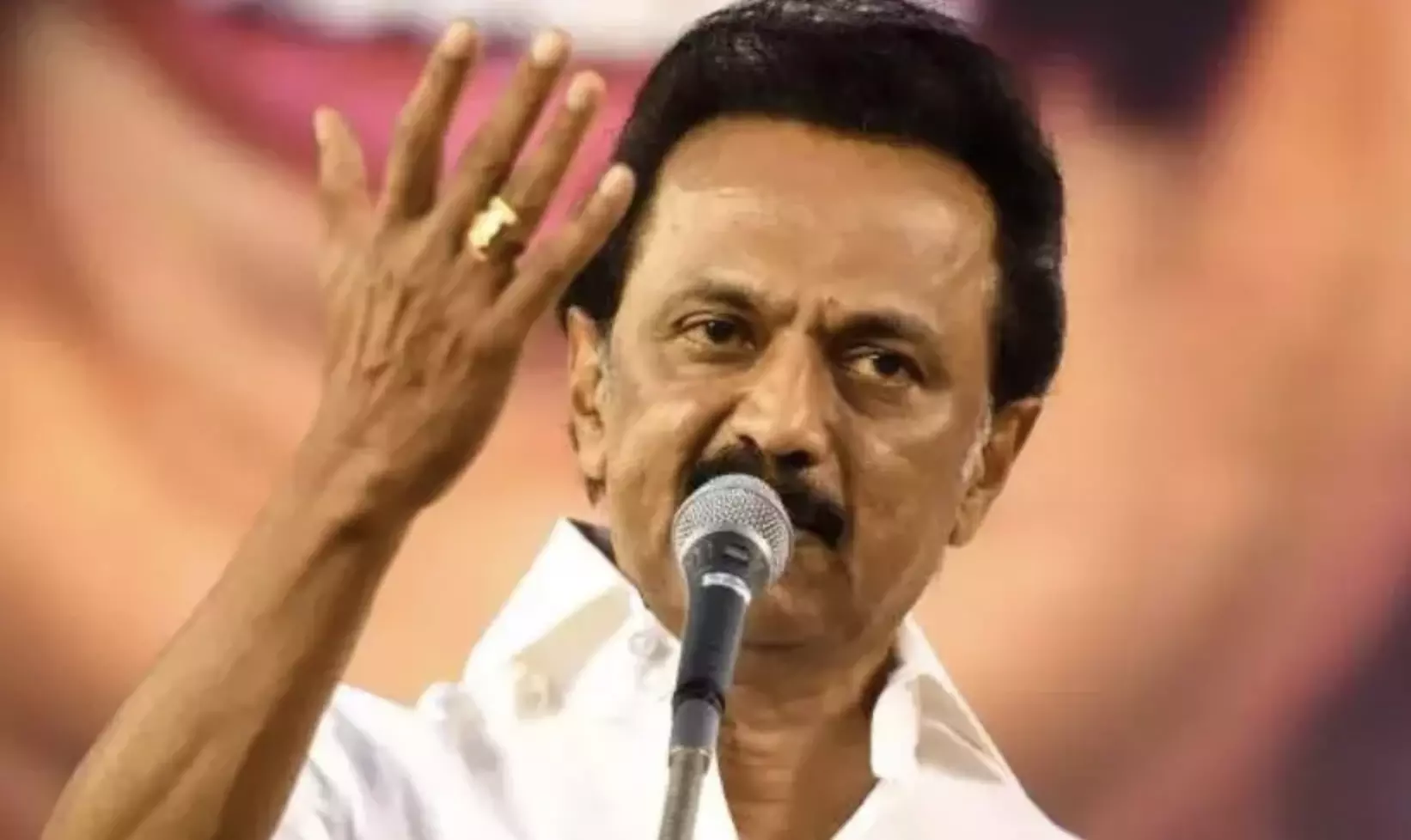
Chennai: Expressing serious concern over the Union Government’s incursions into the legislative domain of States, Chief Minister M K Stalin said States should have full freedom to spend on the items constitutionally allotted to them and schemes with rigid criteria aimed at making the States act as brand ambassadors of the ruling party at the Centre cut at the roots of federalism and democracy.
Speaking at the seminar on Union-States relations held as part of the 24th party congress of the Communist Party of India (Marxist) in Madurai on Thursday, he said though federalism had been now judicially recognized as a part of the basic structure of our Constitution, anti-federal acts like the holding back of Bills passed by the State legislatures were big challenges to democracy and Constitutional values
Despite Governors having no discretionary veto powers on the Bills passed by the Legislative Assembly, many States ruled by parties other than the one running the Union had faced the arbitrary action and the Union Government was moving ahead with measures to tighten the communal grip of the Sangh Parivar on higher education institutions funded by the States, he said.
The present draft University Grants Commission Regulations attempted to totally exclude the State Governments from having any role in university matters like appointment of Vice-Chancellors though State governments provided substantial funds to the centres of higher learning and had a duty to ensure that they protected secular values and fostered scientific temper.
Keeping the States out and preventing them from performing those duties was an anti-federal and undemocratic act aimed at furthering the partisan political and communal interests of the ruling party at the Centre and its associates, he said.
Flaying the BJP-led Union Government for initiating the Constitutional amendment for 'One Nation, One Election' without a two-third majority in Parliament, he said the voter was extremely discerning and voted in a substantially different manner for the Lok Sabha and State Assembly.
Similarly, the move to alter representation of States in the Lok Sabha would create serious imbalances and the delimitation, if done mindlessly, without giving consideration to the efforts of the States that had effectively implemented the National Population Policy of 1976, would amount to penalising the States that controlled population, he said.
Though mutual respect and recognition of powers of the States was the basic principle of federalism, States were facing an in-built imbalance of fiscal powers, as stated clearly by the 15th Finance Commission, having the power to raise only 38 per cent of the total revenues despite having nearly 62 per cent of the total expenditure obligations.
This fiscal imbalance had worsened by the expanding number of Centrally Sponsored Schemes, in which the States bear an increasing cost burden, which had gone up to 40 per cent from 25 per cent since 2015-16, he said
On the revenue side, tax rates across the country had been made uniform, first under the Value Added Tax (VAT) and then under the Goods and Services Tax (GST) regimes leading to States losing much of their already limited fiscal space to mobilise their own tax revenue.
Forced to adhere to mechanical deficit targets, spending by the States in social and economic spheres, faced a back slide, which left the poor and the marginalised sections of the society facing the risk of losing social security and provision of relief by the States to the poor was derisively termed ‘freebies,’ he said.
