Vijay Stresses on Respect for Rule of Law in Water Sharing
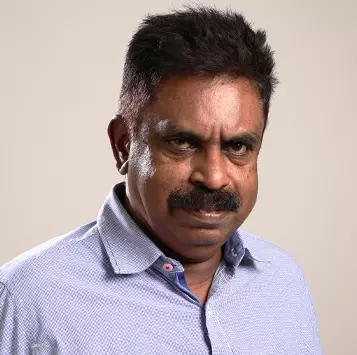
The judgments of the Supreme Court, the awards of duly constituted tribunals and the statutory mechanisms established for river management must be implemented in letter and spirit, Vijay said.

Chennai: Calling for the anchoring of cooperative federalism in a robust, predictable and equitable system of fiscal federalism, Chief Minister C Joseph Vijay said the management of interstate rivers demanded both cooperation and unwavering respect for the rule of law and that no agenda for southern cooperation would be complete without addressing the shared rivers.
Speaking at the 31st Southern Zonal council meeting at Kovalam, near Mamallapuram, on Thursday, Vijay said water was fundamental to the lives of people, agriculture and livelihood of millions and the legitimate rights of lower riparian States and the livelihoods that depended on assured river flows must be fully protected.
The judgments of the Supreme Court, the awards of duly constituted tribunals and the statutory mechanisms established for river management must be implemented in letter and spirit, he said.
The principles were equally relevant across our shared river basins like the Cauvery where timely implementation of the Supreme Court's judgment and the decisions of the Cauvery Water Management Authority remained essential, he said.
On Mullaiperiyar, the safety must continue to be guided by judicial decisions for increasing the water level to 152 feet and any upstream intervention with the potential to affect the rightful share of another State could happen only within the legal and institutional framework, he said.
Since the Southern States contributed over 30% of India’s Gross Domestic Product, by addressing the shared challenges and leveraging the collective strengths, even greater opportunities for growth and prosperity could be unlocked, not just for the South, but for India.
Placing a few priorities before the Council, Vijay said it was a matter of deep concern that addictive and regulated substances, as well as narcotic and psychotropic substances, continue to be misused and remained accessible to young people and called upon the States to work together to curb the interstate movement of narcotics and such drugs.
Advocating a single, integrated economic region, he said the industrial strength of the States did not end at the borders but complemented and reinforced one another. Proposing that the Council championed common economic and logistics clusters across the Southern States and seamless freight and industrial corridors that linked production centres to ports and to global markets, he said the initiatives would make the South a far more attractive destination for foreign investment.
Urging the Council to place maritime economy at the heart of the regional agenda, he called for an integrated approach encompassing ports, coastal shipping, fisheries, marine industries, maritime services, and coastal tourism.
Reiterating his stand against the National Eligibility cum Entrance Test (NEET), he said it placed students from rural backgrounds and socially and economically disadvantaged communities at a distinct disadvantage, undermining the State's long-standing model of inclusive access based on school education.
On delimitation, he said there was a genuine and shared concern across the Southern States and demanded a freeze on the allocation of Lok Sabha seats based on the 1971 Census.