The policy note said the existing public transport system, comprising Chennai Metro Rail Phase-I, Metropolitan Transport Corporation buses, suburban rail and MRTS, would not be sufficient to meet the city’s rapidly increasing mobility needs
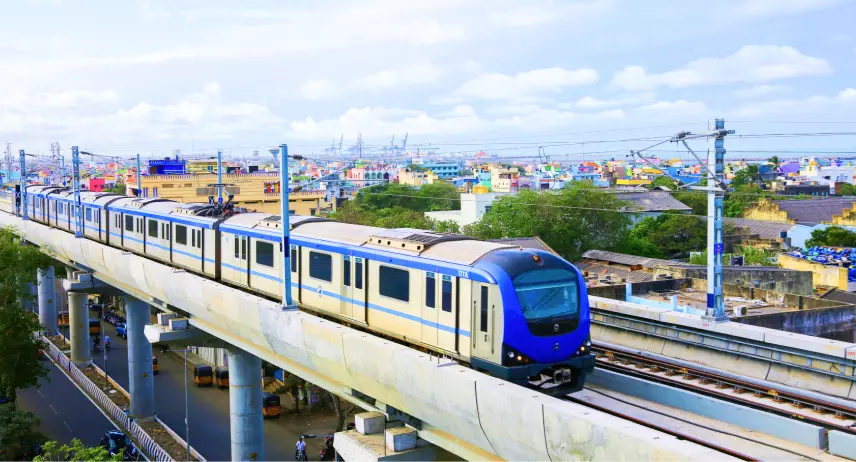
CHENNAI: Chief Minister C Joseph Vijay on Friday tabled the Special Initiatives Department’s policy note in the Assembly, outlining plans to accelerate the expansion of Chennai’s mass rapid transit system and raise the share of public transport from 28 per cent in 2018 to 50 per cent by 2048.
The policy note said the existing public transport system, comprising Chennai Metro Rail Phase-I, Metropolitan Transport Corporation buses, suburban rail and MRTS, would not be sufficient to meet the city’s rapidly increasing mobility needs and tackle congestion and pollution. The 54.1-km Phase-I Metro network, comprising 41 stations, is fully operational.
The 118.9-km Phase-II project, described as the largest metro rail project in India taken up in a single phase, has an estimated cost of ₹63,246 crore. It was approved by the Union government in October 2024 under a joint-venture model. The project will have 128 stations across three corridors — the 45.8-km Madhavaram–Siruseri Sipcot Corridor-3, the 26.1-km Lighthouse–Poonamallee Bypass Corridor-4 and the 47-km Madhavaram–Sholinganallur Corridor-5.
Chennai Metro Rail Limited has tied up funding with JICA, ADB, AIIB and NDB for various stretches. The State has sanctioned ₹5,407.40 crore as share capital and ₹8,490.57 crore as subordinate debt, while the Centre has sanctioned ₹5,407.40 crore as equity and ₹1,299.90 crore as subordinate debt.
The policy note also highlighted CMRL’s sustainability initiatives. It has commissioned 10.6 MWp of solar capacity, generating around 28,000 units of electricity daily and helping avoid 45,325 tonnes of carbon dioxide emissions. Regenerative braking systems recover an average 32 per cent of energy.
Meanwhile, digital ticketing through QR codes, UPI, NCMC cards and mobile platforms has been expanded. Non-fare revenue accounted for around 33 per cent of CMRL’s total revenue during 2025-26.
The State is also examining further Metro extensions towards Sriperumbudur and along the Ambattur–Avadi belt. Studies have been undertaken for MRTS-type systems in Coimbatore, Madurai, Salem, Tiruchirappalli and Tirunelveli.
The Chennai Metropolitan Area Metropolitan Transport Authority (CMAML) is also being developed to promote integrated commercial spaces on government land. Major proposed commercial initiatives include Central Tower, the Broadway–Kuralagam multimodal facility and integrated bus terminals at Vadapalani and Mandaveli.
The expansion of the Metro network and integration of different modes of public transport form a key part of Tamil Nadu’s long-term strategy to encourage public mobility, reduce dependence on private vehicles and create a more sustainable urban transport system.

