Madras Varsity Student Finds Prehistoric Archaeological Site In AP

The discovery and subsequent research were carried out under the guidance of Dr. Jinu Koshy, excavation-in-charge, Department of Ancient History and Archaeology, University of Madras.
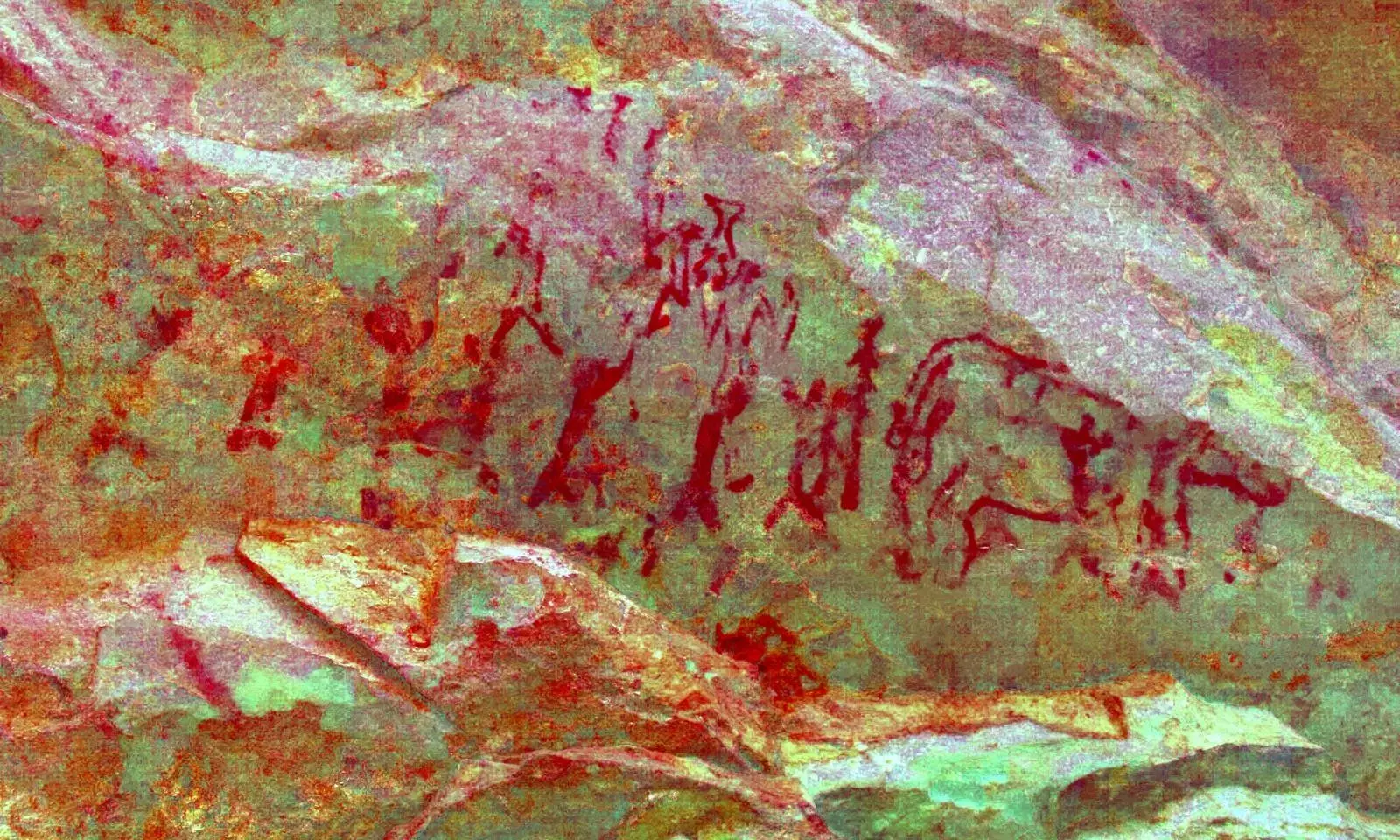
CHENNAI: A prehistoric archaeological landscape has been identified in the Gandikota-Diguvapatnam region of Andhra Pradesh, shedding new light on the ancient cultural history of the Penna river valley.
The site was discovered by Sudharshan R while pursuing his postgraduate studies in Ancient History and Archaeology at the University of Madras.
Preliminary investigations have revealed evidence of continuous human occupation from the lower Palaeolithic period to the historical era. Researchers have documented a series of 35 rock shelters with rock paintings across the Gandikota–Diguvapatnam landscape, along with rich stone tool assemblages and extensive rock art panels, highlighting the region’s importance in understanding prehistoric cultural developments in south India.
According to the report, the rock paintings, executed in red, white and black pigments, depict scenes of daily life, wildlife, aquatic species, hunting, fishing, handprints and symbolic designs. Several panels also appear to reflect early observations of seasonal and celestial cycles. Particularly remarkable is the presence of superimposed paintings, indicating multiple phases of artistic activity and repeated use of the shelters over thousands of years, the report said.
The discovery and subsequent research were carried out under the guidance of Dr. Jinu Koshy, excavation-in-charge, Department of Ancient History and Archaeology, University of Madras. The discovery and documentation programme was led by Sudharshan, with field documentation undertaken by a team comprising archaeologists Sasidharan R, Sanjay S, Bharath K, Parthiban, and Jeeva.
The findings have revealed one of the most significant prehistoric archaeological landscapes in the Penna river valley. Further research, analysis and scientific documentation are currently being undertaken by Sudharshan, and detailed academic publications on the discoveries are presently in preparation.
Researchers emphasise the urgent need for systematic documentation, conservation and further study of the Gandikota-Diguvapatnam landscape, which is emerging as a major prehistoric heritage zone in south India.
