Madras HC Allows Lamp Lighting Atop Thiruparankundram Hill

The Court also criticised the "mischievous" submission made by some that the stone pillar belongs to dargah.
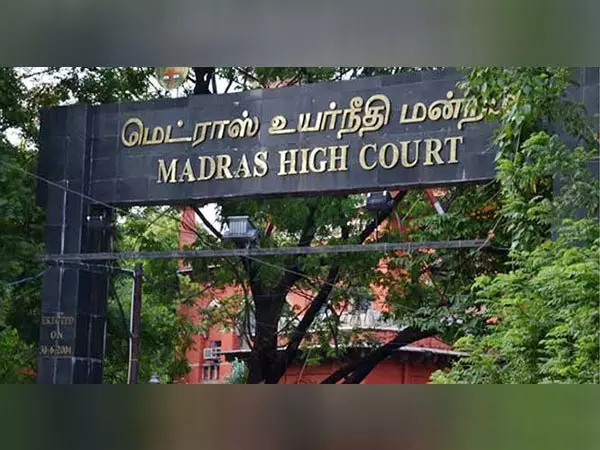
Madurai: The Madurai bench of the Madras High Court on Tuesday upheld the single judge’s order permitting the ritualistic lighting of a lamp (Karthigai deepam) at the stone pillar atop the Thiruparankundram hillock that houses the famous Murugan temple at its foothills near the Hazarath Sultan Sikkandar Badhusha Avuliya Dargah in Madurai. The court, however, modified the single judge’s directions by entrusting the lighting of the lamp exclusively to the temple administration and disallowed others, including the petitioner Rama Ravikumar, from lighting the lamp.
Senior DMK leader and Tamil Nadu law minister S. Regupathy said the order is contrary to established law and the state government will challenge it in the Supreme Court.
A division bench comprising Justice G. Jayachandran and Justice K.K. Ramakrishnan in its order held that the earlier order by Justice G.R. Swaminathan was not barred by the principle of "res judicata", as the issue had not been conclusively adjudicated in earlier litigations. The court noted that neither the state nor the Dargah had placed credible material to show that the agama shastras prohibited the lighting of a lamp at the site.
Rejecting the state government’s apprehension of a law and order problem, the court observed that permitting the temple administration to light a lamp on a single day in a year was unlikely to disturb public peace. It described such fears as speculative and remarked that unfounded apprehensions only deepen mistrust between communities. The bench also observed that the district administration ought to have explored mediation to resolve the dispute.
While upholding the single judge’s order, the division bench modified the directions by entrusting the lighting of the lamp exclusively to the temple administration, in consultation with the Archaeological Survey of India, the Madurai district administration and the police. It clarified that no individual, including the petitioner Rama Ravikumar, would be permitted to light the lamp, and that the ritual could be performed only during the annual karthigai deepam festival.
The court further clarified that as the hill is a protected monument, all activities must strictly comply with the provisions of the Archaeological Survey of India Act, and that the authorities concerned were empowered to regulate the number of persons permitted at the site.
“The Tamil Nadu government and the Hindu Religious and Charitable Endowments (HR&CE) department will file an appeal in the Supreme Court against the verdict of the division bench of the Madras High Court (Madurai bench). We have every right to go on appeal,” the minister told the media.
“The judges should have passed the order granting permission only on facts pertaining to lighting of deepam at the stone pillar. There is no evidence for that. No one has raised the demand to light the deepam at the stone pillar during the reign of former chief ministers Rajaji (Dr C. Rajagopalachari), Kamarajar, MGR (M.G. Ramachandran), and Karunanidhi. When it was raised during the chief ministership of late Jayalalithaa, she had firmly turned it down, making it clear that it can’t be allowed,” he explained.
The longstanding practice of lighting deepam was at the deepa mantap at the Uchi Pillaiyar temple at the middle of the hillock, right above the sanctum sanctorum of the Murugan temple (Subramania Swamy temple) at the foothills.
“This verdict is against established law and contrary to well settled legal principles. The culture and tradition of the Tamils must be protected. Granting permission because someone has sought it is utterly wrong. There is an ulterior motive in sneaking in a new practice contrary to tradition through court intervention. Hence, we oppose it,” he said, adding “We however don’t want to denigrate the verdict.”
The state government contended before the division bench that devotees had no enforceable legal right to seek the lighting of the lamp and argued that Article 226 of the Constitution could not be invoked to alter long-standing practices. The temple administration and the Hindu Religious and Charitable Endowments department submitted that the matter fell within the domain of the temple administration, while the Dargah raised concerns regarding its enjoyment of land granted in 1920. The district administration cited practical difficulties and apprehended disturbance to public order.
Rejecting these submissions, the division bench reiterated that speculative law and order concerns cannot override lawful religious practices carried out strictly within the framework of law.
