JUST SPAMMING | Yanking The War Room Doors Open

Now, Aspire K Swaminathan, who conceptualized and established the first ever IT wing in a political party in India, incidentally in Tamil Nadu, has come out with a book ‘Inside the War Room – How power is built, fought and won,’ perhaps to demystify the aura surrounding war rooms. More than about political theory and electoral warfare, the book provides an insight into elections through lived experiences
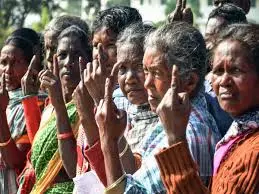
As the election season is upon us, we hear, read and discuss strange things. One latest thing that we repeatedly hear about during elections in recent times is what they call the ‘war room’ that lends a mysterious aura to the word itself. Viewed as a place where strategies are worked out for fighting the elections, not exactly by politicians or foot soldiers of political parties, but by strategists. Perhaps, because the word ‘strategy’ is traced to war and war mongering, etymologically, the term ‘war room’ was coined to refer to the chamber or just a table or a transient rendezvous where ‘experts’ chalk out plans for facing a democratic exercise - election.
Because those ‘experts’ were different from the traditional political foot soldiers, who become active during elections and sweat it out in the open by meeting people personally to solicit votes for their party candidate, pasting wall posters or painting symbols on walls (it is done even now in rural areas), accompanying campaigners, holding aloft party flags and placards and plan and execute a plethora of other activities aimed to garnering votes, the mystery of the war room deepened over the past few elections. Since the phenomenon marked the entry of ‘white collar’ workers in politics, almost every party felt the need for starting their own IT Wings, whose offshoot was the war rooms.
Now, Aspire K Swaminathan, who conceptualized and established the first ever IT wing in a political party in India, incidentally in Tamil Nadu, has come out with a book ‘Inside the War Room – How power is built, fought and won,’ perhaps to demystify the aura surrounding war rooms. More than about political theory and electoral warfare, the book provides an insight into elections through lived experiences. Though Swaminathan is no longer associated with the party where he launched the IT wing, he has written the book based on his experience in traditional grassroots mobilization, voter behavior analytics, structured narrative building, alliance engineering and integration of emerging technologies into political campaigns.
As he himself confesses, he ‘seeks to equip the next generation of political leaders and strategists with not only the craft of power but the wisdom required to exercise it responsibly’ through the book with 51 chapters, each of them presenting a specific high-pressure political situation drawn from ‘real-world dynamics that shape campaigns, governance, alliances, media narratives, internal party tensions and leadership transitions.’ He says the book is not meant to be read passively but to be experienced as it has been structured as a strategic simulation.
Every chapter presents a political situation and raises a question to the reader, who is given multiple options to choose from. The author then makes his pick and explains why he went for it and enumerates the downside of the other options. Some of the situations might resonate with the real-life developments that were witnessed in the run up to the present elections. Even if the option picked by the author might not necessarily be in sync with what the political party concerned did in real life, the theoretical explanation offered in the book holds a mine of political wisdom.
In a chapter titled ‘The Future Candidate,’ the book deals with the modern day conundrum relating to politics and politicians by concluding that a candidate could not be all machine but also cannot be frozen in nostalgia as the answer to the question, ‘what will the future candidate look like.’ So, it talks about a hybrid leader, who masters both the ancient art of human connection and the modern science of machine amplification and becomes a bridge between people and platform exuding both the warmth of touch and the cold glow of the screen. It also cites a case study of an aging leader and his heir apparent and recommends the opting of a ‘mentorship narrative’ because succession is inevitable and in controlling the succession story. ‘A leader who frames the heir as his creation does not fade away; he becomes immortal in the party’s DNA,’ it says.
Offering specific pieces of advice on dealing with various situations, the book says that the strategist’s true power was not in silencing betrayal but making betrayal irrelevant. When allies leak information, the leader must appear too tall for whispers to affect him, it says. On dealing with scandals, the book tells strategists that scandals do not fade but only grow and recommends swift cutting ties with the accused which would also send a powerful signal that the party is bigger than the person. A scandal is not about the accused but about what the party stood for. The price paid defending the indefensible will be power, it says.
With the elections just two weeks away, if a video emerges showing a party candidate arguing with the police officer at a checkpoint, making it look like the candidate abused and threatened the officer, what should the strategist do? Swaminathan says the narrative should be diverted by raking up a new issue to shift media focus. Instead of fighting a fire, another fire should be lit. Providing tips on handling scandals by spinning the storm, the book stresses on making PR stunts feel real. It talks about the need for image makeovers to leaders, who may appear to be stiff on TV and entrusts the strategist with the task of reshaping perception without breaking authenticity. For, perception is a silent killer.
