JUST SPAMMING | What’s All This Business-like Alliance Talks About?
Putting it otherwise, political liaisons today have taken the contours of business deals. It is more about profits or based on each of the party’s aspirations to make maximum gain out of the alliance
That the ruling DMK deciding to start negotiations with its prime ally, the Congress, on seat sharing for the coming Assembly elections made headlines, triggering a wide range of speculations on the future of the tie-up that was being discussed and so many other things related to is a modern day political trend that has abominable connotations. Why should talks on sharing of seats for the elections be such a long drawn process particularly when it is between traditional allies who have been travelling together for over a decade and had even earlier been together fighting a common enemy. Well, the reason is that the priorities of the parties involved have changed now or that leaders want to clinch the best bargain that would benefit them.
Putting it otherwise, political liaisons today have taken the contours of business deals. It is more about profits or based on each of the party’s aspirations to make maximum gain out of the alliance. Unlike the past, politicians think about what they would benefit by entering into an alliance with another party at the negotiation table and not about how they could deepen the democratic process or in delivering better services to the people or in devising meaningful policies that would enrich the lives of the people. The data that the political negotiators produce to clinch a better deal from political partners is now akin to what profit oriented business entities use during discussions.
Conventionally, there had been a difference between a business related discussion and a political negotiation. Since people’s welfare, goodwill, ideologies, social interests, ethics and future of the nation were among the many driving forces that overrun arithmetic calculations in such negotiations, unlike business talks where crude figure and profits mattered more than anything else, alliances were struck on the basis of different yardsticks. Now it looks that the business style of operations have replaced the old political narrative with the priorities of politicians themselves undergoing a sea change. It is also because some people who discuss seat sharing with political allies are now prominently from business backgrounds or at least with less connection with the local people, whose votes they want to garner.
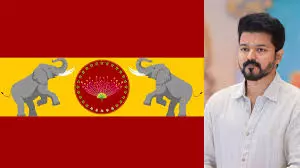
So, when there was an inordinate delay in the resumption of talks for seat sharing between the Congress and DMK in the State, there was a lingering fear of the alliance itself snapping. Like a businessman going to another business house when he fails to strike a profitable deal with his old vendor. The Congress, it was rumored, was planning to look for other avenues to forge ahead politically. Though in the normal course, politics, where ideology is one factor that propels it, does not give much leeway for such shifts, the dawn of a new party, the Tamilaga Vetri Kazhagam (TVK), launched by actor Vijay recently, gave some hope to the Congress in identifying an alternative. Otherwise, the Congress, if it was disillusioned with the DMK, would not be able to align with the rival AIADMK as the BJP was in its camp – or is it the AIADMK that is in the BJP camp? - and forced to stick to the DMK or go on its own.
Making use of the new found freedom to choose another alliance, the Congress opened a channel of communication unabashedly with the TVK even as it remained in the coalition led by the DMK. That was a tactic that even some business houses abhor to adopt and is more common with rogue organizations. It was like sending across the message that if you do not come around we may move on to the other camp. Still, the coalition did not go to smithereens since both parties persevered and finally began their talks on Saturday. Not only did the Congress stop the arm twisting but the DMK too waited because it realized that business style negotiations would not suit politics, particularly when it came to dealing with other parties with whom they would have to work together during the elections.
In the latest political style of forming alliances and working together to garner peoples’ votes, another visible change is the role of ideology in elections. True, parties with conflicting and diametrically opposite ideologies in the political spectrum have worked together and even won elections. The DMK itself had aligned with the BJP though the basic principles and ideologies of both the parties spring from diverse founts. But they had worked out what they called euphemistically the ‘Common Minimum Programme’ and hid their differences behind it.
But now parties just forge alliances at random without even bothering about their own past averments. Like when the AIADMK hooked up with the BJP, it did not remember that its general secretary Edappadi K Palaniswami had given an open assurance that he would not go back to the BJP while snapping ties with it earlier. Similarly when the DMDK general secretary Premalatha Vijayakanth walked into Anna Arivalayam premises to formalize an alliance with the DMK, the statements of the party founder Vijaykanth did not come to her mind. Vijayakanth had expressed anguish over a part of his land being taken away by the Union Government, in which the DMK was a part, to construct a flyover and even wondered how he could have a tie-up with that party. But his wife coolly did it. Of course, the times have changed, along with needs.
