JUST SPAMMING | Tracing The History Of A 100-year-old Movement

In the book, Shanmugasundaram identifies Vaikom as the setting for the landmark social reform battle, since the historic protest that started in 1924 demanding the removal of the ban on entry into the streets surrounding the Mahadeva temple by common people was the beginning of the temple entry movement
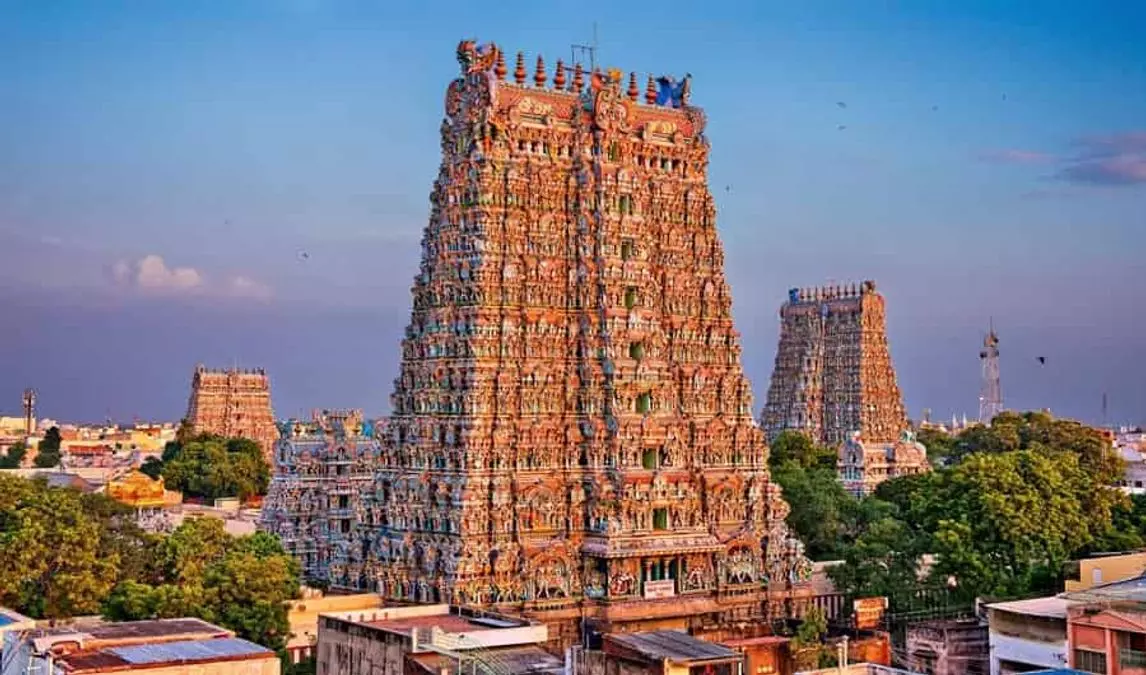
Modern India’s tryst with religious inequality and the democratization of temples is a story that had remained uncaptured, in its entirety, in print despite its interesting and intriguing elements, until Vintage, an imprint of Penguin Random House recently brought out the book titled ‘The People’s Sanctum.’ Authored by Manuraj Shunmugasundaram, a lawyer and media spokesperson for the DMK. The book traces the history of what is known as the temple entry movement that began a 100 years ago in the then Kingdom of Travancore, which is now part of Kerala. As the author himself says he drew inspiration for writing the book from the meeting of Chief Ministers of Kerala and Tamil Nadu when they came together to mark the centenary of the ‘Vaikom Agitation.’
As all those with some sense of local history know, the Vaikom Agitation is associated with Periyar E V Ramasamy, founder of the Dravidar Kazhagam, though the place is located in Kerala. Vaikom is also the birthplace of a former Chief Minister of Tamil Nadu, V N Janaki, who was later rechristened as Janaki Ramachandran. She served as Chief Minister for 24 days after the passing of her husband, the legendary actor and Chief Minister M G Ramachandran or simply MGR. Though Vaikom celebrated the crowning of its own daughter as the Chief Minister then, Janaki went into political oblivion soon and not many associated her with the small temple town in Kottayam district.
In the book, Shanmugasundaram identifies Vaikom as the setting for the landmark social reform battle, since the historic protest that started in 1924 demanding the removal of the ban on entry into the streets surrounding the Mahadeva temple by common people was the beginning of the temple entry movement. With much water flowing down the Vembanad Lake (Vaikom is situated on its banks), since then and more movements and leaders ushering in a plethora of reforms, today even the demand for making common people as temple priests, which was earlier the sole prerogative of upper castes, has been acceded to.
Yet what makes the book important is that it traces the trajectory of reforms that democratized the sanctum that was once out of bounds for many and argues that the intra-religious equality it entailed is Indian secularism. In the process, the book makes readers understand the real impact of caste and how social movements overcame it with help from political parties and the legal system. Giving details on Mahatma Gandhi’s visit to Vaikom, a year after the agitation started, the author talks about a meeting between Gandhi and social reformer Narayana Guru who founded the Sri Narayana Dharma Paripalana Yogam that is popularly known as SNDP.
At the meeting of Gandhi and Narayana Guru at the Sivagiri Math, issues like eradication of untouchability and the need for education and economic opportunities for the empowerment of the depressed classes were discussed. But it clearly states that Narayana Guru was not in favour of non-violent protests like satyagraha. He had reportedly said that no useful purpose the agitations would serve until the protestors scaled over the barricades and entered all the temples. The book mentions the Justice Party that ruled Madras Presidency ensuring equal access to people of all communities towards public services and spaces as part of the Self-Respect movement, whose influence was felt in various spheres.
The book then dwells on the relationship between temples and the sovereign, which evolved over hundreds of years, when temple coffers overflowed with wealth, and elucidates how it continued through the colonial era. The British East India Company, recognizing the financial potential in large tracts of land and other assets under the possession of temples, and appointed Collectors to oversee revenue collection, detect mismanagement and decide on disputes. Apart from the potential revenue collection, the British also felt a sense of moral duty to ensure that the vast properties endowed to the temples were put to the purposes intended by the donor. So the Madras Endowments and Escheats Regulation Act was enacted in 1817. That regulation was religion neutral and brought it to avoid misappropriation of funds. Then, in 1863, the Religious Endowments Act was introduced.
After the Justice Party came to power, it felt that an overarching legislation was needed to regulate Hindi religious endowments and brought in the Madras Hindu Religious Endowments Bill of 1922 and even brought the mutts under the purview of the law. Subsequently, the Madras Hindu Religious Endowments Act, 1925, came in laying the foundation for a larger social goal of equality in temple spaces, the book says, adding that it did enough to reverse the colonial policy of non-intervention and entrenching the idea of government oversight over non-religious aspects of the temple. That, the author claims, defined the view of secularism from Madras. Later, the Madras view of secularism and government oversight of secular aspects would become the Indian view, as reflected in the Constitution.
The chapter ‘The Constitution Enters the Sanctum’ refers to the Protection of Civil Rights Act passed in the first Parliament of India in 1955 and says that it prescribed punishment for preaching and practicing untouchability and for those preventing entry to a place of worship that is open for those professing the same religion. Then it talks about the courts’ role in enforcing Acts through anecdotes and concludes that the future of Indian secularism will be shaped by the Madras Model.
