Just Spamming | India Has Come A Long Way In Space Exploration
Today there are only 12 countries that have the wherewithal to send rockets into outer space and India comes well among the top nations in the list with the Indian Space Research Organisation (ISRO) claiming that the latest mission was the 107th launch from Sriharikota
As space scientists and enthusiasts go gaga over the latest rocket launch from Sriharikota that saw the placing of the advanced earth observation satellite, EOS-05, in its orbit, it is time to look back into the history of space research in India. It all started with the firing of the first sounding rocket from the Thumba Equatorial Rocket Launching State (TERLS) in Thiruvananthapuram on November 23, 1963. Though that Nike-Apache rocket would not even impress a child today since even Sivakasi fireworks companies make ‘rockets’ with better performance for Deepavali and other celebrations, it was a historic event because it was the forerunner to India being launched into the select club of spacefaring nations.
Today there are only 12 countries that have the wherewithal to send rockets into outer space and India comes well among the top nations in the list with the Indian Space Research Organisation (ISRO) claiming that the latest mission was the 107th launch from Sriharikota. Before reaching Sriharikota to launch the Rohini-125 sounding rocket in October 1971, space research and rocket launches developed in leaps and bounds indigenously. Initially known as Indian National Committee for Space Research (INCOSPAR), which was set up in 1962 by the then Prime Minister Jawaharlal Nehru on the advice of Vikram Sarabhai, the father of India’s space programme, it was given the name ISRO in 1969.
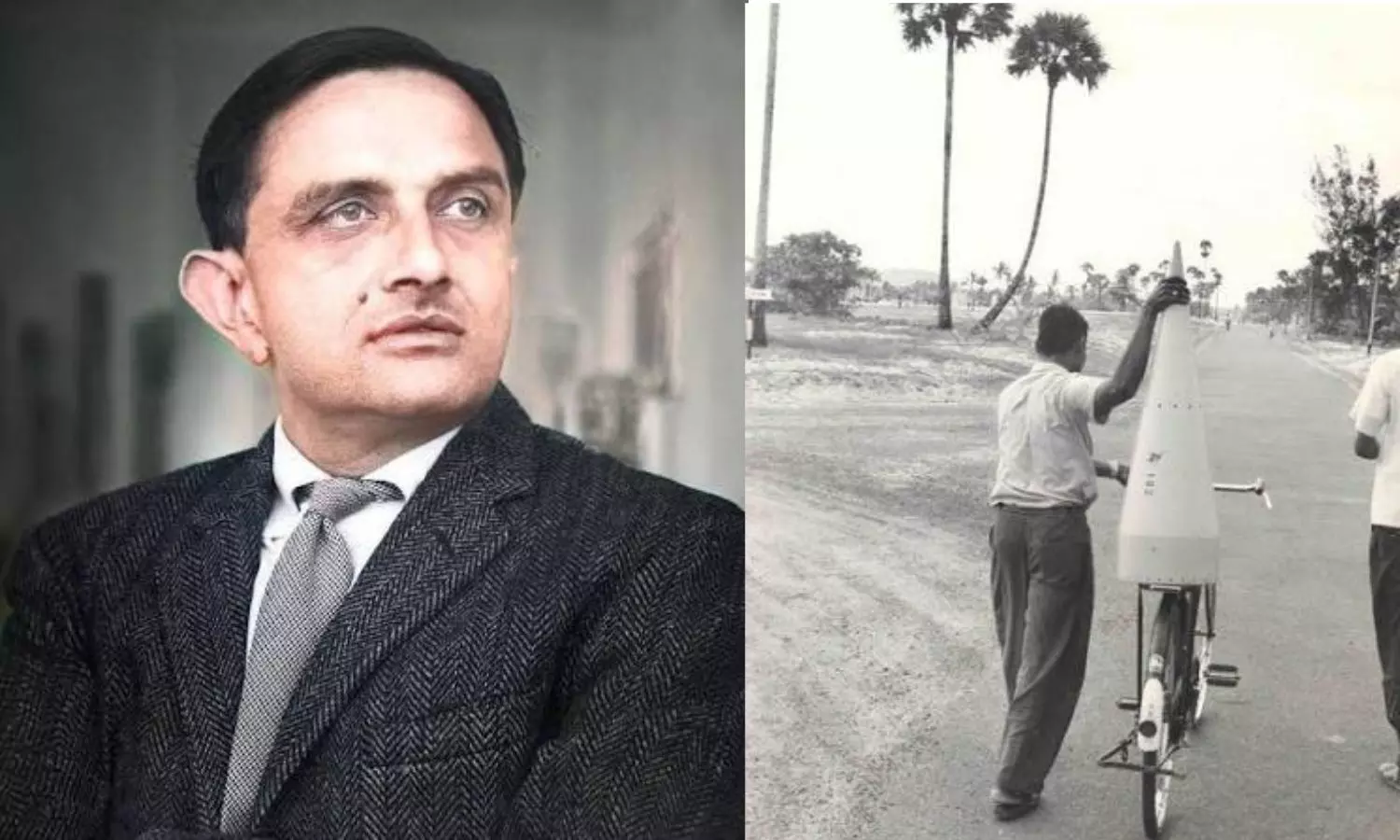
When the initial space research was carried out in Thumba, a fishing village in Thiruvananthapuram, under the guidance of Vikaram Sarabhai, the local St Mary Magdalene Church was the main office for those early scientists and the Bishop’s House was converted into the laboratory, from where rocket parts were transported in bicycles. Among those who worked with Sarabhai then was A P J Abdul Kalam, who would later on become the President of India. Sarabhai, just about an hour before passing away in Thiruvananthapuram on December 30, 1971, had spoken to Kalam over telephone on the design of the Special Launch Vehicle.
However, the first ISRO satellite launch, of Aryabhata, was by the Soviet space agency Interkosmos in 1975 and the country made its first launch, of satellite RS-1, using an indigenously built vehicle – SLV-3 – in 1980, becoming the seventh country to undertake orbital launches. Before that ISRO made an attempt to launch an orbital satellite Rohini 1A aboard an SLV on August 10, 1979, but the mission failed. Later the ISRO forged ahead and indigenously developed the Polar Satellite Launch Vehicle (PSLV), which was used for the moon mission, Chandrayan, that was launched on October 22, 2008. ISRO also developed full launch capacities with the ability to deploy cryogenic engines and also demonstrate unmanned landing capabilities.
But before discovering Sriharikota, which is an island in the Bay of Bengal close to the Indian coast, to set up the satellite launching station there the first generation of space scientists had devised ambitious plans for the country. Otherwise they would not have gone hunting for a location as elaborate as that. Located 80 km north of Chennai, Sriharikota is now accessible by road and media persons have been taken there for rocket launches. Of course some of the rockets have plunged into the Bay of Bengal but the ISRO is today a well-established company that even takes satellites built by others – foreign agencies and educational institutions –to space, to be placed in their designated orbits.
To put it otherwise, since the days of the research carried out in Thumba, which is close to the earth’s magnetic equator and is an ideal location for studying upper atmospheric and ionospheric phenomena, space research in India has come a long way since the EOS-05 that was taken by a GSLV rocket to a geosynchronous orbit was the first earth observation satellite. It will provide advanced near real-time data on earth observation that would strengthen the countries capabilities in land monitoring, environmental tracking and disaster management by continuously monitoring a particular spot from 36,000 km above the earth. Since it can also be used for the nation’s security requirements, if needed, it is a real achievement for the country in many ways.
That the scientific progress was made by Indian scientists is something remarkable given the fact that the country’s first satellite, named after Aryabhatta an ancient astronomer and mathematician who lived in Indian soil between 476 to 550 CE, had to be launched by Interkosmos, a Soviet space agency, in 1975. Now, ISRO also has bigger plans to bring back its PSLV, always considered to be its trusted workhorse. The launch vehicle is now undergoing validation and its design would be improved to meet the challenging demands of the next generation of satellite launches. It is speculated PSLV will be used in the first launch of the Gaganyaan manned mission. The proposal is to send a crew of three astronauts to a 400 km low earth orbit for three days and bring them back.
The plan brings to mind Rakesh Sharma, an Indian Air Force pilot who flew aboard Soyuz t-11, a Soviet satellite in 1984 and earned the sobriquet ‘first Indian in space.’ Even that event was celebrated as a milestone for India mainly after the then Prime Minister Indira Gandhi asked Rakesh Sharma while he was orbiting the earth as to how India looked from there and he replied: 'Sare Jahan se Achha,' which went on to make the patriotic song by Allama Muhammad Iqbal popular.
