JUST SPAMMING | A Mad Scramble For Political Crumbs
Of course when the Union Finance Minister comes down a wide range of people seek appointments - those involved in business and commerce need to seek concessions, tax exemptions and such pecuniary benefits
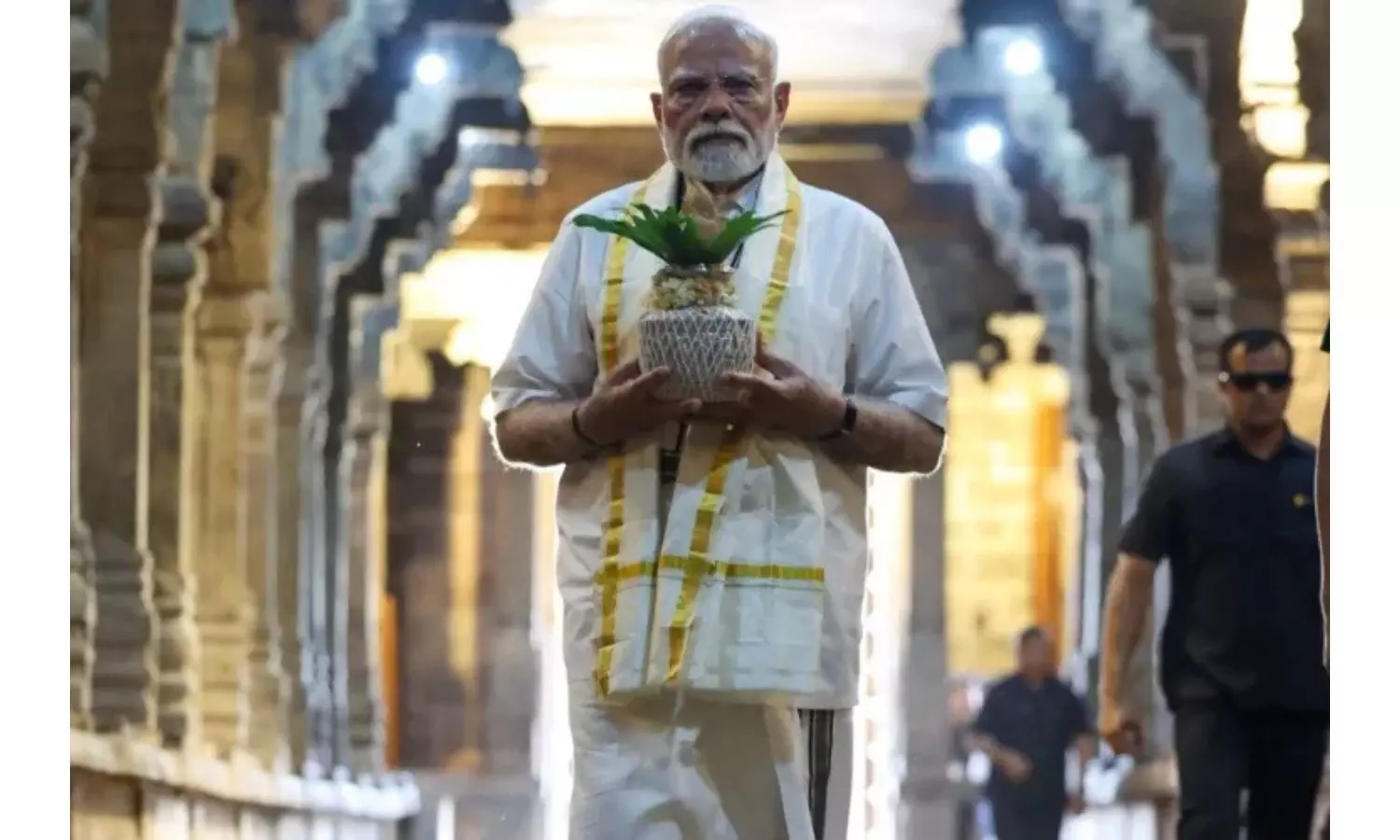
The recent visit of Prime Minister Narendra Modi to Tamil Nadu ruffled a few political feathers whose repercussions were felt in myriad ways. Of course it was just a brief sojourn that saw Modi landing in Thoothukudi from Maldives and then visiting Gangaikonda Cholapuram for an event commemorating King Rajendra Chola’s exploits a 1000 years back. Not many people saw him as the entire proceedings were confined to specific areas in the State. Yet it created rumbles amidst the political class for the modern trend in the state is for politicians to believe in the powers of perceptions and imaginations than in electoral popularity.
So, whenever a top leader from New Delhi, read a BJP honcho, comes down to Chennai there is invariably a mad scramble to get an audience - the perception is that you score brownie points by that and the imagination is that you will reach dizzy heights after that. Of course when the Union Finance Minister comes down a wide range of people seek appointments - those involved in business and commerce need to seek concessions, tax exemptions and such pecuniary benefits. It is the same case with other Ministers as those having something to do with the portfolios held by them want to hobnob with them. But in the case of the Union Home Minister Amit Shah or the Prime Minister, the queue outside their transit camp offices comprises political leaders.
Many of those leaders who spearhead fringe collectives consider that brief moment of togetherness with the visiting dignitary as something important for their future in politics. Of course we are told that they discuss matters of great import in private after the photo shoot. Whatever, many leaders love that moment though the real test of their popularity and acceptability as political leaders should come much later in a different arena – the elections. Anyway, coalition politics has led to strange situations, catapulting leaders enjoying no real popularity among the masses to positions of glory, thanks to the goodwill of powerful leaders.
That was why former Chief Minister O Panneerselvam was probably peeved when he could not gain a rendezvous with Modi who came down to Thoothukudi and Gangaikonda Cholapuram in Ariyalur district on July 27 and 28. Panneerselvam was thrown out of the AIADMK, the party with which he had been associated with since he started his political career, after he, along with a gaggle of violent supporters, stormed into the party headquarters in Lloyds Road to show his anger over being stripped of the top post of ‘coordinator.’ Since then he has been heading a group of dissenters seeking to redeem the party, which means that though he is technically out of the AIADMK, he continued to be part of the National Democratic Alliance or NDA, led by the BJP at the national level.
It was that recognition that kept Panneerselvam going politically. The BJP believed that an united AIADMK – a grand idea touted by all those who were purged, like Panneerselvam, T T V Dinakaran and V K Sasikala – alone would help the party stage a comeback and enable the national party to ride piggyback to power. But a recalcitrant Palaniswami, who would not accept it even if it amounted to snapping ties with BJP, stood his ground and refused to take back those who had been thrown out, offering no alternative to the BJP other than playing along. So Panneerselvam felt slighted and rushed to the DMK seeking some sort of a rehabilitation.
Whether Panneerselvam could help the DMK improve its vote share is not known. Yet, the DMK did not pooh pooh him away for the times are such that every single vote counts. For Panneerselvam, all that he desperately needs is some sort of electoral recognition that could give him and his acolytes a few seats in the Assembly. No, the former Chief Minister does not seem to have any grandiose illusion of becoming the Chief Minister again. In fact most of the smaller parties, whatever their founding principles were, now aspire only for a few seats in the Assembly and Parliament, even if that amounts to toeing the line of a hostile political behemoth that had once trampled over them. It does not matter if the party had sprung to existence on a plank opposing the very same behemoth.
To put it otherwise, the major casualty in coalition politics is ideology and principles that are considered as rudiments of insignificant and irrelevant ideals from a past that are just sticking to modern political moorings. Now the deciding factors are votes, money, seats and sundry posts, besides guarantees for iron clad immunity from by enforcement agencies that otherwise raid premises. So disputes are sorted, differences ironed out and political agreements are arrived at based on the lofty and exalted principle of quid pro quo.
But since Panneerselvam or for the matter Premalatha Vijayakanth, who also called on DMK president M K Stalin last week, were claiming to have made courtesy visits to enquire about the Chief Minister’s health and also pay condolences for the passing of his eldest brother, we cannot point fingers at anyone for breach of ethics or violation of principles. However, the indicators of the modern trend in which anybody can join hands with anybody as long as the liaison brings some more votes and help gain positions and recognitions, portend a threat to the independence of small parties.
